

The familiar advice to choose silky pyjamas because they look luxurious and feel cool leaves too much out. A glossy matching set can be lovely for wedding-morning photographs yet wrong for the wearer's bedroom, laundry routine or preferred fit. Choose for the person first and the photograph second, and you're more likely to give something they'll enjoy after the wedding.
Why Silky Pyjamas Deserve a Closer Look
On an Australian wedding morning, the bride might be having her makeup finished while an attendant steams a dress and someone's mother organises breakfast. Everyone needs something comfortable to sit, move and get dressed in. Why, then, choose their getting-ready clothes by colour and shine alone?
Women's silky pyjamas can serve as occasionwear, a thoughtful gift and a reusable wardrobe piece. Those purposes overlap, but they aren't identical. A set chosen for photographs needs to coordinate; a gift needs to suit its recipient; everyday sleepwear needs to earn its place through comfort and manageable care.
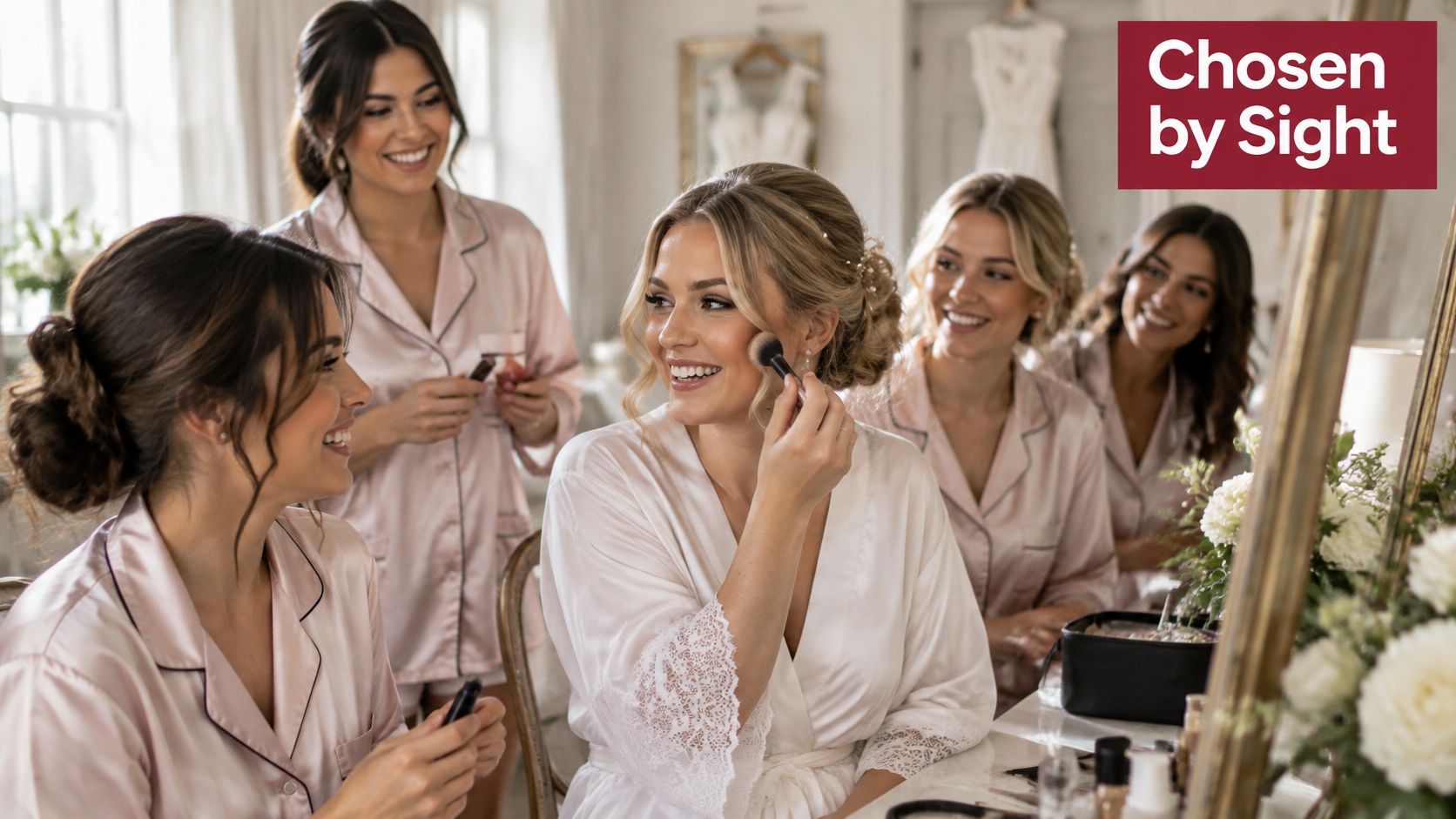
Start with the life beyond the wedding
Consider an attendant who loves matching clothes for the celebration but normally sleeps in loose separates. A generously cut set in a colour she already wears is a more considered choice than something selected solely to match the flowers.
The same principle applies to interests and personality. For an equestrian-minded recipient, browsing ideas such as Bridle Up Hope Shop's stylish horse sleepwear for women offers a useful alternative to choosing everything around a bridal title.
Buying principle: A coordinated gift should still feel like it belongs to the person receiving it.
Before choosing a finish, decide what matters most:
- Getting-ready use: Prioritise movement, coverage and straightforward changing.
- Gifting: Consider the recipient's taste rather than assuming everyone wants wedding-themed clothing.
- Repeated wear: Match the garment to their usual comfort preferences and willingness to care for it.
My recommendation is simple: don't ask a single pair to excel at everything. Identify its main purpose, then make the other decisions around that.
Understand Silk, Satin and Fabric Finishes
Silk is a fibre. Satin describes a weave or smooth surface effect. Satin can be made with silk, polyester or blended yarns, so a satin description doesn't establish what the garment contains. Full composition disclosure matters more than words such as silky or luxury, particularly when assessing laundering and fabric behaviour, as the ACCC's nightwear enforcement guidance helps demonstrate.
Think of a car's paintwork and engine. The finish is what you notice first, but it doesn't tell you everything about what's underneath. Similarly, a photograph can show sheen and shape without answering the practical questions that determine whether you'll enjoy wearing the garment.
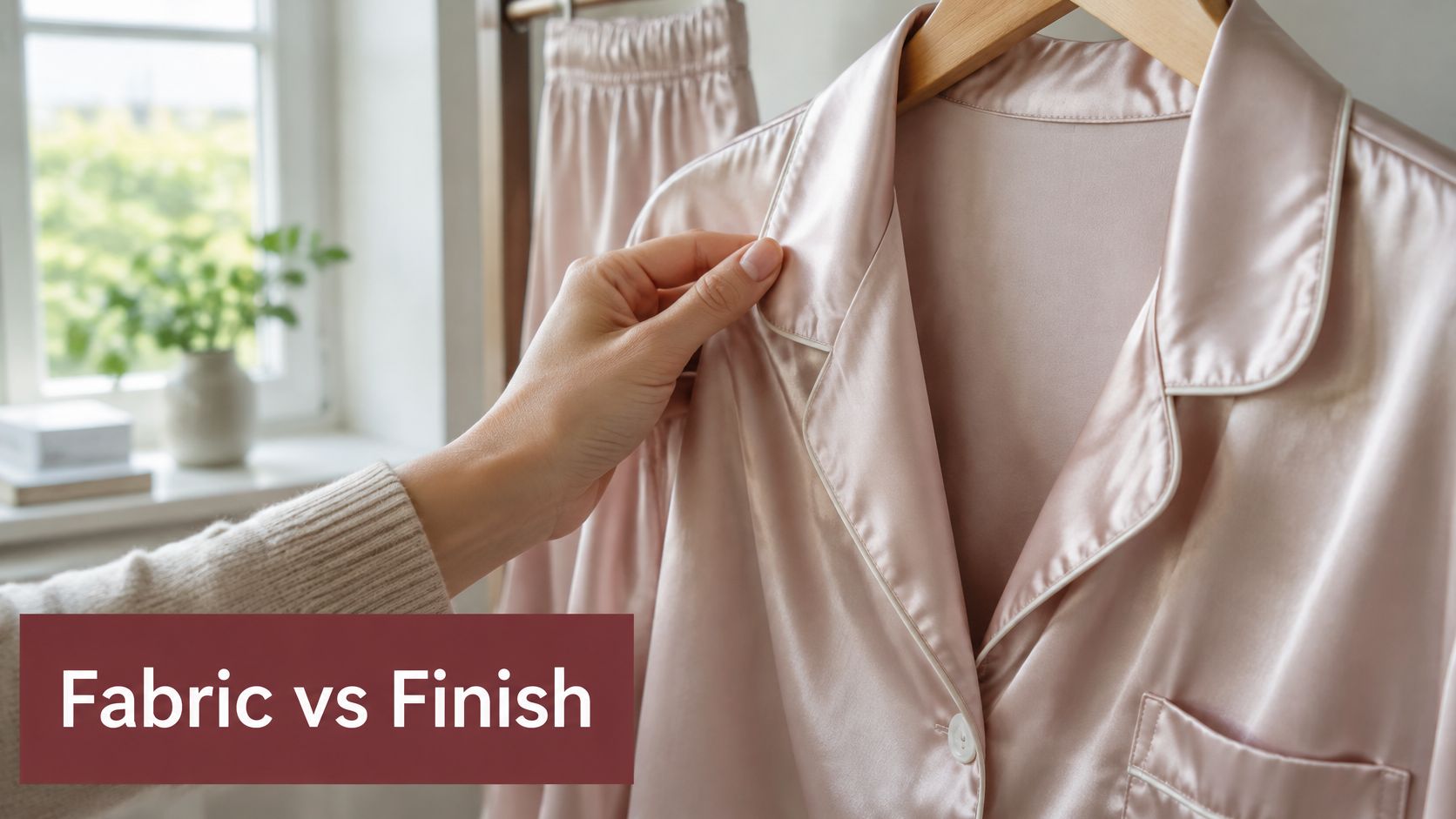
Read the description in the right order
Start with fibre composition, then look at construction and finish. Silk is a natural protein fibre; polyester is synthetic. Neither description alone tells you whether a particular pair has the cut, weight or care requirements you want.
Next, inspect how the garment hangs. Does the top fall softly or hold a more structured shape? Are the trousers fluid or relatively firm? Treat drape as something to assess from the actual garment rather than something promised by its name.
Use this shortlist when comparing descriptions:
- Composition: Look for the complete fibre declaration, not just satin in the product title.
- Construction: Check the fastening, waistband, seams and any lining.
- Finish: Decide whether you prefer pronounced gloss or a quieter sheen.
- Evidence: Ask for clarification when the written description and photographs leave an important detail unresolved.
Keep appearance and performance separate
A delicate-looking fabric isn't automatically fragile, and a substantial-looking one isn't automatically durable. Don't infer moisture handling, laundering tolerance or longevity from a close-up image.
If you're choosing between pyjamas and a robe, the women's silk robe guide provides another garment format to consider. Apply the same composition-first approach to either.
My preference is an accurately described garment over an impressively named one. If a retailer can't explain what the fabric contains, keep looking.
Choose a Fabric for Australian Comfort
A humid bedroom and a cool, air-conditioned hotel room call for different decisions. Dress for the conditions you'll experience, not the season printed on the wedding invitation.
Australian sleep guidance recommends natural fibres to help reduce overheating and identifies approximately 17–19°C as an ideal sleeping temperature, according to Australian Women's Weekly's sleep-hygiene guidance. That's a useful reference point, not proof that any particular silky set will keep its wearer comfortable.
Silky Pyjamas Compared for Australian Conditions
| Fabric or finish | Climate consideration | Best considered for | Check before buying |
|---|---|---|---|
| Silk | Consider fabric weight, room conditions and personal heat sensitivity | A natural-fibre option for sleep or lounging | Is the weight suitable, and does the care routine work for you? |
| Polyester satin | Don't assume a cool initial feel means lasting overnight comfort | Getting-ready outfits and lounging where the wearer likes the feel | How does it feel against your skin, and what laundering is permitted? |
| Blended satin | Judge the disclosed blend rather than the satin name | Shoppers balancing appearance with practical preferences | What fibres are included, and what trade-offs are involved? |
| Unspecified silky fabric | Climate suitability is unclear without composition | Only after the seller supplies further information | Can the retailer confirm the complete fibre content? |
For a warm sleeper, I'd begin with a lightweight natural-fibre option and a relaxed adult cut. That's a shortlist, not a promise: the wearer still needs to judge how the garment feels in their own room.
For someone who mainly wants elegant getting-ready clothes, polyester satin may suit the occasion without needing to become their nightly sleepwear. There's no reason to treat that as a compromise if its intended use is clear.
Consider the whole outfit
In a cooler room, try a breathable camisole beneath an open pyjama shirt or add a removable outer layer. Avoid choosing a heavier set solely because the ceremony falls in winter if the preparation room is likely to be warm.
Ask about cling, static, moisture handling and layering room rather than accepting an all-weather claim. If you can handle a sample, assess it against your skin, not just between your fingers.
A beautiful lounging set doesn't have to be your best sleeping set. Choose each for the job you need it to do.
Find the Right Fit and Size
The wrong cut can undo a thoughtful fabric choice. A loose-looking top may pull at the bust when seated, while trousers that photograph beautifully standing up may feel restrictive at the waistband during breakfast.
Fit the garment to the wearer's movements, not just their standing measurements. A relaxed pyjama set, closer-cut separates and a slip-style silhouette offer different amounts of ease and layering flexibility.
Use a repeatable fit check
Begin with the size chart for the exact style. Don't assume someone's usual dress size will translate neatly into sleepwear.
- Compare measurements: Check bust, waist and hips against the chart, and establish whether it lists body or garment measurements.
- Assess the top: Look for comfortable shoulder movement, sufficient bust room and a neckline the wearer likes.
- Check the waistband: Ask whether it's elasticated, adjustable or fixed, then consider seated comfort.
- Review length: Match cuffs and hems to the wearer's height and intended slippers or other footwear.
- Test movement: Sit, reach forward, bend and raise your arms before approving the fit.
If you're ordering for a group, collect each person's details privately. One attendant may prefer shorts; another may want longer coverage. Coordinating the colour doesn't require everyone to accept the same silhouette.
Think about changing and layering
For the bride, I'd favour an opening that allows dressing without pulling a close neckline over finished hair and makeup. Check that the actual fastening works for her rather than assuming every bridal set is designed that way.
An adult may prioritise fluid drape and room for a camisole. A flower girl needs controlled cuffs and hems, with suitability assessed separately from the adult outfit.
Fit checkpoint: Approve the size and cut before authorising personalisation. A beautifully stitched name won't make an uncomfortable garment more wearable.
Ask the retailer to clarify unresolved measurements before production or dispatch. Guessing is particularly unhelpful when the gift is intended for a specific morning and there's little opportunity to organise an alternative.
Care for Silk and Personalised Pyjamas
Start with the label, not a universal washing rule. A garment described as silky may need a different routine from another pair that looks almost identical.
Australian suppliers must provide applicable clothing and textile care information in English, international care symbols, or both, under the care-labelling mandatory standard. Read that information before buying if easy care is a priority, not after the first wash.
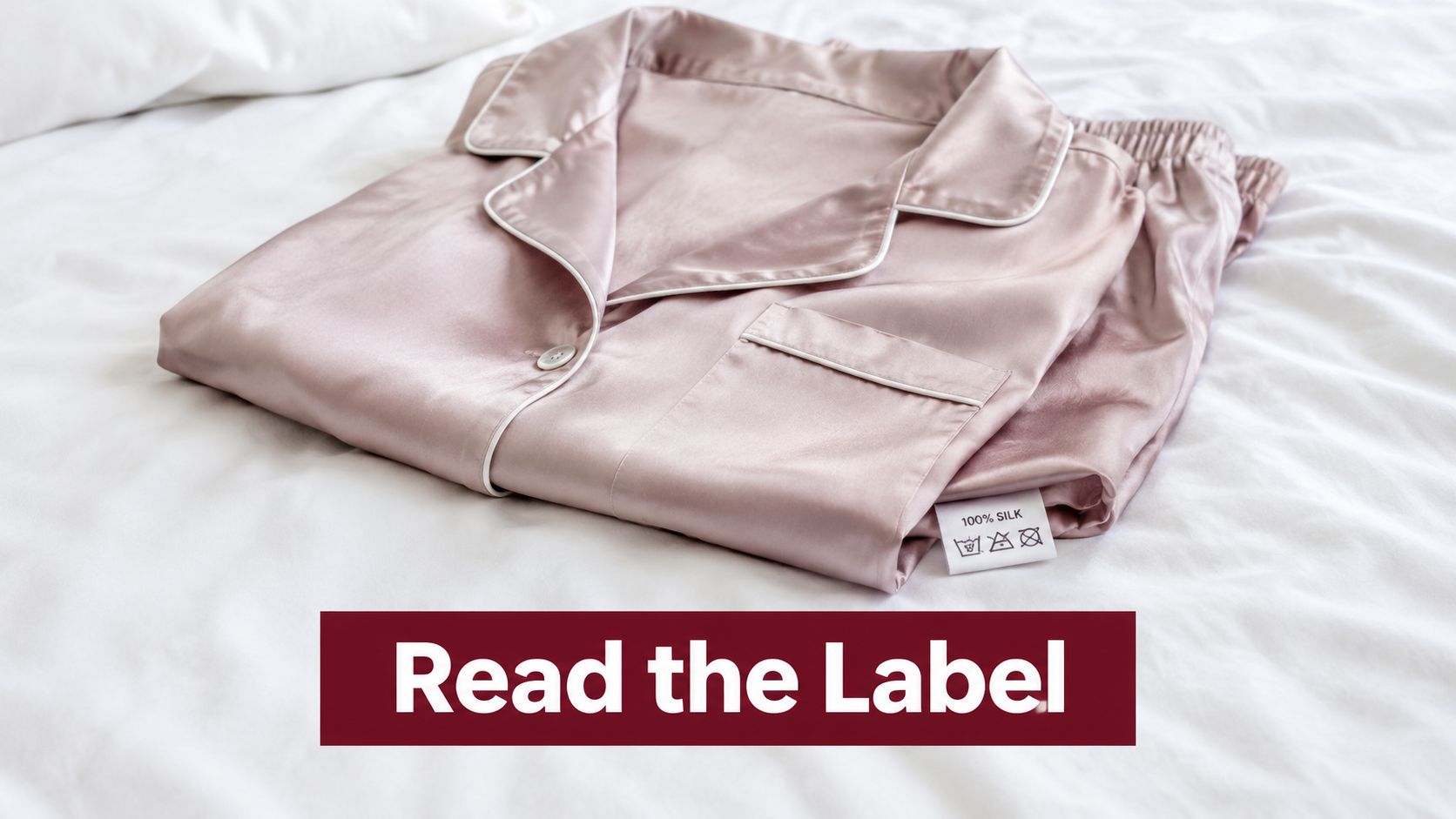
Establish the complete care routine
Check the washing method and permitted temperature, then read the drying and ironing instructions. Don't stop at machine washable if the remaining steps are inconvenient for the person receiving the gift.
- Washing: Confirm whether machine washing, handwashing or professional cleaning is specified.
- Drying: Follow the stated method rather than assuming tumble drying is acceptable.
- Pressing: Check heat restrictions and whether decoration needs separate treatment.
- Colour: Ask about colour transfer, especially where contrasting garments will be washed or stored together.
- Personalisation: Establish whether the lettering changes the base garment's care instructions.
The pyjama and accessory care instructions are a useful place to check for garment-specific guidance. If instructions for the fabric and added decoration appear inconsistent, ask the seller to resolve that before cleaning.
“Silky” is a description, not a care instruction.
Make the first clean a careful check
For washable garments, treat the first clean as a cautious trial using the permitted method. Avoid improvised stain treatments, unapproved heat or a more vigorous cycle because the garment looks sturdy.
Once dry, inspect the seams, elastic, fastening and personalised details. Check whether lettering has lifted, stitching feels rough or the surface looks different, and raise any concern with the seller before repeating the routine.
When choosing placement, keep embroidery and other decoration away from areas where the wearer expects pressure or rubbing. A monogram should feel comfortable against the body, not merely look balanced in a product photograph.
Store clean, fully dry pieces without pulling on trims or cramming them into a tight space. Choose care requirements the recipient will realistically follow. Specialist attention isn't a mark of a better gift if it makes the garment inconvenient to wear.
Style Pyjamas Across the Bridal Party
Coordination works best when people look connected rather than interchangeable. Choose a shared colour direction, then allow the garment shape and coverage to suit each person.
For example, the bride might choose pale pyjamas with a robe, attendants could wear a related deeper shade, and a mother might prefer a longer outfit within the same palette. These are styling options, not rules about who must wear what.
Coordinate without crowding the group
Keep one detail dominant. If the fabric is glossy and the colour is strong, restrained initials may be enough. If the outfits are understated, a discreet name or role can provide the personal detail.
For a wedding with dark formalwear, Princess Apulia®’s ideas for styling black dresses for bridesmaids can help you consider the wider palette. The morning outfits can complement the ceremony clothes without copying them.
Get Spliced offers bridal and bridesmaid pyjamas, robes and matching crossover slippers with custom monogramming and pre-printed titles across sizes for bridal parties and family members. Treat those as options to assess against each person's preferences, rather than a reason to order an identical combination for everyone.
Give each person an appropriate option
A cohesive group might include:
- The bride: Pyjamas and a robe chosen together so neither feels awkwardly layered.
- Attendants: A shared colour with individually confirmed sizing and preferred coverage.
- Mothers and family: Coordinating clothing without requiring a bridal-party title.
- Flower girls: An age-appropriate outfit selected with their parent or carer.
The bridal-party getting-ready outfit guide offers further outfit-planning ideas. Use it to organise combinations, then confirm the details individually.
Don't assume a conventional wedding format or assign titles people haven't chosen. Names and initials are useful when roles differ, and they can make the garment feel less tied to a single occasion.
For a hens celebration, the same approach applies. A well-chosen set and a small personal keepsake can feel considered without requiring every accessory to match.
Personalise Gifts Without Losing Practicality
A maid of honour proposal gift and a bride's getting-ready hamper have different purposes. The proposal gift should express the relationship; the hamper should also make the wedding morning easier.
Choose the recipient's likely use before choosing the wording. Initials are a restrained option for someone who prefers everyday clothing, while a pre-printed role may suit someone who enjoys keepsakes associated with the celebration.
Make the gift personal, not complicated
A presentation box can give a simple gift a sense of occasion. A bundle or hamper is useful when its contents work together, but don't add items merely to fill space.
For a maid of honour, consider pyjamas with a personal card and a small keepsake. For the bride, a robe, slippers and a practical pouch may form a useful getting-ready combination. For a mixed-age party, keep the packaging coordinated while tailoring the clothing to each recipient.
Australia-wide delivery is available through the boutique discussed above. Confirm delivery timing for the specific order, especially when customisation is involved; don't treat general shipping information as a guaranteed arrival date.
Approve the order deliberately
Before payment, check:
- Wording: Name spelling, initials, title and the exact presentation of the text.
- Garment: Size, colour, fibre and agreed personalisation placement.
- Care: Whether the recipient can manage the required cleaning routine.
- Timing: Production arrangements, dispatch expectations and the date the gift is needed.
- Presentation: Packaging, gift messages and whether items arrive together.
- Records: Save the approved details, order confirmation and proof of purchase.
Ask about change-of-mind policies before committing, particularly for personalised items. A brief written confirmation of the details is more useful than relying on what everyone remembers from a conversation.
The strongest gift is personal enough to feel meaningful and practical enough to be used.
Check Quality Before You Buy
Polish isn't proof of quality. Before paying, make sure the product description answers the important questions and that the seller has confirmed any detail you're relying on.
Examine photographs for seam finish, fastening alignment and the placement of decoration. Ask for clarification where necessary, then inspect the delivered garment against the order before the wedding morning.
Know which return rights apply
Changing your mind doesn't automatically entitle you to a refund. Faulty clothing is different: for a major problem, consumers can choose a refund or replacement; for a minor problem, the business may provide a repair, as explained in the ACCC's clothing-retailer guidance.
Keep reasonable proof of purchase. Original packaging isn't automatically required for a problem return, and confirmed faults require reimbursement of reasonable return costs already paid, according to the ACCC's repair, replacement and refund guidance.
Treat children's safety separately
Adult occasionwear and children's nightwear aren't interchangeable regulatory categories. Verify whether a child-sized garment falls within the mandatory standard, including any applicable warnings, rather than relying on its resemblance to the adult set.
The ACCC's children's nightwear safety review explains that fabric and garment design affect fire risk. No sleepwear is fireproof, so keep silky garments away from candles, heaters and other ignition sources.
Make the final decision around these priorities:
- Fibre: Buy what's disclosed, not what the sheen suggests.
- Function: Choose for actual wear and manageable upkeep.
- Fit: Give each person a garment they can move in comfortably.
Before ordering, collect each recipient's measurements, preferred coverage and approved personalisation. Ask the retailer to confirm composition, care and delivery arrangements in writing, then choose the set that suits those answers. That's how you turn a lovely wedding-morning outfit into a gift worth keeping.