
A warm Australian wedding morning has its own rhythm. The bride's hair is being pinned, her sisters are looking for coffee, Mum is checking the schedule, and the photographer is capturing the quiet moments before everyone changes into formalwear. Matching robes make that busy room feel organised, but they also need to do more than look lovely in a photograph. The right robe should feel comfortable, suit the climate, fit each person properly and remain useful after the wedding.
That's the difference between choosing a robe as a prop and choosing one as a garment. Fabric, length, wrap shape, care instructions and personalisation all affect how often it will be worn. The wider Australian sleepwear market, which includes robes, nightgowns, pyjamas and loungewear, was estimated at approximately AUD 74.24 million in 2025 and is projected to reach nearly AUD 161.77 million by 2035, with an 8.1% compound annual growth rate from 2026 to 2035 (Australian sleepwear market data). Robes sit within a broader category shaped by both everyday comfort and occasion-led dressing.
This guide will help you make the practical decisions first, then add the personal touches. You'll learn how to match fabric to an Australian climate, choose a length that works for different bodies, measure when buying for someone else, read care labels and personalise a robe without making it impossible to wear again.
Why a Robe Belongs in Every Modern Wardrobe
On a wedding morning, one person may be having her hair styled while another is carrying coffee, checking messages or helping a flower girl. A women's robe gives each wearer an easy layer for those in-between moments. It can also serve as the cover-up for a hotel breakfast, a comfortable option after a shower, or a light garment for slow evenings at home.
In a bridal group, matching robes create a shared visual thread without requiring identical bodies or personalities. The practical test is simple: each wearer should be able to sit, bend, lift an arm for makeup and walk around a warm room without repeatedly securing the front. A robe that passes those tests has value beyond the photograph.
Choose the robe for the hours after the photograph as carefully as you choose it for the photograph itself.
Australian fashion history supports this broader view of occasion clothing. The National Gallery of Victoria fashion history records more than 200 years of women's fashion and dressing traditions in Australia, including clothing associated with weddings, theatre, balls and afternoon teas. Robes bring that occasion-minded approach into a private preparation space, where presentation and comfort need to work together.
A robe earns repeat wear when its details suit the owner's routine. A smooth satin style may feel polished for a warm wedding morning and a hotel stay. A cotton blend or jersey option may become the layer someone chooses for an ordinary evening. Climate matters too: a Queensland morning calls for different coverage from a winter night in Tasmania.
Use four questions to judge the purchase:
- Where will it be worn? Consider weddings, travel, mornings at home and relaxed evenings.
- How should it move? A relaxed wrap allows room to sit and bend, while a closer shape gives a neater outline.
- How will it be cleaned? Lace and embellishments may require more care than washable jersey.
- What happens afterwards? Initials or a small monogram can support repeat wear. A role title may connect the garment too closely to one event.
That way of thinking treats robes for women as a considered wardrobe category with a life beyond a single event. Material, shape, fit and personal details determine whether the garment stays useful long after the wedding morning.
Choosing the Right Fabric for Australian Conditions
Fabric controls more than appearance. It affects how the robe feels against the skin, whether it traps heat, how much it reveals, how it hangs in photographs and whether it can handle a busy washing routine. Australian conditions make that choice particularly important, because a lightweight robe that feels elegant in a humid morning may be too cool for a southern winter evening.
Satin for polish and warm mornings
Satin has a smooth hand-feel and a fluid drape. It catches light, which gives photographs a gentle sheen, and it tends to slide easily over sleepwear or a camisole. Lightweight satin is a natural fit for warm Queensland mornings, especially when the room already feels humid.
Its drawbacks are practical. Satin can show water marks, makeup and food spills more clearly than a textured fabric. It may also need gentler washing and careful ironing to prevent shine or distortion. Look for a construction that isn't overly sheer if the wearer will be moving around in front of family, suppliers and a photographer.
Lace for texture and ceremony
Lace brings pattern, texture and a more ceremonial feeling. A long lace robe worn over a slip can create a graceful, almost film-costume effect while still allowing the wearer to remove the outer layer before getting dressed. Lightweight lace can suit warm climates, but the openness of the weave means the slip underneath does much of the work for coverage.
Fine lace and trims deserve gentle handling. Snags can occur around jewellery, hair tools or rough surfaces, so lace is most useful when the wearer wants a special layer and is prepared to treat it carefully.
Cotton blends for practical comfort
Cotton blends usually feel softer and more familiar than satin, with a less slippery surface. Depending on the weave, they can offer more opacity and a little extra warmth, making them useful for cooler southern evenings or homes where the robe will be worn after a shower and throughout breakfast.
They may not have the same reflective finish as satin, but that can be an advantage for repeat wear. A cotton-like robe can look less occasion-specific and may transition naturally into lounging, travel or a slow weekend morning.
Jersey for movement and travel
Jersey is flexible, comfortable and forgiving when the wearer is sitting, packing or moving between rooms. It suits travel and everyday lounging because it generally feels less precious than satin or lace. The trade-off is a more casual appearance, with less structured drape and a softer visual impact in formal photographs.
If you're also planning outdoor photography or a summer event, clothing is only one part of comfort. A resource on complete sun damage prevention can help you think beyond the robe itself, particularly when hair and makeup preparations spill onto balconies, gardens or outdoor terraces. For a linen-inspired option, see this guide to linen dressing gowns.
| Fabric | Warmth | Breathability | Care effort | Best for |
|---|---|---|---|---|
| Satin | Low to moderate | Moderate | Moderate to high | Warm wedding mornings, polished photographs and gifting |
| Lace | Low | High, depending on the lining | High | Bridal styling, layering over a slip and ceremonial moments |
| Cotton blend | Moderate | Moderate to high | Low to moderate | Cooler climates, repeat lounging and practical gifting |
| Jersey | Moderate | Moderate | Low to moderate | Travel, relaxed mornings and everyday wear |
The simplest decision is this: choose satin when visual polish leads, lace when texture and ceremony matter, cotton blends when comfort needs to last, and jersey when movement and repeat wear are the priority.
Lengths and Silhouettes That Suit Every Body and Moment
A robe changes its character long before colour or embroidery does. Length affects how it moves, where the eye lands in a photograph, and how practical it feels while someone is having hair and makeup done.
Short robes for energy and ease
A short robe that sits above the knee has the crisp feel of a shirt-dress. It shows more leg, feels easy to walk in, and suits warm mornings, hens celebrations, or a gift for someone who prefers a lighter layer. In photos, it keeps the line clean and draws attention to the face, hair, and shoulders.
Short styles can suit many body shapes, but the wrap and hem still need checking. A hem that stays comfortable when the wearer sits is more useful than one chosen only for standing photos. A slightly relaxed cut can also stop the robe from pulling across the bust.
Mid-length wraps for versatility
A mid-length robe that finishes around mid-calf offers a useful middle ground. It gives more coverage than a short style without the heavier feel of an ankle-length garment. That makes it practical for getting ready, hotel mornings, and regular lounging.
The shape often works well for mixed bridal parties because it does not depend on everyone having the same height. A wrap waistband can sit at each wearer's natural waist, and the longer line helps the group look coordinated even when sleeve lengths vary. It is a bit like choosing the same frame for different photos, the overall effect stays connected while each person still has room to fit well.
Long robes for ceremony
A long robe that reaches toward the ankle feels more dramatic. The fabric creates a sweeping line as the wearer walks, which can look beautiful in a full-length photograph. A long lace robe worn over a slip has become a bridal favourite because it combines coverage with transparency and texture. The slip gives the outfit structure, while the lace adds movement.
Long robes can feel especially elegant on a bride or mother of the bride, but they need practical checking. Make sure the hem will not catch under slippers, and consider whether the wearer will be carrying a coffee, stepping outside, or moving around a small room.
For a mixed-size bridal party, choose one colour family and let each person select the length that lets her move comfortably. Coordination does not require identical proportions.
That approach fits a long tradition of dressing for specific social settings in Australia. Earlier formal and ceremonial garments often balanced appearance with function, and a robe continues that idea in a quieter, more wearable form. It prepares the wearer for a public occasion while still working well in private.
Sizing and Fit When You Are Buying for Someone Else
Buying robes for a bridal party becomes difficult when the people you're shopping for aren't standing together in a fitting room. Australian online fashion returns are strongly associated with fit problems, with “wrong size or fit” cited by 43% of consumers who return online purchases (Grant Thornton Power Retail Report). A robe's forgiving appearance can be misleading. The wrap still needs enough overlap, the sleeves need to finish comfortably and the waistband needs to sit in the right place.
Use measurements, not labels
Australian size numbers aren't interchangeable between brands. One published chart lists chest measurements from 81–85 cm for size 6 through 134–141 cm for size 24, while another lists 80 cm for size 6 and 105 cm for size 16, demonstrating why a nominal size can't make the decision on its own (Australian women's sizing charts).
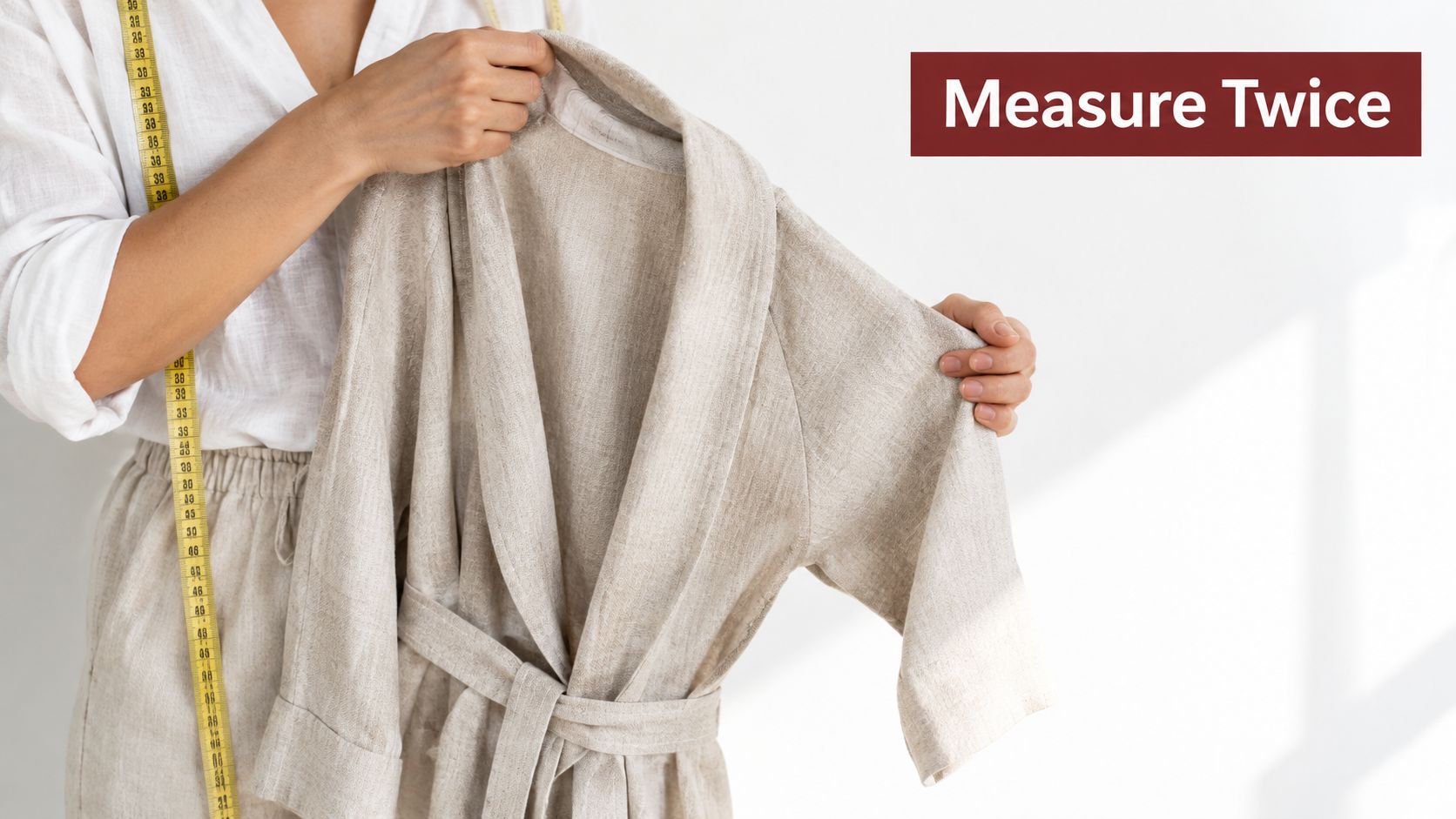
Ask each person for measurements in centimetres, or measure a robe she already wears well. You need:
- Fullest bust or chest, measured without pulling the tape tight.
- Natural waist, where the body bends comfortably.
- Fullest hip, especially for a long or close-fitting robe.
- Shoulder to wrist, if sleeve length matters or the wearer is particularly petite or tall.
Compare every measurement with the supplier's own chart. If the measurements sit across two categories, select the larger size. A little extra wrap overlap is usually more comfortable and photographs more securely than a front that pulls open when someone sits.
Make the fit work for the person
Size up when the wearer wants to layer clothing underneath, needs additional comfort after pregnancy or prefers a relaxed shape. Mothers and flower girls often benefit from an easier silhouette rather than a fitted cut. For children, also check sleeve and hem length carefully, because excess fabric can become awkward during hair and makeup.
You can keep the visual effect coordinated without forcing identical sizing. Use the same colour, fabric family or monogram placement while allowing different lengths and sizes. For further guidance on fuller proportions, use this resource on plus-size bridal robes.
Personalised garments need an earlier decision point. Check the exchange and return conditions before ordering, and allow time to resolve a sizing issue before the wedding week. A name or title may limit exchange options, so confirm measurements and wording before personalisation begins.
Care Labels Decoded for Delicate Fabrics
A care label is part of the garment's design, not a scrap of information to ignore until something goes wrong. Australian clothing and textile suppliers must follow the national mandatory care-labelling standard, which requires suitable care information to be communicated clearly (Australian mandatory care-labelling standard). That matters for satin, lace and embellished robes because heat, agitation and unsuitable solvents can affect the fabric, trim or monogram.
Read the five symbols
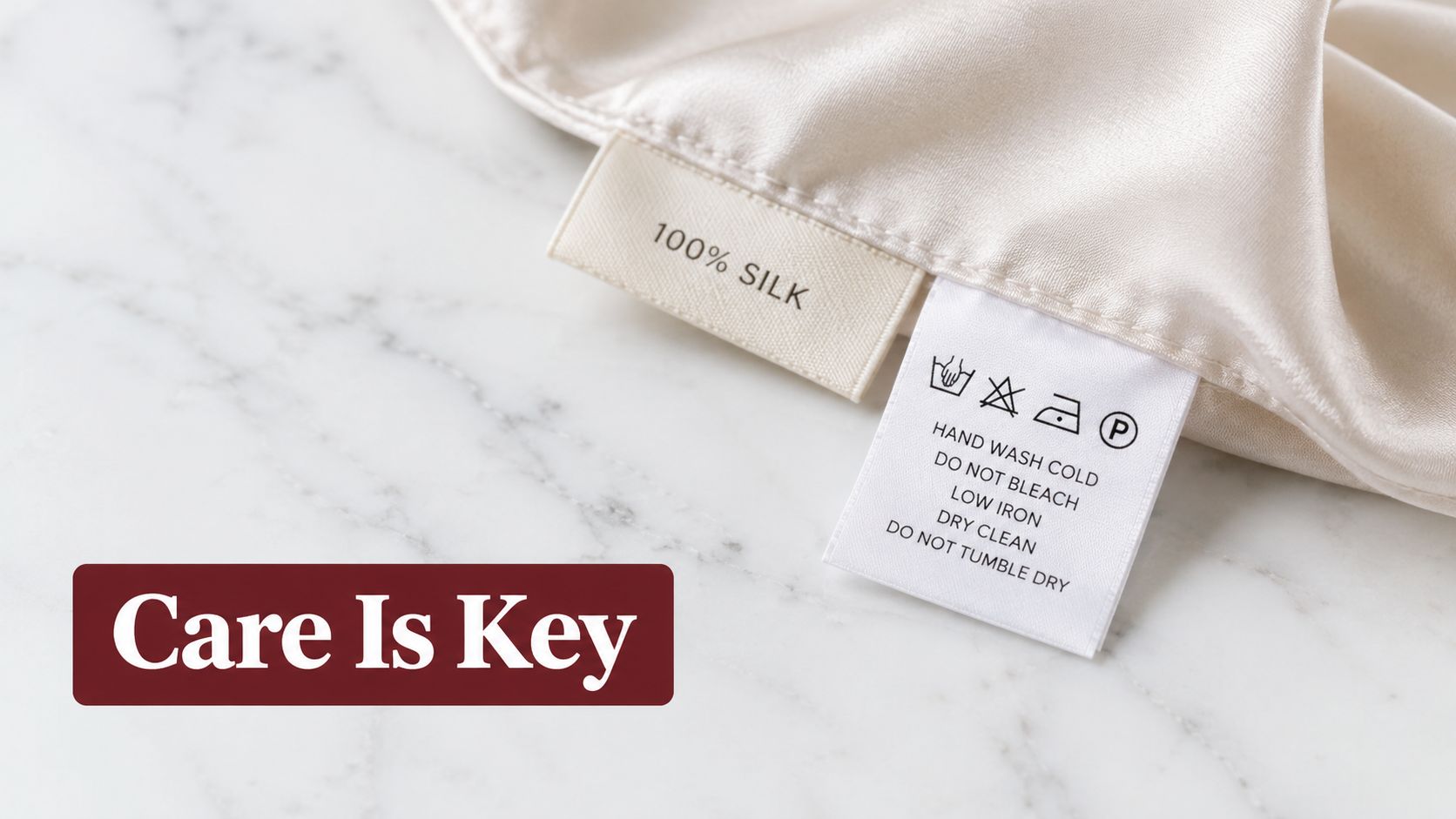
The Australian care-labelling system uses five main international symbols:
- Washtub: Shows whether the garment can be machine washed, hand washed or washed at a specified temperature. A hand inside the tub indicates hand washing at 40°C or below, while dots indicate cold, warm or hot settings (clothing washing symbols explained).
- Triangle: Indicates whether bleaching is allowed. A crossed triangle means bleach should be avoided.
- Square: Covers drying. It may show whether tumble drying is suitable or whether the garment should be line dried or dried flat.
- Iron: Shows whether ironing is allowed and how much heat to use. Dots indicate temperature levels.
- Circle: Refers to professional cleaning, including dry-cleaning instructions.
For dyed satin, a cold gentle wash may help protect colour and surface finish, but the label takes priority. Fine lace may show a hand-wash symbol and should be kept away from jewellery, zips and rough towels. Embellishments and monograms may need low-temperature ironing, careful steaming or no direct heat at all.
A pre-wedding care check
Australian consumer guidance explains that care labels help prevent damage and extend the useful life of textile products (care labelling consumer guide). Before the wedding morning:
- Read first: Check washing, drying and ironing instructions as soon as the robe arrives.
- Look for dye guidance: Wash separately if the label warns that colours may run.
- Protect the finish: Keep makeup, hairspray and breakfast away from the robe where possible.
- Plan the wash: Don't leave a delicate robe crumpled in a bag after the event.
- Store thoughtfully: Ensure it's clean and completely dry before storing it as a keepsake.
Personalisation That Adds Meaning Without Limiting Use
Personalisation can give a robe emotional weight, but the wording determines whether it remains wearable. A title such as Bride, Bridesmaid, Maid of Honour, Mother of the Bride or Flower Girl tells the story of the wedding morning immediately. It also makes the garment feel more specific to that event.
Initials or a full monogram take a quieter approach. They can still mark the occasion while allowing the robe to become part of a person's regular wardrobe. A monogram on the chest or sleeve may feel appropriate at home, in a hotel or while travelling, whereas a large role title may feel less natural after the wedding.
Match the wording to the future
Think about the wearer's life after the event:
- Bride: “Bride” is expressive for the wedding morning. Initials may offer more longevity.
- Bridesmaid or maid of honour: A role title makes a thoughtful group gift, while a monogram gives the recipient more freedom later.
- Mother of the bride: A title can feel sentimental, but initials may suit repeat lounging or travel.
- Flower girl: A name or simple initial may be easier to keep using as the child grows.
A useful compromise is to keep the robe itself role-neutral and place the event-specific wording on a sash, removable title bar or monogrammed keepsake pouch. That preserves the memory without making the main garment feel like a costume.
The decision also deserves practical attention because personalised items may have different exchange timelines. Confirm spelling, capitalisation, thread colour, placement and sizing before submitting the order. For Australian shoppers, online fashion is a substantial part of the category, with women's fashion recording AUD 3.6 billion in online spending in 2025 and 49% of category spending occurring online (Australia Post women's fashion ecommerce report). Accurate descriptions and clear care information matter when the buyer can't feel the fabric or check the fit in person.
Get Spliced is one Australian option offering personalised robes, pre-printed bridal-party titles and related getting-ready accessories. Whether you choose that or another supplier, treat personalisation as a long-term design decision rather than a final flourish.
Styling a Getting-Ready Morning That Photographs Beautifully
The most natural getting-ready photographs come from a room that feels lived in, not staged like a product display. Start with the robe as the visual foundation, then add small details that support the morning's actual rhythm.
A bride might wear a neutral satin robe while her bridesmaids wear a soft floral print or a related colour family. The bride remains visually distinct, but the group still looks connected. Matching cuts aren't essential. One person may prefer a short wrap, another a mid-length style, and a third a long lace layer over a slip.
Build the morning around movement
Begin with robes over comfortable sleepwear while everyone has coffee and hair appointments. Keep slippers near the door, place proposal cards or small gifts where they'll be found naturally, and use a sash only if it doesn't interfere with makeup or hair. Champagne flutes can sit on a tray rather than being carried constantly, particularly when the room is crowded.
Monogram placement creates a subtle visual rhythm. Matching chest placement looks tidy in group portraits, while a sleeve monogram can appear when someone reaches for a brush or adjusts a veil. A long lace robe over a slip adds dimension without requiring a complicated outfit change.
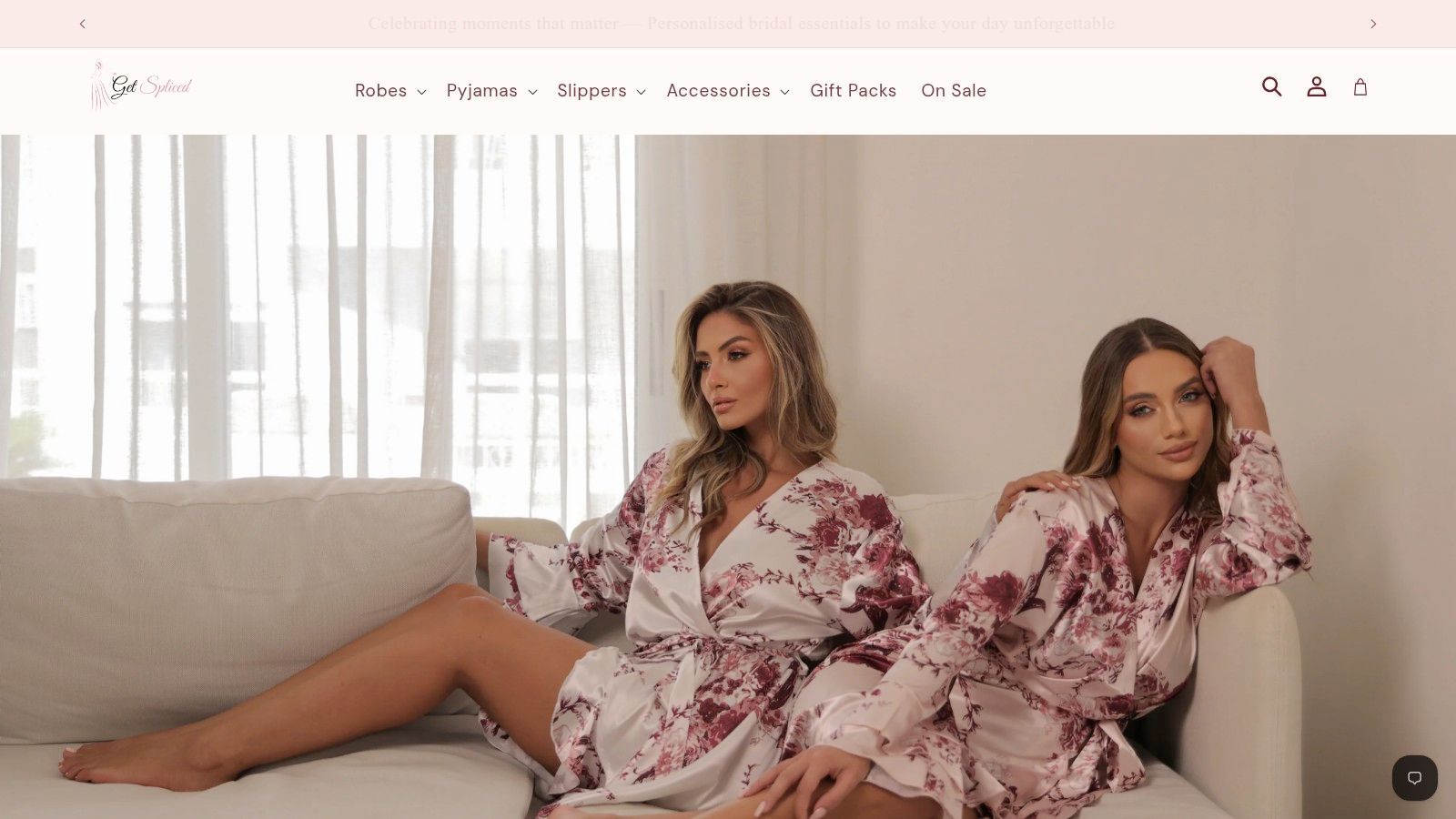
A coordinated hamper can make the practical side easier. Pair robes with slippers, a makeup bag, a clutch, a champagne flute or a proposal card so the pieces arrive as one considered gift rather than a collection of last-minute purchases. A wedding getting-ready outfits guide can also help you think through layers and accessories before the schedule becomes crowded.
For makeup planning, the same principle applies: choose a look that feels like the wearer and works with the outfit, rather than treating the robe as a costume. A specialist resource such as book your perfect look can be useful when considering how makeup, lighting and the final outfit should work together, even if your wedding takes place in Australia.
After the wedding, keep the styling logic alive. A floral robe can work for a hens weekend, an engagement shoot, an anniversary morning or a future gift. Slippers and a personalised pouch can move into regular travel, while a neutral robe may become part of a weekend routine. That's how a beautiful getting-ready scene becomes a useful wardrobe memory rather than a single photograph.
Your Robe Decision Checklist and Common Questions
Before ordering, check:
- Fabric: Does it suit the climate and desired level of coverage?
- Length: Will the wearer move comfortably and photograph well?
- Size: Have you used body measurements rather than a generic label?
- Care: Can you follow the washing and drying instructions?
- Personalisation: Will the wording still feel right after the wedding?
- Styling: Do the robes, slips, slippers and accessories work together?
- Future use: Can the garment become part of regular lounging, travel or gifting?
Robe or pyjama set as a gift? Choose a robe when layering and flexible sizing matter. Choose pyjamas when the recipient prefers a complete outfit with a more defined fit.
Does monogramming affect delivery? It can affect exchange options and planning, so confirm the supplier's terms before approving names, titles and spelling.
What should happen after the wedding? Follow the care label promptly, then store the robe clean and dry. Wear it for travel, slow mornings or future celebrations.
How do you coordinate different climates? Keep the colour family consistent while choosing lighter fabrics for warm locations and more substantial blends for cooler rooms.
A robe is a small garment, but it can hold a surprisingly large part of the story. Choose it for the morning, the body and the life that follows the photographs.
Ready to choose robes for your bridal party? Start by listing each wearer's measurements, preferred length and likely climate, then select the fabric and personalisation that will still feel useful after the wedding day.