
Ordering pyjamas for a bridal party can sound simple until everyone sends through a different size, and the labels don't line up across brands. If you're choosing plus size pyjama sets for yourself or a group, the dependable approach is to start with measurements, then choose a cut and fabric that feel good to wear. Matching matters for the photographs, but it shouldn't come at the cost of comfort.
Why Australian Sizing Calls for Measurements, Not Labels
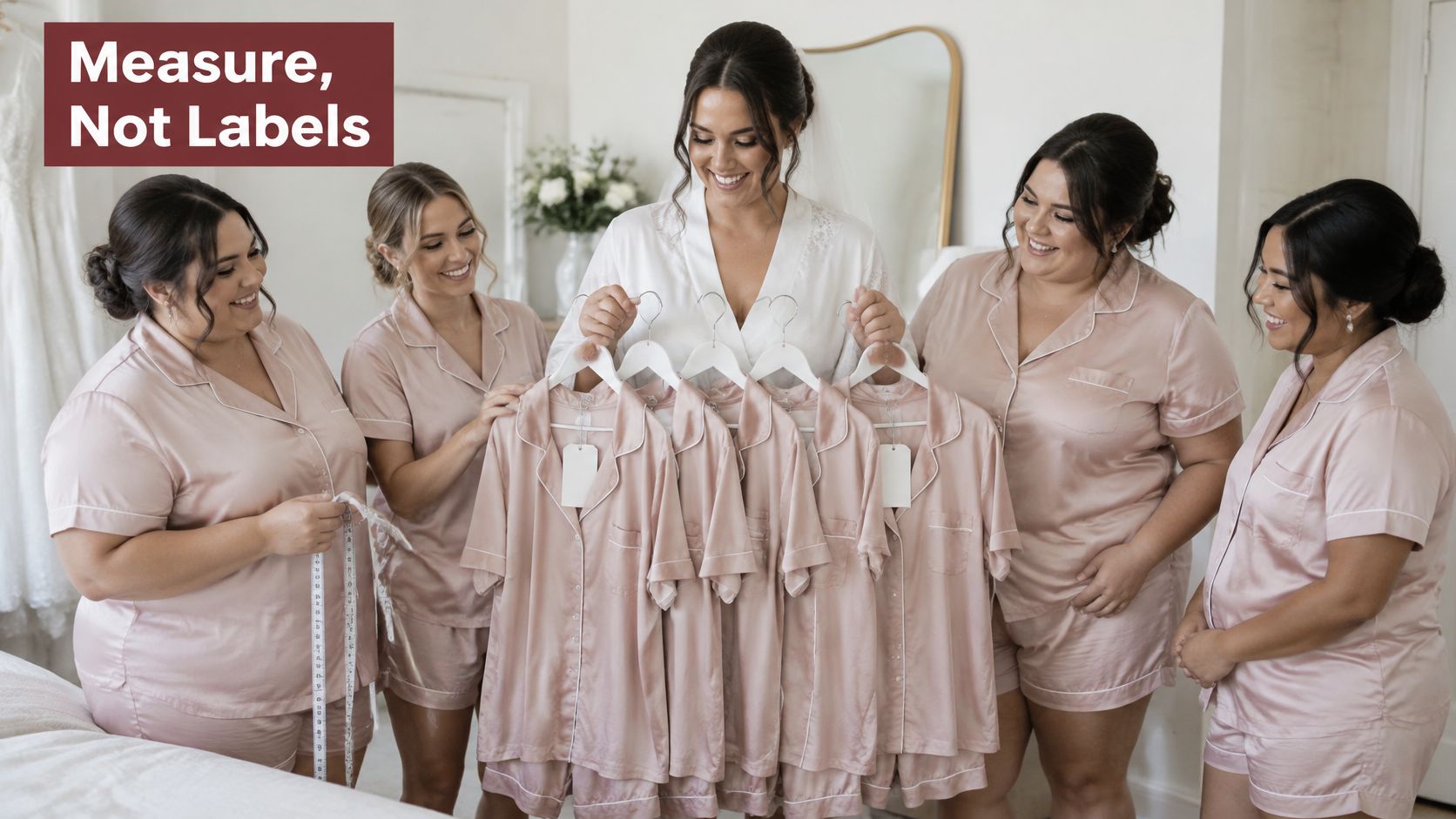
A bride ordering matching pyjama sets for five bridesmaids may need to accommodate sizes from AU 14 to AU 26. One label cannot describe that range, and choosing the same nominal size across different styles will not solve the problem. Start with each person's measurements, not a guess based on what they usually buy.
The group needs room for a broader range of sizes. An analysis of more than 32,000 Australian women aged 18 and over found that 36.9% were plus-size, using size 18 and above as the benchmark. In the same analysis, 52.1% wore size 16 or larger, while 9.1% fell within sizes 4–8. The average Australian woman wore size 16, placing her at the threshold of, or close to, commonly used plus-size definitions, according to Mys Tyler's Australian sizing analysis. Plan for sizes beyond AU 16 rather than assuming a narrow range will suit every bridesmaid.
Why a size label can mislead
Australian adult clothing has no mandatory national sizing standard, so brands set their own scales. The same label can therefore correspond to different bust, waist and hip measurements from one brand to another. Even within a brand, a loose button-up top and tapered pyjama pants may be graded differently.
A coordinated set can fit unevenly. The top may sit comfortably across the shoulders but pull at the bust, while the trousers fit at the waist and bind at the hips. Labels alone do not show whether a waistband has enough room, the rise suits the wearer, or the fabric gives with movement.
Working rule: Treat the size label as a starting point. Compare the garment measurements and choose according to the largest relevant measurement, rather than sizing up automatically.
Use this approach for one set or an entire bridal party. Gather everyone's measurements and check the chart for each specific garment. Keep the matching look as a starting point, then choose matching sets or separate pieces so each person can wear a comfortable fit.
How to Measure Yourself and Read a Size Chart
Measure your body first, then compare those figures with the specific pyjama set's chart. The Queensland Health uniform sizing guide gives an Australian reference for bust and waist measurements in centimetres through size 32.
Body measurements by size, in centimetres
| Size | Bust (cm) | Waist (cm) |
|---|---|---|
| 16 | 105 | 87 |
| 20 | 115 | 97 |
| 24 | 125 | 107 |
| 28 | 135 | 117 |
| 32 | 145 | 127 |
These figures are a reference, not a substitute for measuring yourself. Use a soft tape over light clothing or underwear, and keep it level around your body.
- Measure your bust. Wrap the tape around the fullest part, beneath your arms and across your shoulder blades. Keep one finger between the tape and your body.
- Measure your waist. Find your natural narrowest point and measure around it, leaving room for one finger. A waistband should sit securely without squeezing.
- Measure your hips. Place the tape around the fullest part, approximately 22 cm below your waist. Check that it stays level and passes over your fullest point.
- Measure your inside leg for full-length trousers. Start at the crotch and measure down to your preferred hem length. Wear the shoes or slippers you expect to use with the set.
- Check rise and torso length if the chart includes them. Rise affects where the waistband sits and how trousers feel when you sit or bend. Torso length helps you judge where a button-up top will fall and whether it will stay comfortably tucked.
- Read the chart for the specific garment. Check whether its figures describe body measurements or the finished garment, then follow the brand's fit guidance. Choose a size that accommodates your largest relevant measurement. Finished garments need room beyond your body measurements, and the amount depends on the cut and fabric.
Waist alone is a poor guide to a set's fit. A top can pull across the bust even when the trousers fit, while trousers can feel restrictive through the hips or thighs despite a comfortable waistband. Compare the top and bottoms separately wherever the brand allows. When a set is sold only in one size, use the chart to identify the measurement most likely to control fit, then check that the other areas have enough ease for sitting and moving.
Pyjama Set Styles That Suit Different Bodies
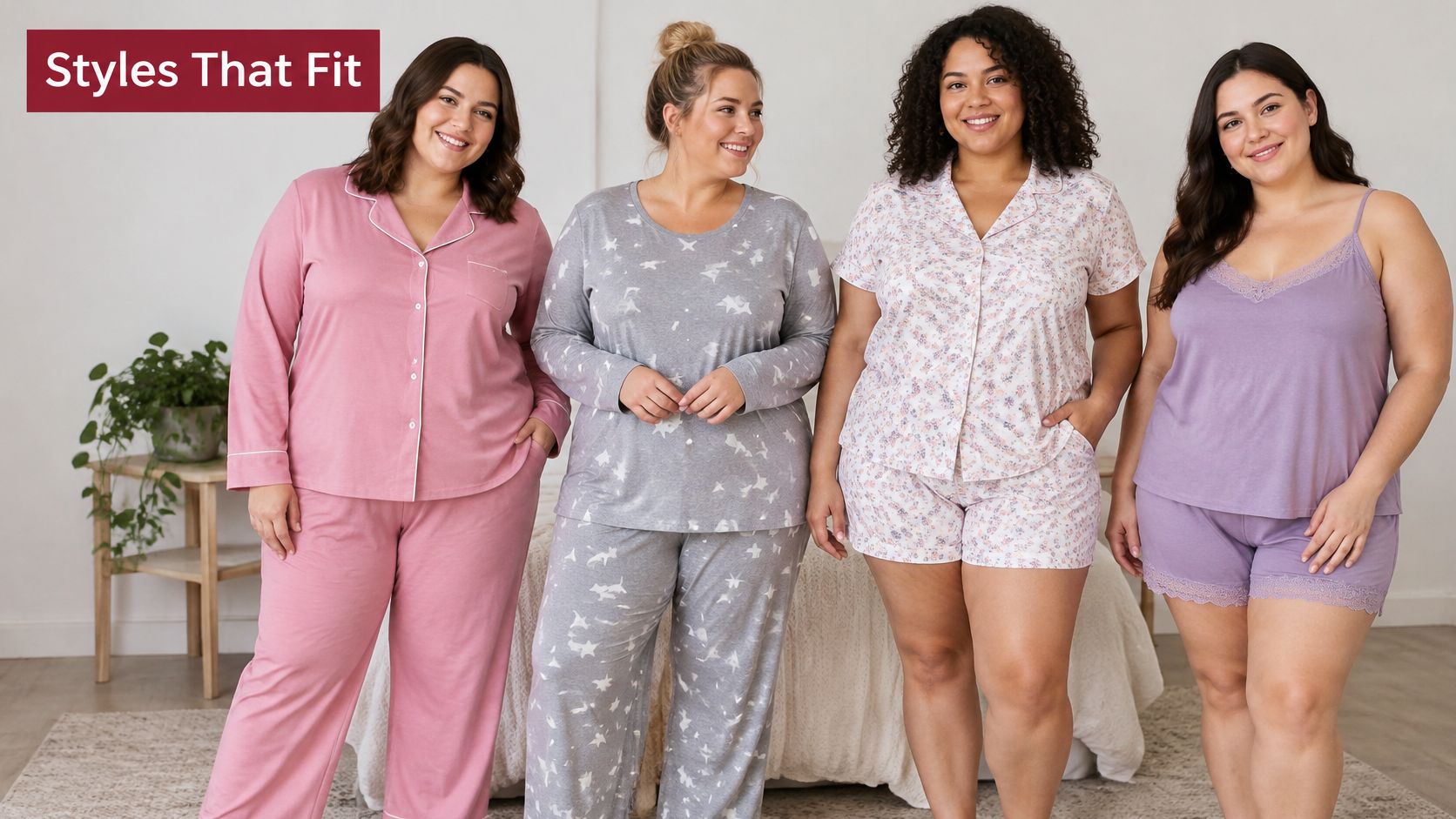
A matching set is a lovely starting point, not a rule. Bodies aren't proportioned uniformly: a graded set might fit the bust but pull at the hips, or fit the waist while restricting the thighs. If that happens, choose a roomier top with longer shorts or trousers that feel comfortable, even if the two pieces are different sizes.
| Style | Suits | Check before buying |
|---|---|---|
| Button-up top with full-length trousers | Fuller bust and hips, relaxed sleepers | Rise, thigh width and whether the top gaps at the bust |
| Long-sleeve top with trousers | Cooler climates and warmth overnight | Sleeve circumference and waistband stretch |
| Shorts set | Warm weather and humid nights | Leg opening and whether the shorts ride up |
| Camisole with shorts or pants | Shoulder comfort and lighter sleepers | Strap width and bust support |
| Separates bought by size | Mixed body proportions | Matching print and fabric weight between pieces |
A button-up top with full-length trousers gives you coverage and often a relaxed shape, but check the bust area while standing and sitting. Buttons that strain or gape are a sign the cut isn't working, even if the size label looks right. For cooler nights, long sleeves add warmth, but sleeves need enough room to move without twisting or pulling.
For warmer weather, shorts can feel lighter than full-length trousers. Look closely at the leg opening and length: a narrow hem can rub, while very short shorts may ride up as you sleep. A camisole can ease pressure around the shoulders, though thin straps don't suit everyone and may offer little bust support. Check how the neckline and straps sit on your body rather than relying on the product photo.
Details that make the difference
Before buying, inspect the waistband width and stretch, the trousers' rise, and the amount of room through the thighs. For tops, look at sleeve circumference, button placement and whether the bust has been considered in the cut. A waistband that looks soft in a photograph can still roll or dig in if its elastic is narrow or too firm.
Say a bridesmaid measures 110 cm at the bust and 120 cm at the hips. If the top fits her bust in one size but the trousers pull across her hips in that same size, there's no reason to force the set to match. She can choose the top by the bust measurement and the bottoms by the hip and thigh fit, while keeping the colour or print coordinated with the group.
Fabrics for Comfort, Climate and Occasion
Satin can look polished in getting-ready photographs, yet feel slippery and warm during a humid Queensland night. It usually has little stretch and may be less breathable, so reserve it for the morning look if overnight comfort matters. For a bridal party, coordinated fabric does not have to mean identical sets: choose the same palette, then let each person prioritise the feel that suits her.
A product photo can't show whether a fabric stretches, clings or traps warmth, so read the fibre content and look for clear information about stretch and fabric weight. Use the details to assess how a set may feel, rather than relying on its appearance.
| Fabric | Breathability | Drape and stretch | Best use |
|---|---|---|---|
| Cotton | High | Holds shape, limited stretch unless blended | Everyday sleep and warm nights |
| Modal | High | Soft drape, handles moisture well | Sleep comfort and close skin contact |
| Cotton-modal blend | Medium to high | Softer than cotton, some give | Balanced everyday option |
| Satin | Low to medium | Smooth, slippery, little stretch | Photographs and getting-ready looks |
| Polyester | Low | Holds shape, stretch depends on blend | Budget options and easy care |
Cotton is a reliable choice for everyday sleep and warm weather because it breathes well and holds its shape. Heavy cotton can feel stiff and tends to crease, so check the fabric weight if softness and drape matter. Modal falls softly and handles moisture well, making it comfortable against the skin. A cotton-modal blend offers a familiar cotton feel with added softness and some give through the hips and thighs.
Polyester dries quickly and is easy to care for, but its lower breathability can make it feel hot overnight. Choose it when easy care or quick drying matters more than ventilation. Lace belongs as a finishing detail, not the main sleep fabric. It can scratch at the neck or wrists, so keep it on a robe or away from areas where it rubs during sleep.
Choose the fabric for the night you'll wear it, not just the photograph you'll take in it.
For another perspective on fabric feel, read this guide to linen pyjama sets. For a wedding weekend, use satin or lace for photographs and the getting-ready look, then choose cotton, modal or a blend for sleeping across several nights. The best coordinated set is the one each person can comfortably wear, not a matching fabric that leaves someone too warm or restricted.
Matching Robes and Slippers for the Bridal Party
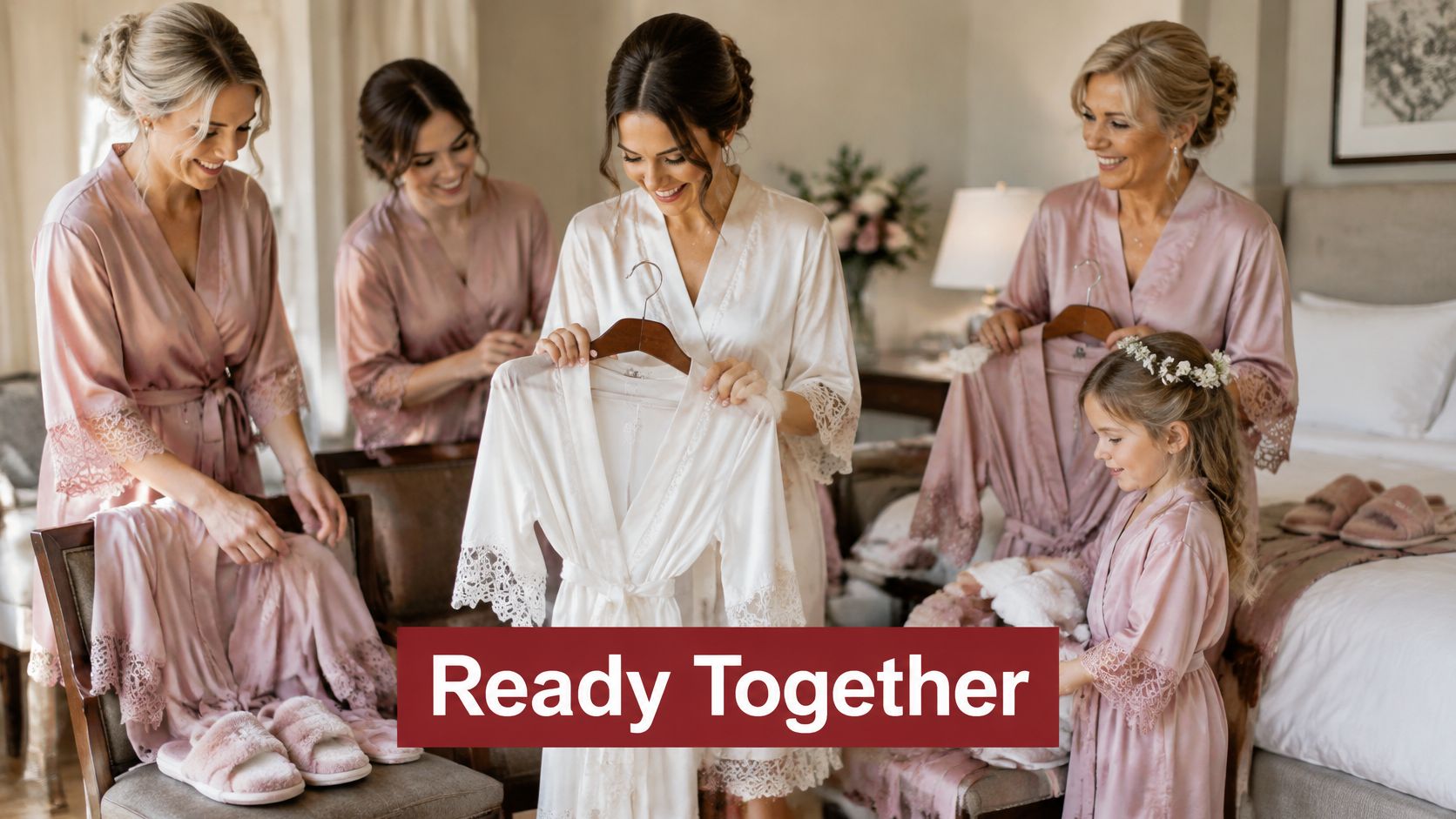
A bride coordinating a getting-ready morning for her bridesmaids, her mother and a flower girl doesn't need everyone in identical garments. She needs a plan that makes the group feel connected while giving each person something that fits. Three layers make that easier: a shared palette, individual fit, and personal details.
Start with matched pieces that sit well together in photographs. The bride might wear a satin robe, while the bridesmaids wear pyjamas in a complementary colour. A consistent palette can do the visual work of matching without requiring a single style for every body. For the flower girl, choose a child-appropriate garment rather than ordering the smallest adult size.
Then consider each person's measurements. Choose robe lengths with the tallest person in mind, and check slipper sizing for each wearer rather than assuming one size will suit the group. If someone is more comfortable in a shorter robe or needs a different pyjama cut, keep the colour coordinated and make the fit personal.
Personal details without a uniform fit
Names, monograms or pre-printed titles help each robe feel like it belongs to one person. They're also practical on a busy morning, when the bridal party is changing, getting hair and makeup done, and moving around the room. If you're choosing a coordinated range, check that the styles and sizes you need are available before settling on the design.
For an adult bridal robe, pay attention to construction as well as appearance. Fabric composition, raised surfaces, trims and loose ribbons can affect how a garment behaves near candles, heaters or styling equipment. Avoid overly loose decorative details during the getting-ready process. For more ideas on choosing a coordinated robe, this guide to plus-size bridal robes can help you compare options for a mixed-size group.
Children's nightwear needs a separate check. AS 1249:2014 covers children's nightwear and selected garments commonly used as nightwear, with requirements for design, flammability performance and labelling across four child-nightwear categories. Check the applicable category and warning labelling for any flower girl's pyjamas or robe. The Australian Standard for children's nightwear doesn't mean an adult pyjama set automatically meets children's requirements.
Before you order, use this short checklist:
- Collect each person's measurements early.
- Agree on a colour palette that works across different styles.
- Order a size range, not one size for the whole party.
- Confirm robe length for the tallest person and slipper sizing for each wearer.
Alterations and Care That Keep a Set Fitting
Simple alterations can make a pyjama set much more comfortable. Shortening trouser legs or adjusting a hem is usually straightforward; replacing worn waistband elastic can restore a comfortable hold. Taking in side seams on woven fabric may also work if there's enough seam allowance, but don't cut into a personalised or printed piece without checking the fit first. A fitting before any alteration is the safer choice.
Read the care label before washing, particularly if your set includes satin, lace, elastic or a personalised print. Australian textile products must carry adequate care instructions under the Consumer Goods (Care Labelling) Information Standard 2023. The ACCC says the standard was made in August 2023, and that from March 2024 suppliers may provide instructions in English or using international care symbols. The label must be legible and adequate to help prevent garment damage when its instructions are followed, as set out in the ACCC's clothing and textile care-labelling consultation paper.
| Fabric | Washing | Drying | Ironing |
|---|---|---|---|
| Cotton | Cool to warm, gentle cycle | Tumble low or line dry if the label allows | Iron on medium while slightly damp |
| Modal or cotton-modal | Cool, gentle cycle | Line dry to protect softness | Low heat, or steam |
| Satin | Cool hand wash or delicate cycle | Air dry flat away from direct sun | Low heat with a cloth between iron and fabric |
| Lace trim | Hand wash or delicate bag | Lay flat to dry | Avoid direct heat |
| Printed or personalised pieces | Turn inside out, cool wash | Air dry away from heat | Iron the reverse side only |
These are starting points, not a substitute for the garment's own care instructions. Cool washing helps reduce wear on colour and stretch, while air drying helps protect delicate fabrics and trims from unnecessary heat. If a print or monogram is present, turn the garment inside out and avoid applying the iron directly to the design.
For a hens weekend and wedding, plan for repeated wear rather than leaving care until checkout. Wash each set after wear, rotate between two sets if you'll be staying away for several nights, and store printed pieces flat to limit creasing. These garment-care instructions are a useful reference when checking how to look after sleepwear and other delicate pieces.
Confirm Your Sizes Before You Order Your Bridal Set
Gather every person's bust, waist, hip and inside-leg measurements in centimetres before choosing a style. Put them in one shared list, then check them against the specific brand's garment chart. It's much easier to spot a fit mismatch before you order than while everyone is getting ready.
Work through the decisions in order:
- Assign each person a size using the largest relevant measurement on the garment chart. Check the top and bottoms separately if the range allows it.
- Choose matched sets for people whose proportions suit one size. Use separate sizes for people who need more room in the bust, hips or thighs.
- Pick the fabric for the occasion. Satin or lace suits the morning-of look; cotton, modal or a blend is a more practical choice for sleeping.
- Check the care label before you finalise the order. Confirm that the fabric and any personalisation can be cared for as you expect.
- Confirm the largest size is available. Don't assume every style comes in the full range you need.
- Order a size range for the group and check the retailer's return terms before purchasing.
- Book one alteration fitting before the event, especially if trouser hems or robe lengths need adjusting.
If robes are part of the plan, check their fabric and laundering needs too. For a separate reference on maintaining towelling styles, terry cloth robe care tips can help you understand how to care for that fabric.
For a coordinated bridal-party set, browse Get Spliced's bridal and bridesmaid pyjamas, robes and slippers, then add personalisation once everyone's sizes are confirmed. Measure first, coordinate second, and let comfort decide the fit.