
The room is warm, the robes are hanging from the wardrobe, and the photographer is shifting closer to catch the morning light. On the table, two champagne flutes pick up the sun. One carries the bride's name. The other is waiting for the toast. It's a small detail, but it gives the getting-ready photographs a sense of ownership that an ordinary glass never can.
That's why personalised bride champagne flutes have become more than decorative props. The right one is held during the first excited sip, photographed beside the invitation suite, carried through the reception and placed on a shelf after the wedding. It should feel like a bridal accessory with a useful second life, not another item destined for the back of a cupboard.
Australia's wedding market gives this category lasting relevance. The Australian Bureau of Statistics recorded 120,844 registered marriages in 2024, up from 118,439 in 2023. For couples planning a carefully styled morning, the flute is a modest piece of luxury with an outsized sentimental role. It appears in hands, flat-lays, champagne pours and candid photographs, including the kind of considered visual storytelling found in Atlanta wedding photography.
A Toast Worth Keeping Forever
A personalised flute earns its place when it performs beyond the first photograph. It should look elegant in a close-up, feel balanced while the bride is in a robe or moving through a busy suite, and remain attractive enough for an anniversary toast. I have seen wedding details look beautiful for ten minutes, then disappoint in daily use. Glassware gives you a simple chance to choose better.
Choose restraint. A name, title, monogram or small heart gives the eye a clear focal point without competing with flowers, stationery or the dress. The bride can hold it naturally, while the personalisation stays readable without making the image feel like an advertisement. That matters in getting-ready photographs, reception portraits and the casual pictures guests take themselves.
Stylist's rule: if the flute looks too busy on the getting-ready table, it will look even busier in photographs.
Treat the purchase as a sentimental accessory with a working life. Check the lettering, finish and construction before ordering, then confirm how the glass should be washed. A design that survives the wedding morning but cannot handle careful household use has limited value. Australian logistics matter too, including delivery timing, packaging and the practical reality of storing fragile glass after the celebration.
A bridal accessory with a future
The flute should sit comfortably beside the bride's robe, slippers, invitation card and bouquet ribbon. Delicate white lettering suits a soft satin morning, while a clean etched monogram works with a more modern celebration. The finish needs to complement the styling rather than compete with it.
Its emotional value often grows after the wedding. Use it for an anniversary dinner, a Christmas toast or a quiet celebration at home. That second life separates a meaningful keepsake from a prop bought for one photograph, and a dishwasher-safe finish, where specified by the maker, can make regular use more realistic.
Get Spliced offers personalised bridal accessories and glassware that can coordinate with the wider getting-ready setting. The useful question is whether the finished piece will still feel like the bride's after the champagne is gone, and whether it can be stored, handled and washed with care. For couples documenting the morning through Atlanta wedding photography, that balance gives a small detail lasting value.
What a Personalised Bride Champagne Flute Is
A personalised bride champagne flute is stemmed glassware made recognisable through a name, “Bride”, “Mrs”, initials, a wedding date or another short phrase. It can serve as a getting-ready photo prop, a bridal-party gift, a reception glass or a keepsake for anniversaries. Choose it as something the bride will hold, wash and store, not merely as a detail that appears in one photograph.
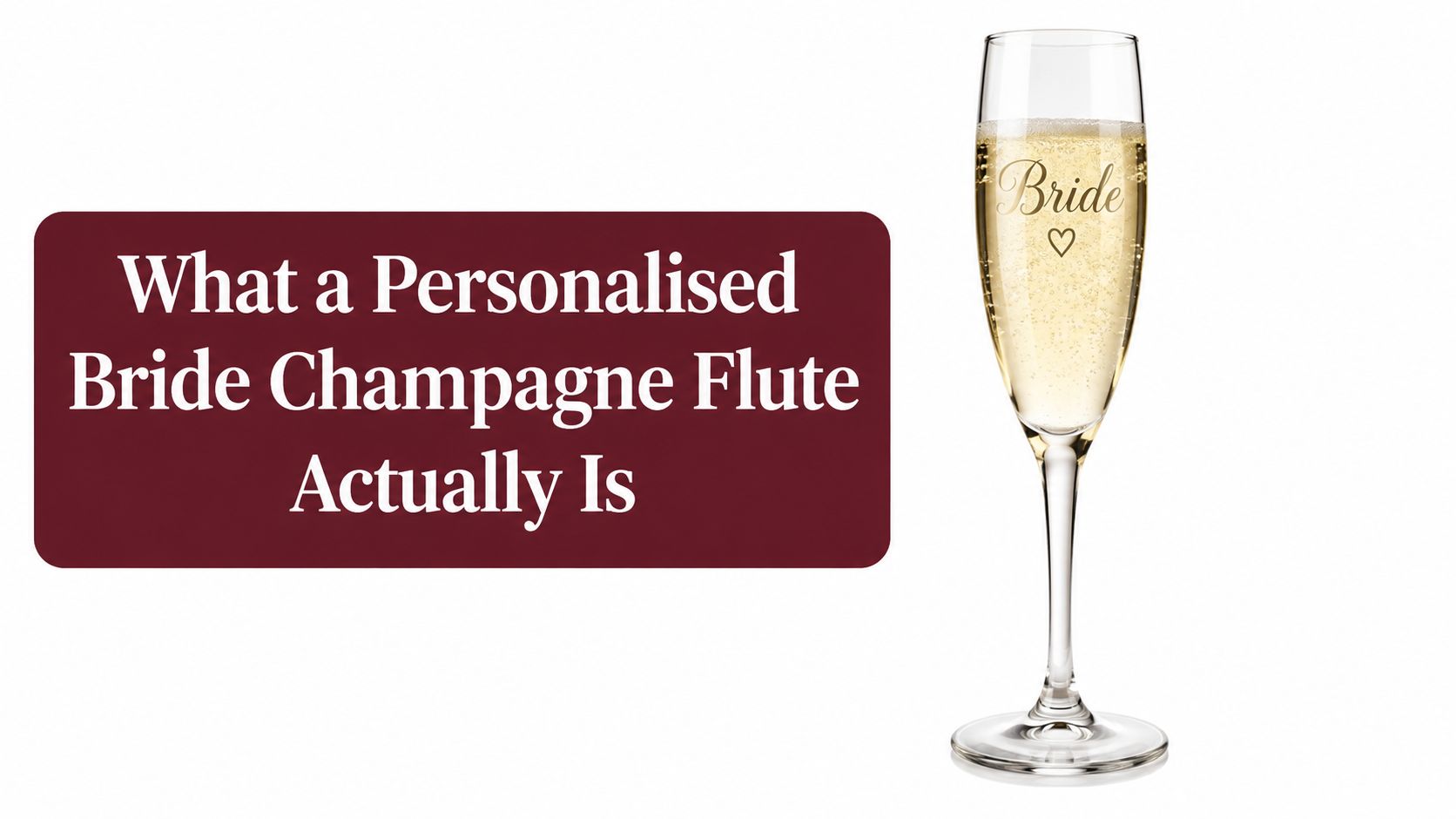
Start with the material. Classic glass delivers the familiar stemware feel and photographs with clean clarity. Crystal-like, lead-free glass gives a more refined appearance without traditional lead crystal. Acrylic weighs less and is less likely to break during an all-day event, though it can look less luxurious and may feel less at home in a bar cabinet after the wedding.
Shape matters more than shoppers expect
A tulip-shaped bowl is my first choice for a bride's flute. It leaves room for the wine to show its colour, narrows towards the rim and directs aroma upwards. A wide bowl can look striking, but it is harder to carry securely through a busy reception.
Review the proportions before ordering:
- Bowl width: enough space for a generous pour without making the glass appear bulky.
- Stem height: tall enough to read as champagne stemware, while remaining comfortable to handle.
- Base stability: a broad, even foot helps during photographs and table styling.
- Capacity: choose a practical serving size instead of an oversized novelty glass.
The bride's flute should have its own role. Her wording normally carries the central title or name, while bridesmaid or maid of honour glasses can use matching initials, roles or restrained names. A proposal flute may be playful because it belongs to the reveal. A reception flute should suit the event and withstand repeated handling.
For broader context on proportions and tableware construction, the Simply Hospitality tableware range is useful. Read the product description closely, confirm the care instructions and proof every name, date and title before submitting a personalised order. A retailer should provide goods that match their description and work as stated, but a correctly made personalised item may not qualify for a change-of-mind return. That makes the final proof and intended use your responsibility before checkout.
Engraving Versus Printing and Why the Method Matters
The personalisation method determines whether your flute becomes a lasting keepsake or a temporary styling piece. Don't choose the lettering purely by colour. Look at how it sits on the bowl, how it responds to washing and whether it can remain legible after the wedding.
Engraving and laser etching
Traditional engraving removes or cuts into the surface, creating a tactile mark with a classic feel. Laser etching creates a fine, usually frosted appearance by marking the glass with precision. Both methods become part of the surface rather than sitting on top of it, which is why they're my first choice for a bride who wants to use the flute again.
The finish may be subtle. That's a virtue. Frosted lettering catches light beautifully in a flat-lay and remains elegant when the glass is used years later. It also avoids the visual heaviness that metallic decals can create against a pale dress or white stationery.
Surface printing and vinyl
Printed lettering can deliver stronger colour and more elaborate artwork. Vinyl is useful for a one-event prop or a themed hens celebration, especially when the design needs a bright colour that etched glass can't provide. These finishes sit on the exterior, so abrasion, heat and unsuitable cleaning can dull or loosen them.
That doesn't make them automatically wrong. It makes them a different purchase. A printed “Bride” flute can be perfect for photographs when the priority is a bold visual moment. It's less persuasive as an heirloom unless the supplier has documented the finish's durability and care requirements.
Australian food-contact guidance requires containers touching food or beverages to be food-grade and suitable for their intended use. Decoration should remain on the outside of the glass, away from the drinking rim, and suppliers should be able to explain the glass composition and decoration process. Metallic paints, inks, adhesives and coatings must not create a contamination risk when exposed to sparkling wine. (NSW Food Authority guidance on food packaging)
My recommendation: choose external engraving or etching on quality glass for a true keepsake. Reserve printing or vinyl for a deliberately temporary photo prop.
The drinking rim, bowl integrity and food-contact surface are essential. A useful explanation of the difference between decorative methods and durable glass finishing appears in this guide to etched champagne flutes. Don't accept “food safe” as the whole answer. Ask where the decoration is placed, what material is used and how the glass should be washed.
Wording Ideas That Photograph Beautifully
Personalisation succeeds or fails on legibility. The bride will hold the flute at an angle, often beside her face, bouquet or dress. Tiny lettering may look delicate on a product preview and disappear completely in a candid photograph.
Five dependable wording choices
Initials are the cleanest option. They suit modern stationery and leave plenty of clear glass around the mark. Use them when the bride prefers a discreet keepsake or when the bridal-party set needs to look coordinated without becoming identical.
A first name feels warmer and more personal. It's easy to read in a photograph and works particularly well with a small heart, star or botanical detail.
A title, such as “Bride” or “Mrs”, gives the clearest visual cue during the morning. It's ideal when the flute is part of a wider set featuring “Maid of Honour”, “Bridesmaid” or “Mother of the Bride”.
A full name and wedding date create a formal heirloom. This option needs careful spacing. Keep the name prominent and the date secondary so the design doesn't become a block of text.
A short phrase, such as “To Have and to Hold”, can feel romantic, but keep it very short. Long wording becomes difficult to read on a curved bowl and can look crowded beside other wedding details.
For Australian stationery, match the date format to the invitation suite. Don't use a formal written date on the flute if the rest of the wedding uses numerals, or vice versa. Consistency makes the collection feel styled rather than assembled.
Three templates I'd happily approve
-
Minimal:
AB | 12.10.26 -
Classic:
Emma | Bride -
Whimsical:
To Have and to Hold
Use capital letters or a clear title-case font when photography matters. Lowercase script can vanish against bubbles, white fabric and bright daylight. I'd also avoid novelty slogans, surnames that are difficult to spell under pressure and wording tied too closely to a passing joke.
The best design reads at arm's length. If the bride needs to rotate the bowl to understand it, reduce the wording. The flute should add intimacy to the image, not ask the viewer to decode it.
Packaging, Gift Sets and How Many to Order
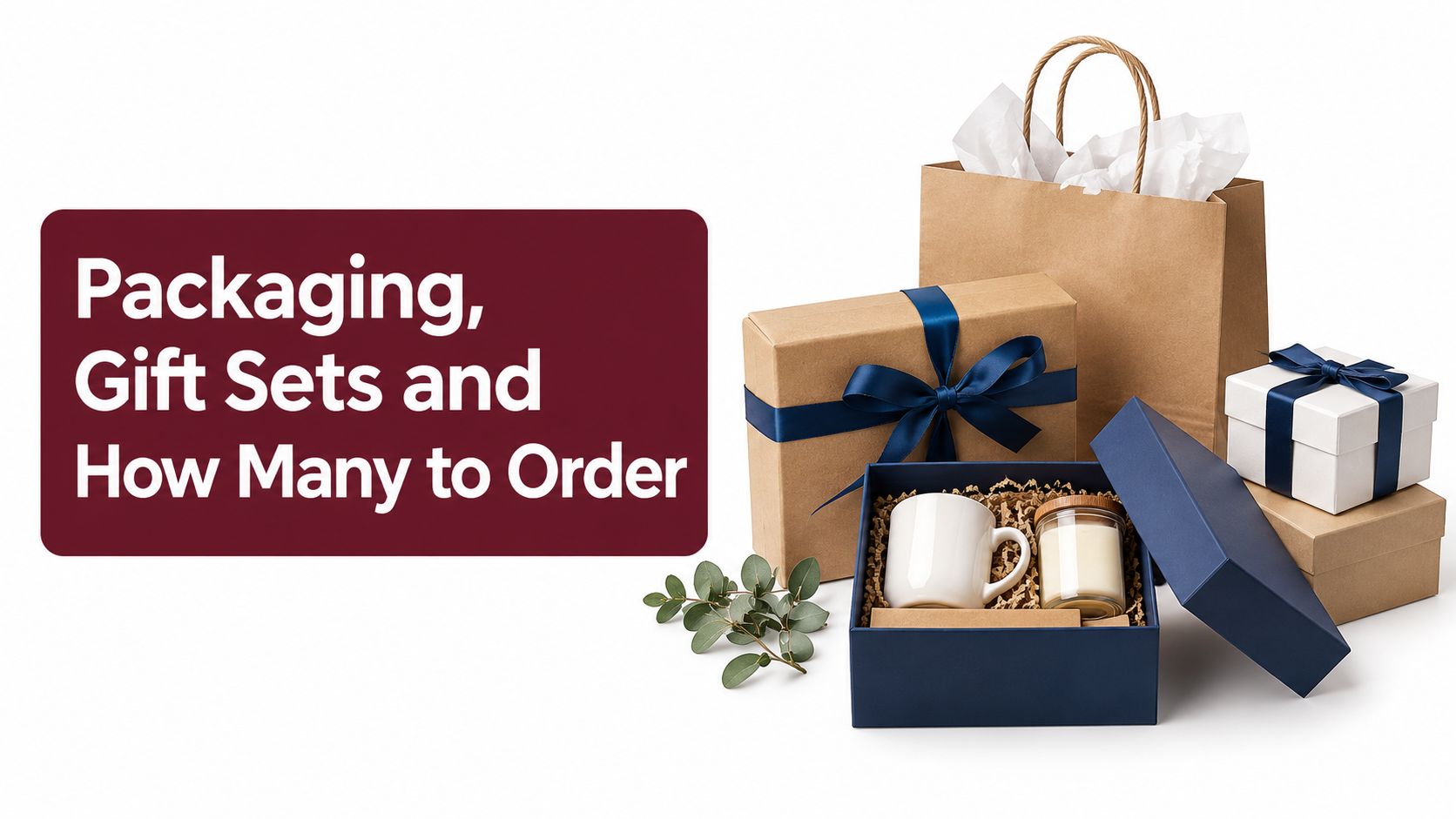
A personalised flute arrives as a gift before it becomes part of the wedding. Packaging shapes that first moment. An individual gift box suits a bride or maid of honour present, while a pair box works naturally for the couple. A keepsake tin adds protection during transport, and a personalised hamper can combine the flute with robes, slippers, a proposal card or other morning-of details.
The setting also affects the quantity. The 2024 Australian Wedding Industry Report estimated average wedding costs at $33,810, against an original budget of $27,652. Couples therefore spent roughly 22% above their initial plans, which helps explain why small, emotionally distinctive accessories can find a place within a larger celebration. A flute doesn't need to compete with the venue or dress. It needs to earn its small footprint.
Use a role-based quantity plan
One for the bride is enough when the flute is a private keepsake and the reception already has styled glassware.
A coordinated bridal-party set makes sense when the getting-ready photographs show everyone raising a glass together. Give the bride the most individual wording, then use titles or initials for the maid of honour and bridesmaids.
A pair for the couple creates a natural anniversary tradition. Choose matching shapes and let the personalisation distinguish each glass.
A parent flute can be a beautiful morning gift for the mother of the bride or another person who has played a significant role. It shouldn't be added merely to make the set larger.
I don't recommend ordering personalised flutes for every guest unless they'll be used after the wedding. A coordinated set should support the story of the morning, not turn the table into a warehouse of fragile objects.
Packaging looks especially polished when it echoes the rest of the boutique collection. Match the lettering and colour to the bride's robes, pyjamas, slippers, bridal boxes and proposal cards. The wedding-party champagne flute guide is useful when deciding whether roles should match exactly or follow a tiered design.
Caring for a Keepsake That Lasts Past the Wedding
A beautiful flute can last for years, but it won't survive careless washing indefinitely. The decorated surface, rim and stem all need a gentler routine than an ordinary tumbler.
Rinse the glass soon after use, particularly if sparkling wine has dried around the bowl. Wash with a mild detergent and warm, not hot, water. Keep each flute separated so rims and stems don't knock together, then dry it with a soft, lint-free cloth. A thick tea towel can catch around a delicate edge or twist the stem if you're rushing.
The safest washing routine
- Let temperature change gradually. Don't pour hot water into a cold flute. Sudden temperature changes can cause breakage.
- Use mild detergent. Strong products and abrasive sponges can affect surface decoration.
- Hold the bowl carefully. Avoid twisting the stem while loosening residue.
- Keep metal away. Metal utensils can scratch glass and decoration.
- Rinse fully. Residue can dull the surface and affect the next pour.
- Dry with care. Support the bowl and stem separately rather than forcing a cloth inside.
Specialist glass-care guidance recommends mild detergent and a low-temperature wash of around 50 to 55 °C, warns against contact with metal utensils and notes that sudden temperature changes can cause breakage. (Spiegelau glass-care guidance)
Treat the dishwasher as conditional
Hand washing is the lowest-risk option for personalised glassware, especially when the finish is printed, painted or vinyl-applied. Use a dishwasher only when the supplier has specifically validated the glass and decoration for a low-temperature cycle. Position the flute securely with adequate spacing, and never assume that a dishwasher-safe base glass means the personalisation has the same durability.
Store each glass upright with space around the bowl. Don't stack stemware, wedge one inside another or leave it pressed against metal accessories. Advice on decorative glass finishes, including the difference between etching and surface treatments, is available in this glass etching care resource.
Retire a flute if it becomes cracked, chipped or structurally unstable. Australian food-contact guidance identifies chipped glassware as a hazard because fragments can contaminate food or beverages. (Food Standards Australia New Zealand guidance) A damaged bride's flute may still be emotionally important, but it shouldn't return to the drinks table.
The Reusable Versus Favour Question
Around 70% of couples thank guests with some form of favour, according to the 2025 Easy Weddings report. That doesn't mean every favour needs to be a personalised champagne flute. In fact, I think mass-ordering fragile glassware for every guest often creates clutter rather than connection.
A reusable glass has a stronger afterlife. It can return for anniversaries, Christmas morning, a new-home celebration or a quiet drink at the couple's home bar. It also photographs with more substance than a lightweight single-use acrylic favour, particularly in close-up shots where the bowl, stem and lettering are visible.
Acrylic still has a role. It's practical for outdoor celebrations, poolside hens events and situations where guests will carry drinks around for hours. It's lighter to transport and less stressful around crowded spaces, but it usually feels more like an event accessory than a permanent household object. Dishwasher durability depends on the specific product and finish, so don't choose it on the assumption that plastic means indestructible.
Fewer personalised pieces, chosen for the people who'll keep them, are more sustainable than a large order nobody wants to store.
Sustainability-conscious couples are already looking more closely at environmentally responsible bomboniere and reusable choices. The most sensible approach is to personalise the bride's flute, perhaps add one for the couple and closest bridal-party members, then choose a different favour for guests if a guest gift is important.
More personalisation doesn't automatically mean more love. A smaller set of quality glasses gives each one a clear role and a better chance of being used beyond the wedding.
Planning the Order Without the Stress
Start with the wedding date, then work backwards through personalisation, proof approval, dispatch and Australia-wide delivery. Leave room for a replacement if the parcel arrives damaged. Custom glassware becomes harder to manage during popular wedding periods, especially when several coordinated products are due at once, so place the order before the final rush.
Before production begins, compare the proof with the invitation, menus and place cards. Check:
- Spelling: confirm every name, including accents and surname changes.
- Date: use the same format as the stationery suite.
- Role: choose the correct wording, such as “Bride”, “Mrs”, “Maid of Honour” or “Bridesmaid”.
- Placement: keep the design clear of the drinking rim.
- Quantity: decide whether the flutes are for the bride, couple, bridal party or guests.
- Transport: keep boxed glassware upright and shaded, never loose in a hot Australian car.
Order one spare when the flute will feature heavily in getting-ready photographs or when the parcel contains several fragile pieces. A backup is useful insurance against breakage in transit or at the venue. Duplicating every item usually adds cost and storage without adding much protection.
Before you plan a wedding at B R Cohn, decide what must be ready, who will collect it and where it will sit before guests arrive. Apply the same checklist to the flute. Assign one person to receive the parcel, inspect the glass and keep it boxed until the morning.
Choose the method, then the wording, then the quantity. Custom details do not remove the seller's responsibility to provide an item that is safe, fit for purpose, of acceptable quality and accurately described. Keep the order confirmation and approved proof until the wedding has passed, particularly if the lettering or finish differs from what you selected.
Select a flute that reads clearly in morning light, check every detail yourself and give the finished glass a life beyond the celebration. A well-made keepsake should work in the getting-ready photographs, survive careful storage and return for an anniversary toast.
Choose the personalisation method, confirm the wording against your stationery and order only the quantity you will genuinely use. Explore Get Spliced's personalised bridal accessories and champagne flute options for a coordinated getting-ready moment that remains meaningful after the wedding.