

You've got the group chat open, the makeup artist is booked, and now you're staring at the most deceptively important detail of the morning, what everyone is wearing before the dress goes on. That's where organic cotton PJs earn their keep. They need to feel easy at dawn, photograph well under window light, and still look pulled together when the champagne has gone flat and the bridesmaids start swapping shoes.
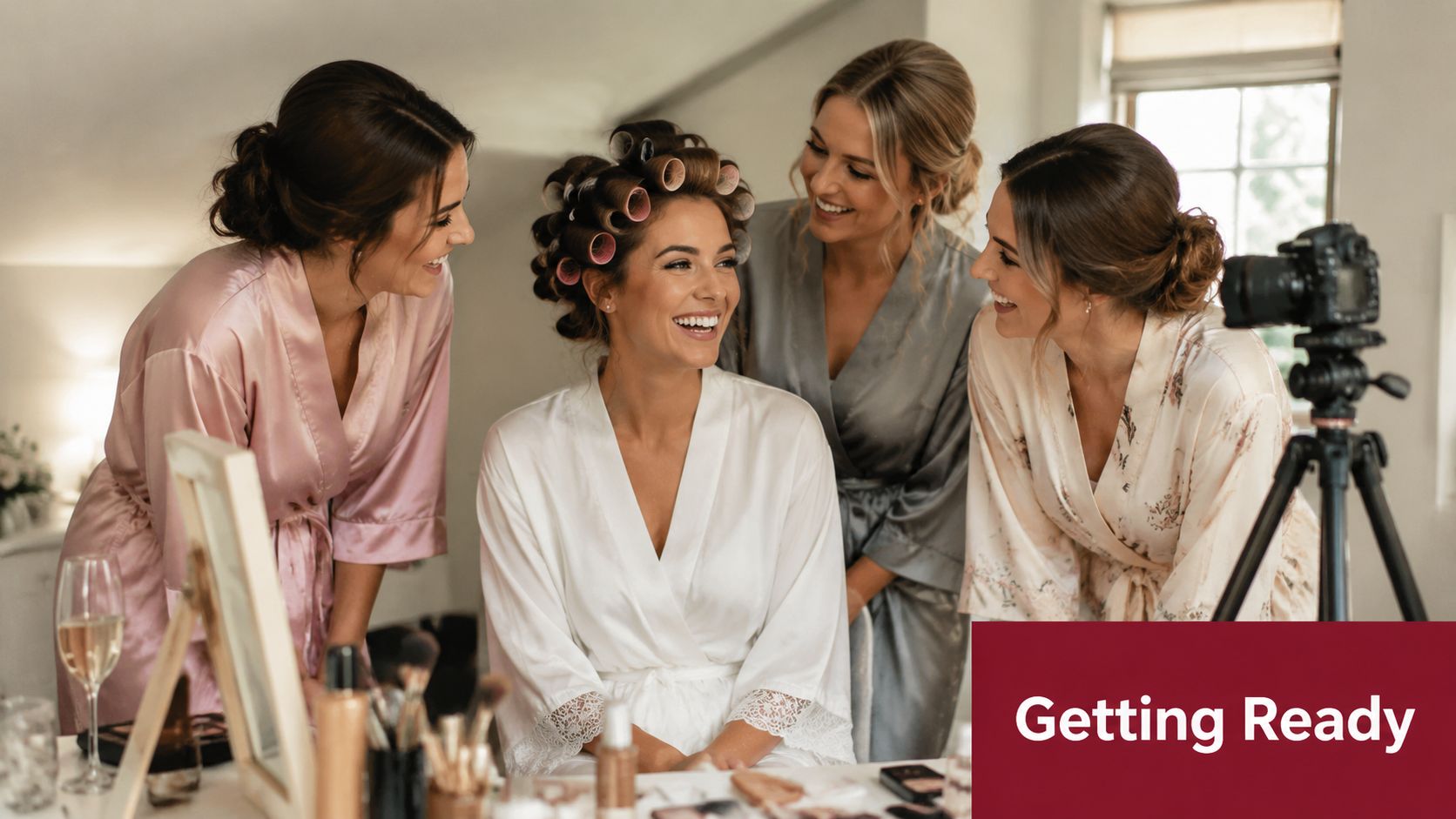
I'm going to be blunt. For a getting-ready morning, fabric matters more than sentiment. A pretty set that scratches, clings, or sags in the wrong places will show up in every photo and every memory. Organic cotton is the smart choice when you want softness on fresh skin, a calm look in pictures, and a set the bride tribe can wear again after the wedding, not just tolerate for one morning. For ideas on matching pieces that read well in group shots, the bridal-party styling notes in this Get Spliced guide are a useful starting point.
The Getting-Ready Morning Worth Getting Dressed For
The true test of any bridal pyjama set starts before the first bellini. It starts in the room with curlers on the dressing table, a phone propped against a water glass, one bridesmaid still fastening earrings, and someone asking where the lashes went. In that mess, organic cotton PJs need to do three jobs at once, feel good, look good, and survive being worn, washed, and kept.
A bride doesn't need a lecture about textiles at 6 a.m. She needs a set that doesn't pinch at the waistband, doesn't flash awkwardly in a mirror selfie, and doesn't look limp when the photographer leans in for candid shots. Organic cotton gives you that middle ground, soft enough for sleep the night before, polished enough for the camera, relaxed enough that nobody feels dressed up in a fake way.
Practical rule: if the set wouldn't still look intentional after two hours of hair spray, steaming, and moving between rooms, it's the wrong set.
The best bridal morning outfits are the ones people forget they're wearing because they're comfortable. That matters more than romance, more than matching for matching's sake, and more than a label that sounds lovely but fails in real life. For Australian weddings, that often means choosing a breathable set that suits a warm pre-wedding morning, then still feels decent if the venue runs cool before sunrise.
If you're shopping for the moment, not just the garment, think in photos. Sleeves that skim instead of cling. Neat collars instead of bulky trims. Colours that sit nicely beside skin tones, makeup wipes, and champagne flutes. The point is not perfection. The point is a calm, cohesive start that feels considered from the first zip, button, or drawstring.
What Makes Cotton Organic
Organic cotton is cotton grown without the usual chemical shortcuts, and that's the simple version. No synthetic pesticides or fertilisers during growing, non-GMO seed, and a traceable chain from field to finished fabric. If you need a breakfast-table explanation, free-range and barn-laid eggs are in the same broad category but have very different production rules.
That distinction matters because the word organic on a swing tag is about the fibre, not automatically the whole garment. A set can contain organic cotton and still have a lot going on in the processing, dyeing, and finishing stages. That's why the label alone isn't enough if you care about sensitive skin or if you're buying for a bride tribe with different comfort levels.
Fibre first, garment second
Start with the fibre claim. If the garment says organic cotton, you know the cotton itself was grown to organic rules, but you still need to ask what happened after harvest. That's where processing standards and independent certifications become useful. They tell you whether the fabric stayed clean through the parts of production that matter most for skin contact.
Organic cotton also fits a broader market reality in Australia. Textile Exchange reported that just eight countries produced 97% of the world's organic cotton in 2020/21 (Textile Exchange report). That concentration is one reason Australian retailers can't treat certified supply as endless or casual. It has to be tracked carefully, which is why a serious organic cotton product should come with documentation, not just nice marketing copy.
If you remember only one thing, remember this. Organic cotton is a materials claim. It's a great starting point, but it's not the whole story. For bridal shopping, that means you're choosing a fabric category first, then checking the paper trail second.
Decoding the Certifications on the Label
Most bridal content gets vague, and that's exactly where shoppers get misled. GOTS, OEKO-TEX Standard 100, the Australian Certified Organic Bud logo, and OEKO-TEX's Organic Cotton route do different jobs. If you treat them as interchangeable, you'll end up thinking a label says more than it does.
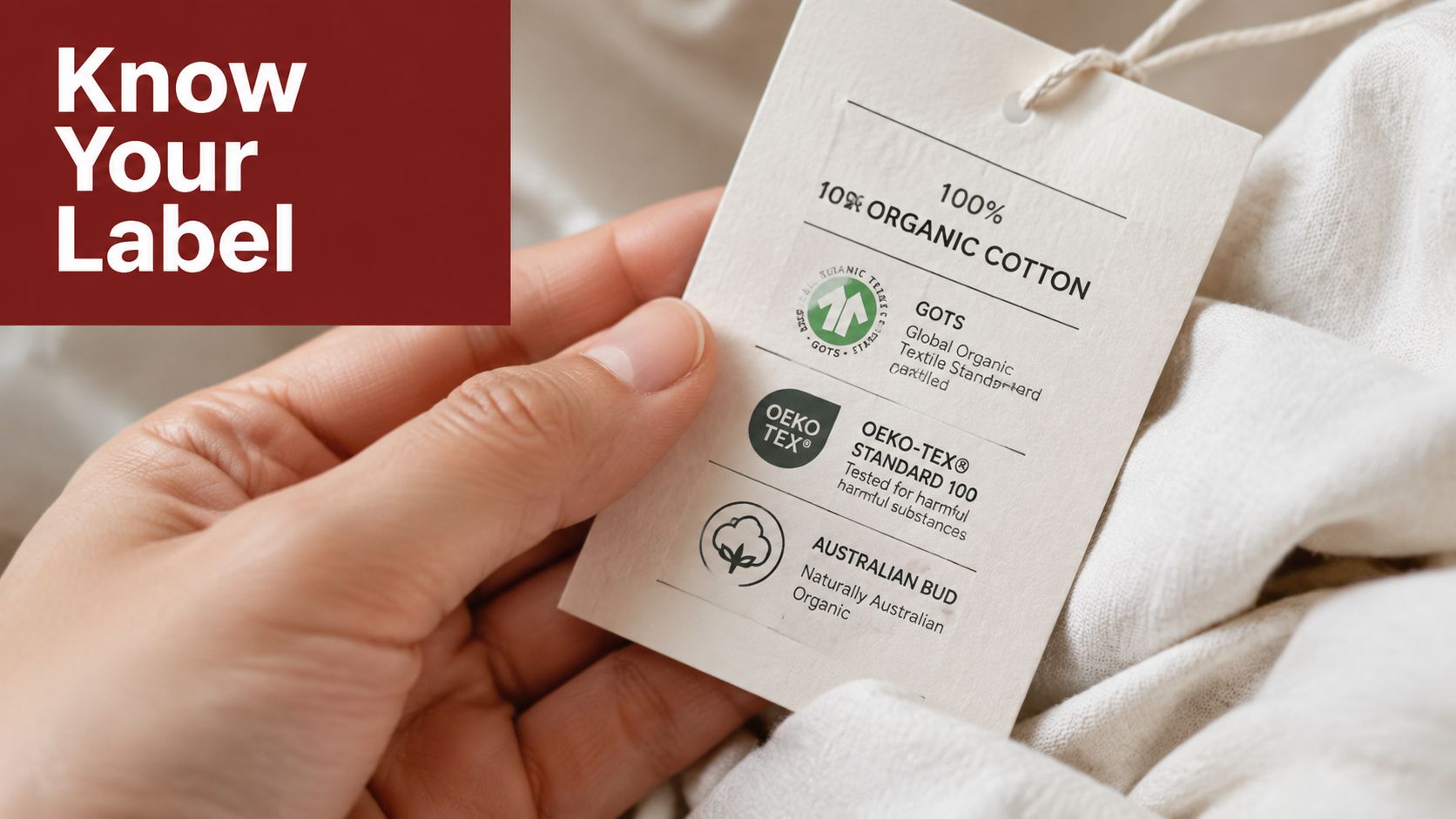
GOTS covers both the cotton and the processing chain, so it's the strongest shorthand for a full-chain organic textile. OEKO-TEX Standard 100 is different. It tests the finished textile for harmful substances, even if the fabric itself isn't organic. That makes it especially useful if skin sensitivity is your first concern, because it answers a different question from GOTS.
The Australian Certified Organic textile standard is more specific again. It requires all natural fibre components to be certified organic or organic in conversion, and it sets the 70%, 95%, and 100% thresholds for how the Bud logo and the word Organic can be used (Australian Certified Organic standard). That's useful when you're comparing labels on a boutique floor, because a swing tag can look eco-friendly without meeting the same threshold across the board.
For a more plain-English explanation of what OEKO-TEX Standard 100 is checking, this Little Venture Co. overview is worth reading before you buy anything for a bridal party.
What the label is really telling you
- GOTS: the cleanest indicator that the textile chain has been audited from fibre through processing.
- OEKO-TEX Standard 100: the fabric has been tested for harmful substances, which is not the same thing as being organic.
- Australian Certified Organic Bud logo: the fibre percentage matters, and the logo changes with the organic content threshold.
- OEKO-TEX Organic Cotton route: the certification path has its own threshold rules, so don't assume every organic cotton claim is built the same way.
Cotton Australia says there are, to its knowledge, no organic cotton farms in Australia, and Australian cotton is instead grown under the myBMP Best Management Practices program, which includes more than 300 environmental and social standards (Cotton Australia reference). That matters because it explains why certified organic sleepwear sold in Australia usually depends on tightly controlled supply chains, not local fibre grown at scale.
If you're shopping for sensitive skin, eczema, or allergies, don't stop at the word organic. Read the label for the exact certification, then decide whether you need full-chain organic, harmful-substance testing, or both.
Fabric Weight, Weave and What Feels Good
A lot of brands sell pyjamas with soft photos and vague adjectives. Ignore that noise. The buying decision is fabric weight, weave, and how the set behaves on a body that is moving, sitting, hugging, and being photographed before sunrise.
Read the fabric, not the brochure
Lightweight fabrics in the 115 to 130 gsm range are usually the right call for warmer conditions, summer weddings, and anyone who runs hot. Heavier brushed cotton in the 180 to 210 gsm range suits colder weather because the brushed surface traps more air and holds warmth better (fabric weight guide). For an Australian getting-ready room, that split matters because the temperature can shift fast from cool pre-dawn to crowded and warm once the hair team arrives.
My rule for bridal mornings: choose the set for the room, not the mood board. A beautiful heavy set can look gorgeous and still feel wrong by 9 a.m.
The other thing I look at is staple length. Textile Exchange notes organic cotton staple lengths run from 20 to 45 mm, which affects whether a yarn spins smoother, stronger, or more prone to pilling depending on how it's finished (Textile Exchange fibre guide). Longer staples usually give you a cleaner handfeel and better durability, which is exactly what you want if the bride tribe will keep wearing the set after the wedding.
Breathability matters too. For moisture management, Get Spliced makes the same practical point from a linen perspective, fabrics that move vapour away from the body feel cooler and less clingy in a busy getting-ready room. That is not a vanity detail. It is the difference between a set that feels fresh while people are moving around it and one that turns sticky once the styling tools are switched on.
A simple way to shop is to touch both fabrics, pinch them between your fingers, and decide which one you would happily wear while sweating through the final minutes before the ceremony. Look at the weave, too. A plain weave usually reads crisper and lighter, while a brushed finish feels softer and warmer straight away. Choose the one that suits the room, then check how it falls on the body when you sit, lift your arms, and reach for a coffee.
Sizing a Bridal Party Without a Spreadsheet
Matching pyjamas sound simple until you're fitting six women, three body shapes, two tall bridesmaids, and one person who always wants sleeves longer than the designer intended. Don't turn it into a spreadsheet contest. Turn it into a fit decision.
Start with the reality that Australian sizing varies between labels. Ask for the retailer's size chart before you commit, and ask whether the set runs small, true, or roomy. If the fabric has limited stretch, size for comfort first. Nobody wants to spend the morning tugging at side seams while the florist is unloading buckets in the hallway.
Keep the group cohesive without forcing sameness
The neatest solution is to keep colour, fabric, and trim identical, then let the sizes vary naturally. That gives the room a coordinated look without pretending every body should wear the same cut. For group photos, that consistency is what reads intentional.
A few practical rules make life easier:
- Size for the widest comfort point: if a bride or bridesmaid is between sizes, the better move is usually up, especially in non-stretch cotton.
- Think about post-laundering fit: cotton can change after washing, so don't buy as if the garment will stay exactly as it arrived.
- Match the silhouette, not the number: wide-leg pants, button tops, or shorts can all sit together beautifully if the colour story is consistent.
- Ask for a swatch if you can: the touch test tells you more about softness and drape than product photos ever will.
For curvier bridal parties, pay attention to the waistband and button spacing. That's where a pretty set either stays elegant or starts pulling in photos. For straighter frames, you may want a slightly more fitted cut so the set doesn't look swallowed up on the body.
The goal is not to make everyone identical. The goal is to make everyone look comfortable enough that the photos feel relaxed instead of styled within an inch of their lives.
Caring for Organic Cotton So It Lasts Past the Wedding
A bridal pyjama set should survive more than one morning. If you want it to become a keepsake, care for it like one. Organic cotton often feels a touch stiff straight out of the packet, and that's normal. A few proper washes usually bring out the softness people expect.
The routine is simple. Wash in cold water with a mild detergent, skip bleach, and avoid optical brighteners that can be harsh on fibres and embroidery. Line dry in shade if you want to protect colour and monogramming, then fold the set once it's fully dry so the shape doesn't get crushed in storage. For a retailer's care notes, Get Spliced's care instructions are a useful reminder of how to protect personalised pieces.
Treat it like a keepsake, not a disposable outfit
If the set has initials, titles, or bridal embroidery, turn it inside out before washing. That keeps the stitching looking neat for longer. Store it in a cotton bag or a drawer with other soft pieces, not in a damp bathroom cupboard where fibres pick up mustiness.
A few habits make a real difference:
- Wash gently: cold water and mild detergent are enough for this kind of fabric.
- Skip harsh additives: bleach and strong brightening agents shorten the life of both cotton and decoration.
- Dry with care: shade drying protects the finish better than hard sun.
- Fold, don't crush: keeps the collar, cuffs, and monogramming tidier between wears.
The best part is that cotton softens with wear when you treat it well. That means the set you buy for the wedding morning can become the one you reach for on future holidays, anniversaries, or lazy Sunday breakfasts. That's a much better return than a one-time outfit with a pretty tag.
Gifting Organic Cotton PJs to Your Bride Tribe
Organic cotton pyjamas work because they feel thoughtful without being fussy. They're practical enough to wear, polished enough for the morning-of, and useful again after the wedding. That's exactly the kind of gift bridesmaids remember.
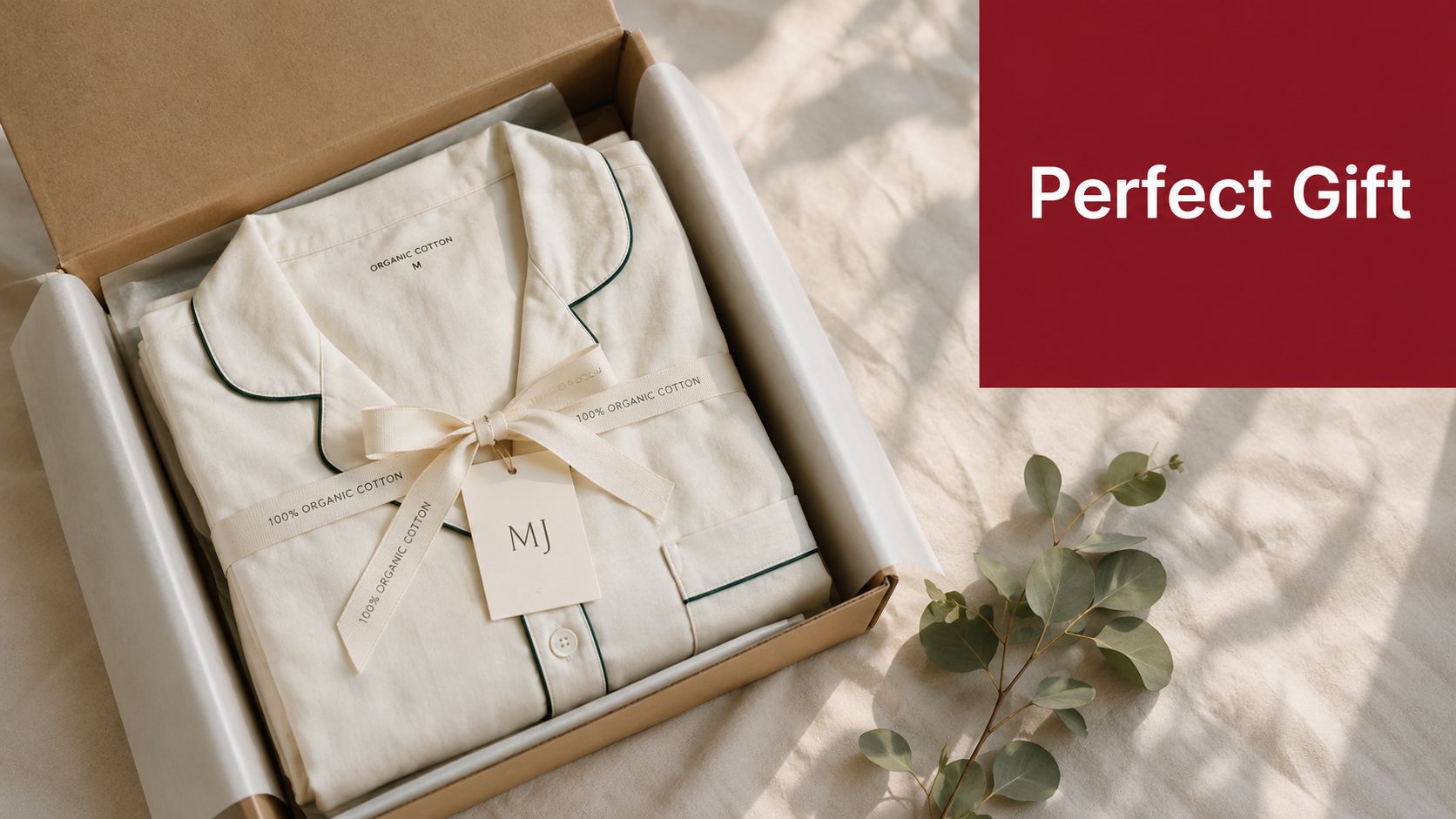
I'd use them for proposal boxes, hens weekends, and the actual getting-ready morning. For a maid of honour, a monogrammed set feels more personal than another candle. For mothers of the bride or groom, a title print or soft neutral set reads polished without feeling overdone. If you're including flower girls, keep the styling coordinated and simple so they don't look like tiny versions of the adults in a way that feels staged.
One thing worth saying plainly. Certified organic cotton often costs more than conventional cotton because the supply is tighter and the fibre has to be traceable. That's not a flaw, it's the reality of buying from a more controlled supply base. If you want the gift to feel cohesive, bundle the pyjamas with slippers, a robe, a makeup bag, or a compact gift box rather than trying to stretch one item into a full present.
For a retailer-ready example of how personalised gifting can be handled, the High Country Quilts application for crafters is a useful reference point for how branded gifting partnerships are framed.
Make the set feel special without overcomplicating it
- Use titles thoughtfully: “Bride”, “Maid of Honour”, or “Mother of the Bride” turns a plain set into a keepsake.
- Keep the palette tight: cream, ivory, blush, or soft blue usually photographs better than a mixed rainbow.
- Add one useful extra: slippers or a pouch make the gift feel complete without clutter.
- Think beyond the wedding: choose a style they'd wear again, not something too costume-like.
Organic cotton earns its place. It's soft enough for the morning, useful enough for the next year, and substantial enough to feel like a proper gift rather than a cute prop.
Your Shortlist Before You Click Buy
If you are about to order, make the call in this order, not the order the product page tries to push on you.
Start with the label that answers your question. If you want the cleanest full-chain story, choose GOTS. If you care most about a harmful-substance check on the finished textile, OEKO-TEX Standard 100 covers that. If you are shopping in Australia and want to read the Bud logo properly, check the 70%, 95%, and 100% thresholds before you assume the mark means more than it does.
Then match the fabric to the morning. A lighter 115 to 130 gsm set makes sense for warmer weather and summer ceremonies. A heavier 180 to 210 gsm brushed cotton set works better for colder mornings and venues where the air conditioning bites. Do not choose by colour or print alone. Choose by how the room will feel when everyone is half-dressed and moving around.
Size for the group, not the hanger. Use the retailer's chart, account for how cotton behaves after washing, and keep the colour, fabric, and trim consistent even if the sizes vary. That is how you get a cohesive bridal party without forcing every body into the same shape.
Think beyond the day. Wash gently, dry in shade, and store the set properly if you want it to last as a keepsake. The best organic cotton PJs do more than look good in the photos. They stay wearable after the wedding and still feel lovely when someone pulls them out again later.
Screenshot this: certification, fabric weight, size chart, care plan. If those four things are right, you have made the right buy.
That is the whole point. Choose the set that makes the room feel calm, the photos look polished, and the morning feel considered without becoming precious. Then place the order and move on to the parts of the wedding that need your attention.