

You're probably in a group chat comparing robes, sashes and gift boxes while trying to keep the plan within everyone's comfort zone. One guest wants a polished getting-ready look; another doesn't want to buy anything she'll never use again. The right hen party gear isn't the longest checklist. It's a considered set of pieces that looks good, works for the people wearing it and still has a purpose after the celebration.
I recommend deciding what's worth keeping before you decide what to order. Start with the bride's preferences, set optional extras apart from essentials, and favour useful keepsakes over items that only make sense for a single photo.
What Counts as Hen Party Gear in 2026
The group chat is full of options: a sash for the bride, matching pyjamas for the bridal party, proposal cards for the friends being asked, and a gift box that could hold everything together. The useful question isn't “What does a hen party need?” It's “Which pieces will make this group feel celebrated without becoming clutter?”
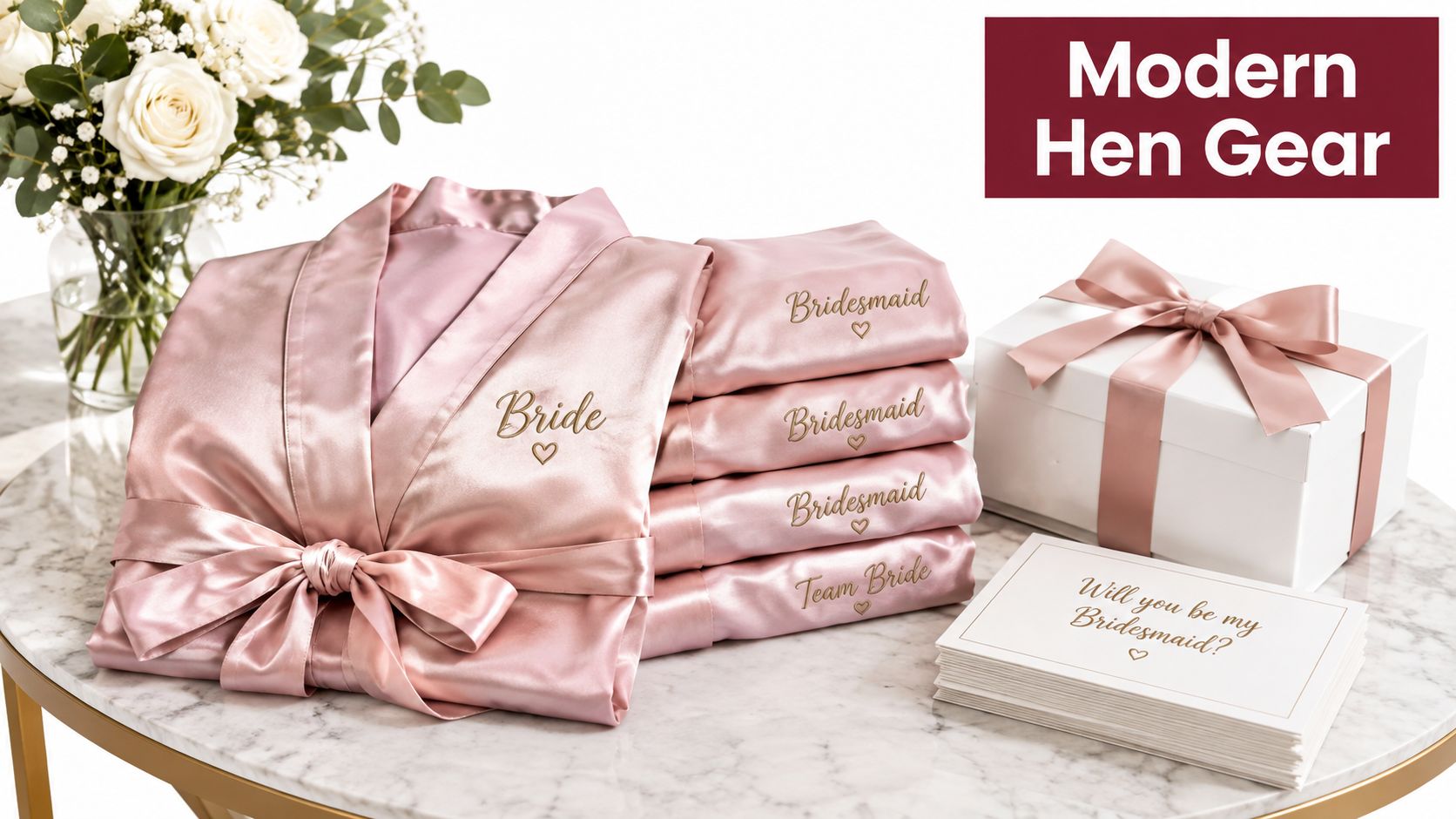
Hen party gear includes wearable pieces, such as robes, pyjamas, slippers and sashes; small accessories, such as clutches, pouches and champagne flutes; and gifting details, such as proposal cards, personalised boxes and thank-you keepsakes. The best choices do more than identify the bride. They help guests feel included, look considered in photographs and give the bride something she'll keep or use.
Think about the morning after, not just the group photo. A satin robe that the bride can wear while getting ready for the wedding earns its place. So can a clutch she'll use again or a gift box that becomes a storage keepsake. A disposable novelty prop might bring a quick laugh, but if it's awkward to carry and goes straight in the bin, it deserves scrutiny before it makes the shopping list.
My rule: Buy for the celebration and the life of the item after it. If it only works for one joke or one photograph, it's an optional extra.
The broader wedding context supports treating pre-wedding purchases as a real part of the occasion rather than an afterthought. Finder reports that women attending weddings spent an average of A$257 on pre-wedding activities, including hens events, compared with A$53 for men, within an average total wedding-attendance spend of A$1,993 among Australians who'd attended a wedding between 2018 and 2023 (Finder's Australian wedding spending research). That doesn't mean every guest should be expected to buy matching extras. It does mean organisers should make choices carefully, because a coordinated experience can involve real spending for the group.
Modern hen party gear should feel elegant, useful and easy to participate in. Matching can be as simple as a shared colour, a personalised title or a keepsake the bride receives from everyone. The aim is a celebration that looks like it belongs to the people in it, not a catalogue of compulsory novelties.
The Core Categories Worth Buying
Shortlist by category, then check whether each item suits the venue, the wearer and the plan for the day. The product that looks lovely online isn't automatically the one that'll be comfortable or useful in practice.
Start with wearable pieces
Robes and pyjamas often give the group the most practical value, especially if the hens party includes a getting-ready morning or an overnight stay. Check the fabric's weight and feel, and ask how the garment sits when it's tied or worn open. For robes, confirm whether the cut provides enough coverage; for pyjamas, check whether the sizing range suits everyone who wants to join in.
Slippers are an easy complement to robes, but comfort matters more than a perfect colour match. If the group will walk between locations, slippers may be better kept for accommodation or a getting-ready space. Don't assume everyone wants the same footwear.
Add identity, then keep the joke in proportion
A sash helps make the bride easy to spot, and a discreet, well-chosen design can work with the outfit rather than compete with it. Proposal cards suit the moment someone is being asked to take part in the wedding party. They're most meaningful when the message and title feel personal, rather than copied across a generic set.
Clutches and pouches are more practical than costume props because guests can use them to carry essentials during the celebration. Champagne flutes can be a lovely keepsake if the group has a clear plan to transport them safely. If you're still choosing the style of celebration as well as the accessories, this roundup of top bachelorette party ideas can help you consider how the event itself might shape what's worth bringing.
Choose presentation that has a second job
A gift box can hold a robe, card and small keepsake neatly, then serve as storage afterwards. Check that it's sturdy enough to travel and that the contents don't rattle around inside it. Add tissue or a simple fabric wrap only if it protects or presents the items well; packaging that creates extra waste without adding care is clutter.
My shortlist usually starts with one useful wearable, one personal detail for the bride and one accessory guests can keep using. Add a sash or themed prop only if it suits her taste and the setting. That approach keeps the celebration recognisable without asking every guest to buy a complete matching outfit.
Getting Measurements, Names and Titles Right
Personalised gear fails most often before it's made: the organiser guesses a size, copies a name from an old group chat or submits embroidery before everyone has approved it. Get the information right first. It's less exciting than choosing colours, but it's what prevents a lovely group order from arriving with avoidable mistakes.
Australian clothing returns show why guessing fit is a poor plan. The Iconic has reported an online clothing return rate of about 30%, with some Australian retailers reporting rates as high as 60% when customers order multiple sizes to check fit; the same reporting says Australians buy an average of 56 new clothing items a year (The Sydney Morning Herald on clothing returns and landfill). Personalised items add another complication because embroidery or monogramming can make a garment difficult to resell.
Use one controlled approval process
- Collect measurements from each wearer. Ask for bust or chest, waist, hips and height. Record the measurements alongside the person's name so nobody has to reconstruct the details from messages later.
- Confirm the intended size. Check the supplier's size information and note the selected size beside each wearer. Confirm whether the style is relaxed or fitted, and whether a robe is being worn over a slip.
- Approve names and titles in writing. Confirm spelling, capitalisation and role labels before production. A group may include the bride, maid of honour, bridesmaids, mother of the bride and flower girl, but don't assume everyone wants a traditional title.
- Submit one checked order. Where possible, order the group in one colourway and production batch. Keep a written record of the final specifications and approval.
For a practical example of how personalised sash wording can work across a group, see this guide to personalised hen party sashes. Use the same care for every item carrying a name or role.
When the order arrives, check each size, spelling, title and placement straight away. Don't leave inspection until the night before the celebration, when there's little room to correct a mistake. If a guest's circumstances or measurements change, contact the supplier before confirming any replacement or amendment.
Choosing Between Novelty Touches and Keepsake Pieces
Make the novelty-versus-keepsake decision before the group starts adding extras. Novelty gear can set a playful tone, but it's rarely the best use of a tight group budget if guests won't want to wear or keep it. A beautiful item isn't automatically a sensible buy either; it has to fit the bride's taste and the celebration.
Australian hens-party preferences point towards choosing fewer, more considered pieces. Recent research cited in Australian coverage found that almost 70% of women preferred an elegant hen experience to a novelty-focused one, while more than half considered items such as novelty straws tacky. The same coverage reports that nearly 30% of surveyed women were disappointed with a hen party, and more than one-third were unhappy with its cost or value for money (Australian coverage of hens-party expectations).
Make each item justify its place
- Swap disposable costume pieces for useful wearables. A personalised robe or matching pyjamas work for getting ready and can be worn again. Keep a sash if it suits the bride, but don't treat one as compulsory for every guest.
- Swap disposable presentation for a keepsake container. A monogrammed box can hold a proposal card or small gift and remain useful for storing jewellery or wedding mementos.
- Choose named drinkware only when it fits the event. Personalised flutes can make a toast feel special, but they need a safe way home. If the group is moving between venues, a small pouch or clutch may be the more practical choice.
- Leave out extras that make guests uncomfortable. A joke accessory that clashes with the bride's style or forces guests into a costume isn't worth buying just because it's familiar.
The best shortlist for most groups is modest: a useful wearable for those who want one, a distinct keepsake for the bride, and a small coordinated detail such as a shared colour or card. You can still include a playful touch, but make it a choice rather than the centrepiece.
That matters because guests don't all value the same thing. Some will treasure a robe; others would rather receive a thoughtful card and join in through the group's colours. A polished celebration comes from making the gear feel intentional, not from giving everyone the same pile of things.
Coordinating a Group with Uneven Budgets and Needs
A hen party group may include guests with different budgets, mobility needs, cultural preferences, sensitivities or reasons for avoiding alcohol. Keep gear optional where possible, and choose shared details that help everyone feel included without making anyone explain their choices.
Set a clear optional accessory budget before ordering extras. Separate the bride's chosen keepsake from items guests might buy for themselves, and explain what is provided, what is optional and how to take part at lower cost. Finder's July 2025 survey found that 12% of Australians had spent money on pre-wedding activities such as hens or bucks parties, with an average spend of A$198 among those participants (Finder's research on wedding guest costs). Keep the plan welcoming, not financially demanding.
Shared colours and thoughtful options give a group a unified look without requiring every guest to dress or spend alike.
A robe in a common colour can sit alongside different styles. Guests who don't want personalised clothing can carry a coordinated pouch, choose a card or join the group photograph in their own outfit. Use role-neutral wording, such as the bride's name, “celebrating” or the event theme, rather than assigning titles guests may not use.
Make accessibility part of the gear decisions. Choose comfortable footwear, check that clothing comes in inclusive sizes, and use packaging that is easy to open for anyone with limited dexterity. For guests joining remotely or unable to attend, a card, shared message or small keepsake can make them part of the celebration.
Check the venue for step-free access, accessible toilets, seating and a quiet area. Offer non-alcoholic drinks as a considered option, and provide a genuine alternative if someone can't or doesn't want to join an activity. The bride gets a cohesive celebration, while guests keep their dignity and choice.
Bundles, Hampers and Matching Sets That Travel Well
Bundles make it easier to organise the experience because you're deciding how items work together, not adding products one by one. Choose the recipient first, then select pieces that fit the occasion and travel well. A bride-only set, for example, doesn't need to become a compulsory group uniform.
| Group type | Core bundle | Add-ons |
|---|---|---|
| Bride-only gift | Robe or pyjamas with a personalised box | Flute, pouch or card |
| Bridal party | Coordinated robes or pyjamas | Slippers or role-specific sashes |
| Maid of honour proposal | Proposal card and keepsake box | Small accessory or personalised pouch |
| Thank-you hamper | Practical keepsake and handwritten note | Flute, clutch or makeup bag |
| Mixed or remote group | Shared-colour accessory and personal message | Individually chosen keepsakes |
Pack for the person, not just the photograph
A bride-only set is the simplest option when guests already have their own outfits or the celebration is short. Choose one substantial item she'll use again, then add a card or box that makes the presentation feel complete. Don't fill a hamper with small extras just to make it look fuller.
A matching bridal-party set is useful for a getting-ready morning, particularly when the garments will appear in wedding photographs. Confirm every wearer's size and preferred style before ordering. If the group includes people who'd rather not wear the same thing, a shared colour or matching slippers can create continuity without requiring matching outfits.
For a maid of honour proposal bundle, let the card carry the message and choose one practical keepsake to accompany it. A large gift isn't necessary to make the question meaningful. A thank-you hamper can work after the event, especially if it's easy to carry and includes something the recipient will use.
Presentation should protect the contents rather than create a packaging problem. Use a box that fits its items securely, keep fragile pieces from moving, and avoid adding layers that guests must discard immediately. These EP Fine Jewelry packaging tips offer useful ideas for presenting a small keepsake neatly. For a simpler approach to collecting gifts for the group, this guide to hens party gift bags can help you think through what guests will carry.
Keep the travel plan in view. Glassware needs secure wrapping, boxes need a manageable size, and anything carried between venues should be light enough for the recipient. A bundle feels generous when every piece has a purpose, not when the packaging is larger than the gift.
Running Sheet and Last-Metre Practicalities
The final stretch is where good plans unravel: a monogram hasn't been approved, the delivery is still in transit or nobody knows who's taking the keepsakes home. Put the decisions on a running sheet so the group isn't sorting them out in the venue foyer.
Work backwards from the event
Confirm the order and delivery arrangements early enough to allow for measurement checks, personalisation approval and a delivery buffer. Set a firm date for names, titles and monograms to be signed off, then inspect every item as soon as it arrives. If you're considering a last-minute order, check the actual dispatch and freight cutoff rather than assuming delivery timing; this guide to hen party sashes and next-day delivery can help you think through the timing questions.
On the day, label recycling and general-waste stations and place them near food and drink. Offer substantial food, water and clearly labelled non-alcoholic options. ACT Policing recommends regular food service and a sober host who can respond to problems; it also advises organisers to communicate whether an event is invite-only, BYO or supplying alcohol (ACT Policing's safe-party guidance). Agree on who's the sober point of contact and how guests will get home.
If someone becomes confused, passes out, vomits, has a seizure or breathes slowly or irregularly after drinking, call 000 rather than leaving them to sleep it off. Keep a charged phone available, make sure guests look out for one another and plan a safe route home (Better Health Channel guidance on partying safely).
Before the event, decide what gets packed away, who takes personalised items home and whether any borrowed pieces need returning. Keep the gear simple, the details checked and participation optional. Choose one keepsake the bride will use, coordinate the group without imposing a uniform and appoint someone to handle the practicalities.
Set your shortlist now: choose the bride's keepsake, decide which accessories are optional, and send one clear message about sizes, personalisation and delivery timing. That's how you make hen party gear feel thoughtful on the day and worth keeping afterwards.