

When the bridal party arrives, the first thing they notice isn't always the robe, candle or handwritten note inside. Often, it's the bag waiting on the chair, tied neatly and marked with their name. A well-made customised gift bag creates anticipation before the gift is opened, and it can turn a practical piece of packaging into part of the celebration.
That detail matters at a hen's party, a proposal, a wedding morning or a thank-you gathering. The right bag should look beautiful in photographs, carry its contents safely, suit the event's styling and give the recipient a reason to reuse it. In Australia, that also means thinking carefully about materials, disposal instructions and the time required for artwork approval, production and delivery.
What Makes Customised Gift Bags Truly Special
At a wedding morning, a table of identical presents can feel thoughtful or forgettable. The difference usually comes down to the details. A plain mass-produced bag may hold the same satin robe and champagne flute as a personalised one, but a bag marked with “Emma”, “Maid of Honour” or the wedding date tells each person that their gift was prepared for them.
That emotional response starts before the contents are revealed. A name, monogram or carefully chosen colour gives the recipient a small moment of recognition. It also helps the gift feel connected to the wider occasion rather than selected at random.
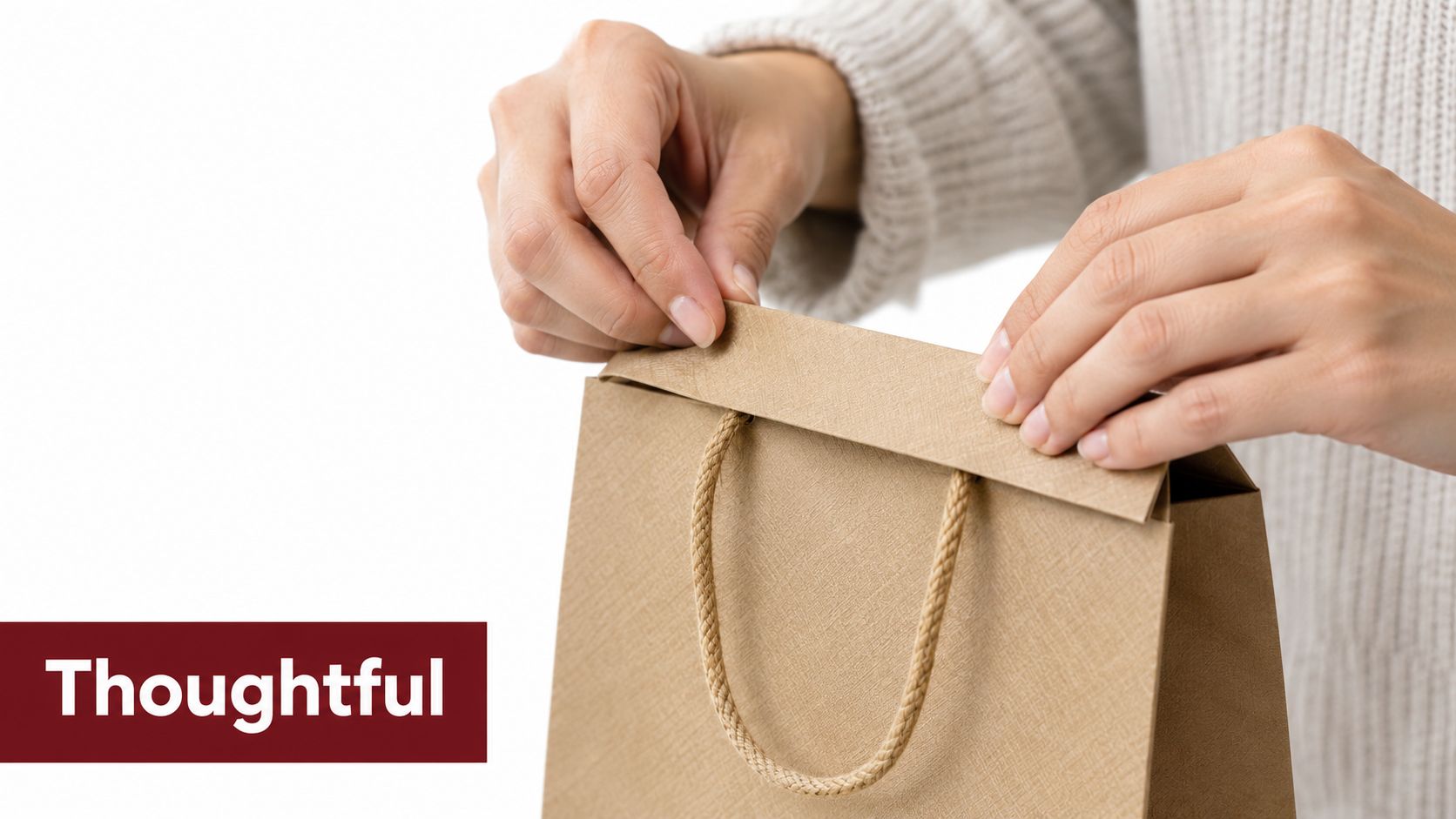
Packaging that carries the feeling
The best customised gift bags work on three levels:
- They identify the recipient: A first name, role or monogram makes a shared gift feel individual.
- They establish the mood: Soft neutrals suit a refined wedding morning, while florals, playful lettering or brighter colour can make a hens celebration feel more relaxed.
- They remain useful: A sturdy bag becomes a keepsake, shopping bag, storage pouch or travel companion after the event.
This is especially relevant in Australia, where gift bags already form part of seasonal buying habits. A 2024 Australia Institute poll found that 52% of Australians purchase gift bags at Christmas, with 44% buying between one and six bags and 9% buying seven or more. The same poll found that 65% of people who use gift bags reuse them, compared with 24% who reuse wrapping paper. These figures are reported in the Australia Institute Christmas waste polling.
Practical rule: Treat the bag as one of the gifts, not as a disposable container that happens to hold the gift.
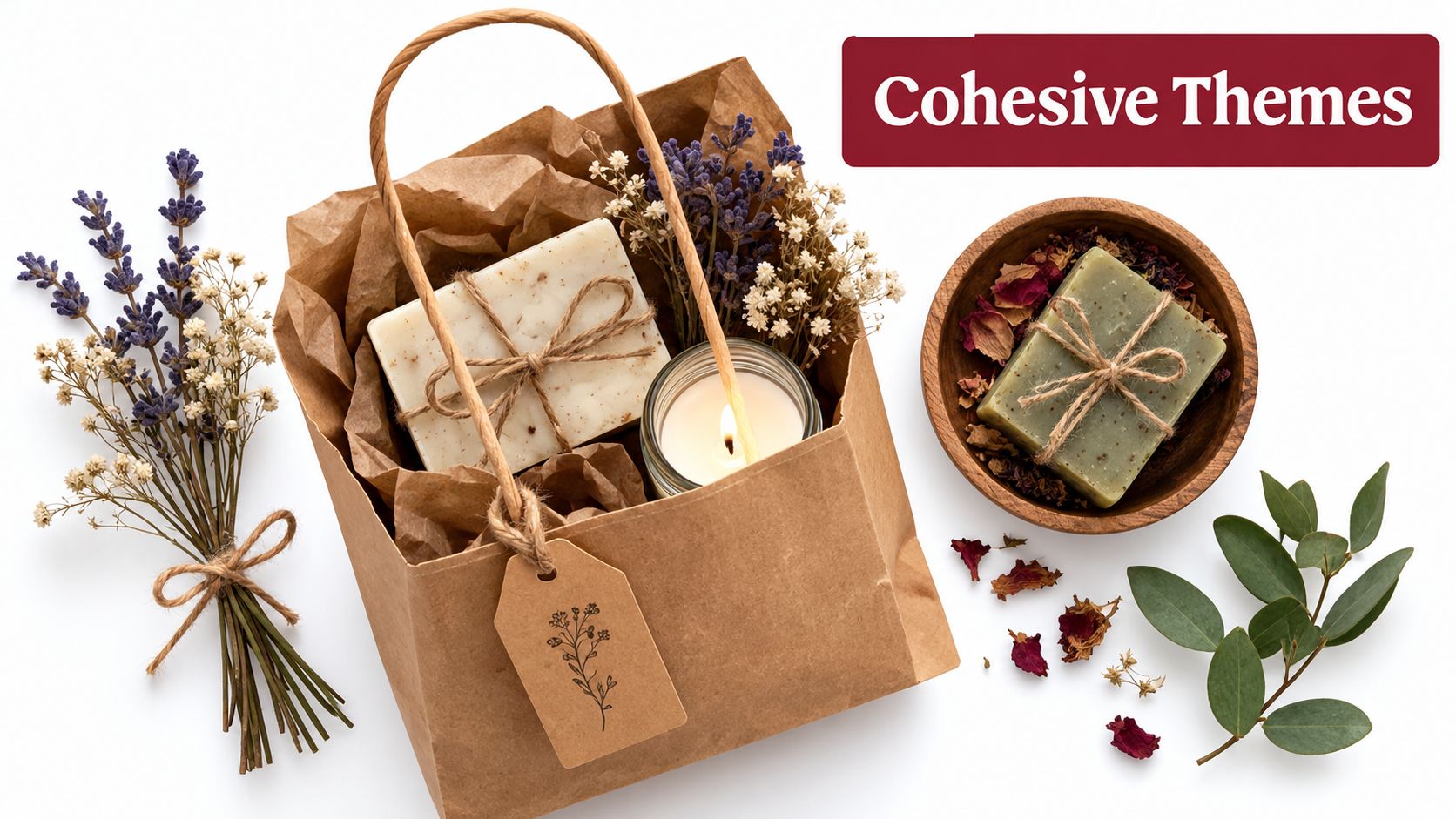
A bridal hamper feels more considered when every element belongs to the same visual story. A kraft bag with a botanical tag can make a candle, soap and handwritten card feel rustic and intimate. A smooth, pale bag with a restrained monogram can give a robe and matching slippers a more formal finish. The contents matter, but the bag frames how the recipient interprets them.
Personalisation should also be legible. Tiny lettering, crowded artwork and too many decorative elements can weaken the premium effect. One clear name, a simple motif and a finish that suits the bag usually create more impact than a crowded design.
Choosing the Right Materials and Sizes
Material choice affects more than appearance. It determines how the bag carries weight, how it photographs, whether the handles remain comfortable to hold and what happens when the recipient no longer needs it for the original occasion.
Kraft paper suits natural, botanical and relaxed wedding themes. Its visible texture gives small gifts warmth and can work particularly well with black, white, deep green or muted terracotta print. A heavier kraft construction feels more substantial than a thin lunch-style bag, especially when it carries a candle, bottle, boxed cosmetic or folded robe.
Cardstock and coated paper create a cleaner, more formal surface. They're useful when fine typography or crisp colour reproduction matters, although a glossy finish can look less natural and may complicate recycling if it forms part of a mixed construction. Fabric bags, such as cotton or canvas, offer the strongest keepsake value and tolerate repeated use, but they need artwork and printing methods suited to textile surfaces.
For practical background on paper construction and format choices, Monopack ltd's kraft bag guide is a useful reference when comparing kraft styles.
Match the bag to the contents
A good fit protects the gift and improves the reveal. The bag shouldn't bulge at the sides, force the handles apart or leave a small item lost at the bottom.
| Contents | Useful design consideration | What to avoid |
|---|---|---|
| Proposal card, jewellery box or small keepsake | Choose a compact bag with a firm base and a clean printable front | An oversized bag that makes a small gift feel insubstantial |
| Candle, soap, tea or beauty items | Allow enough width for the largest item, with tissue paper to prevent movement | Filling the bag tightly so the packaging creases |
| Robe, pyjamas or slippers | Use a wider, deeper format with handles that remain comfortable under load | Narrow gussets that compress soft garments |
| Mixed bridal hamper | Measure the packed contents rather than the individual products | Ordering from the dimensions of an empty product alone |
The Australian personalised gifts market was estimated at USD 492.84 million in 2025 and is projected to reach USD 894.83 million by 2034, with an implied 6.86% CAGR from 2026 to 2034, according to Deep Market Insights' Australia personalised gifts market data. The same source identifies customised accessories as the largest product segment in Australia in 2025, a useful indication that presentation items increasingly need to feel personal and worth keeping.
Specify the end of life before approving the design
A bag can be technically recyclable but still fail in practice if its handles, ribbons, laminates or metallic decorations can't be separated. The NSW packaging framework requires brand owners with annual turnover of $5 million or more to meet packaging stewardship obligations. NSW also requires review of 100% of new and existing packaging against Sustainable Packaging Guidelines and 90% recovery of packaging materials by 30 June 2028, as outlined by the NSW Environment Protection Authority.
For an Australian order, simpler construction is often the more responsible choice. Ask for a clear material specification, minimise mixed-material trims and include disposal guidance where it could prevent confusion. A reusable fabric bag, a mono-material paperboard bag or a certified compostable structure can each be appropriate, provided its end-of-life pathway is clear.
Printing Techniques and Personalisation Options
Personalisation works best when the technique supports the character of the occasion. Start with the bag's surface, then consider the artwork, the number of colours and the level of detail. A design that looks elegant on a digital proof may lose clarity when reduced to a small print area or transferred onto textured paper.
Select the method for the artwork
Screen printing suits bold names, logos and simple motifs. It produces a strong visual mark and works well when the design uses limited colours. It isn't the natural choice for a highly detailed floral illustration with many tonal changes.
Digital printing is flexible for full-colour artwork, photographic detail and designs that vary from bag to bag. It can be useful when every bridesmaid receives a different name or role, although the final finish depends heavily on the material and printer settings.
Foil stamping creates a reflective, formal effect for initials, dates and short phrases. Gold, silver or coloured foil can look beautiful against a dark or matte surface, but metallic details should be used deliberately. Too much shine can compete with the bag's shape and the gift inside.
Monogramming is the most restrained option when the aim is a keepsake rather than a loud event accessory. Initials in a classic serif, a small name in script or a role such as “Mother of the Bride” can make the bag feel exclusive without overwhelming the rest of the styling.
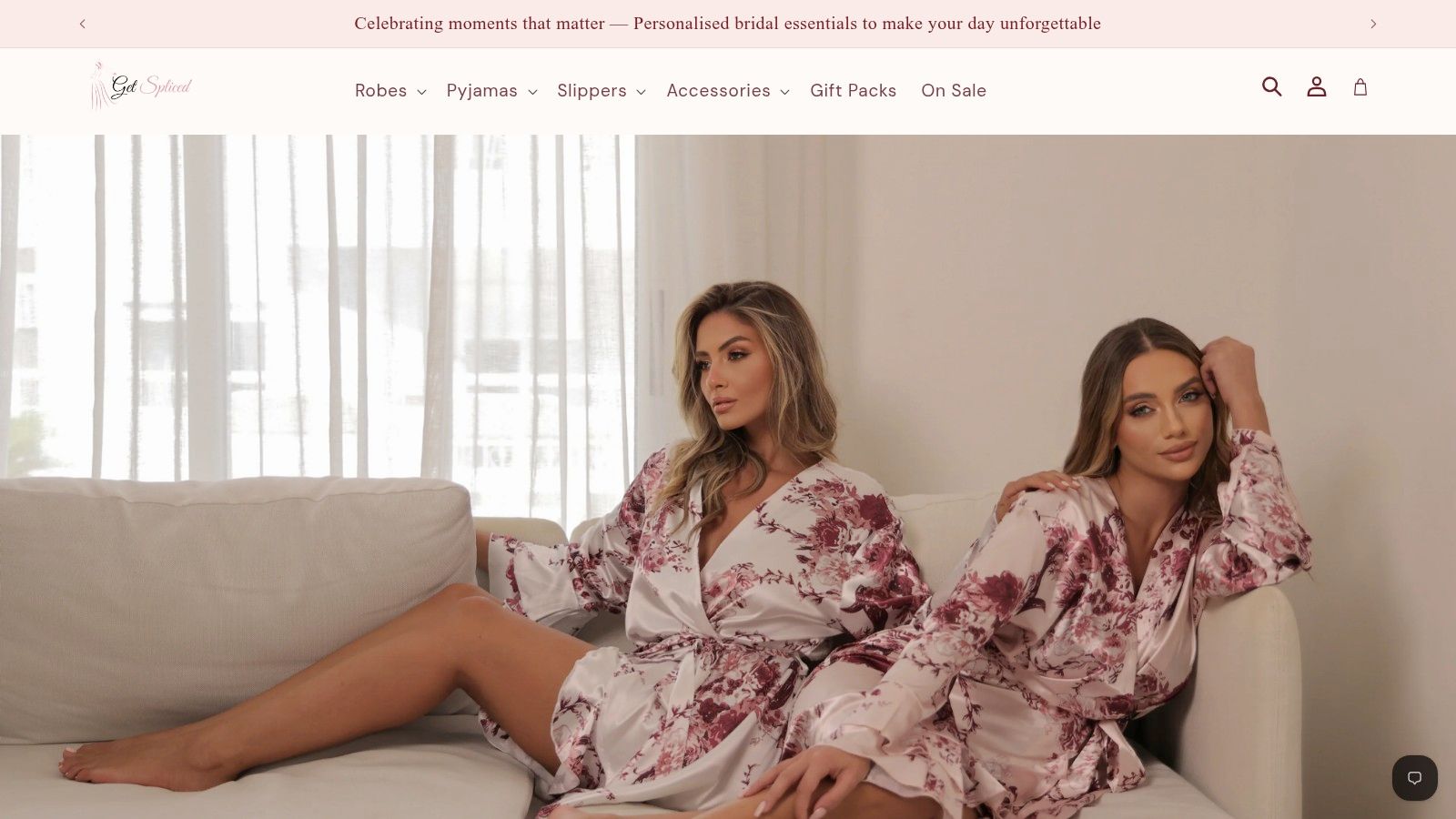
A floral robe, matching pyjamas and a personalised bag can tell one coherent story when the lettering and colour treatment are restrained.
Proof the design in a disciplined order
Artwork approval isn't a formality. It protects the colour balance, positioning and legibility that make the bag feel polished.
- Confirm the exact wording. Check names, titles, initials, dates and apostrophes before the artwork is prepared. A spelling error on a personalised item is difficult to correct after production.
- Review the print area at its real size. A name can appear generous on a screen and become too small on the finished bag. Look at the actual dimensions, not only the full-page proof.
- Check contrast against the material. White ink on kraft, pale lettering on satin-like fabric and metallic print on a reflective surface can all lose definition.
- Approve one physical or carefully scaled proof where possible. Screen colours vary from the final surface, particularly with textured paper and fabric.
- Confirm whether every bag is identical. If names or roles change, ask how the supplier will manage the variable artwork and check the full list before production begins.
The most effective designs usually have one hero detail. That might be a monogram, a small floral emblem or a date. Additional tags and ribbons can provide texture without forcing every message into the printed artwork.
Bulk Ordering Versus DIY Assembly
The decision between ordering finished customised gift bags and assembling them yourself depends on what you value most. Bulk ordering creates consistency. DIY assembly creates flexibility. Neither approach automatically produces a better result.
A professionally produced order suits a bridal party where every guest should receive the same base design. The bags arrive with consistent sizing, print placement and handle construction, which removes much of the repetitive work from the final week. It also reduces the chance that one bag will have a crooked tag, a different ribbon or a visibly different fill level.
DIY assembly makes sense when the guest list is still changing or when each person needs a different combination of small gifts. You can add a last-minute note, change the tissue colour or adjust the contents for a particular recipient. The trade-off is that the work shifts to you, often at the point when other wedding tasks are competing for attention.
A practical comparison
| Consideration | Bulk customised order | DIY assembly |
|---|---|---|
| Consistency | Strong control over print, colour and placement | Depends on careful hand assembly |
| Flexibility | Changes may be difficult after approval | Easy to adapt until the final packing |
| Labour | Less repetitive preparation at home | Requires sorting, folding, filling and checking |
| Timing | Needs an early artwork and delivery plan | Can accommodate later content decisions |
| Finish | Usually more uniform across the group | Can feel personal, but small differences show |
| Risk | Incorrect artwork affects the whole order | Individual packing errors are more likely |
For Australian brides and organisers, Get Spliced offers Australia-wide delivery and free shipping over $150, which can simplify assembling coordinated robes, accessories and gift components. Treat delivery terms as part of the planning decision, not as an afterthought.
DIY is only the flexible option if someone has protected time to do the work carefully.
Whichever route you choose, create a packing checklist. Include the recipient's name, bag, contents, card, tissue, tag and final quality check. Pack one complete sample before assembling the rest. That sample reveals whether the size works, whether the handles sit correctly and whether the contents look generous without making the bag difficult to close.
Coordinating Bags with Themes and Hampers
A customised gift bag should feel like the opening scene of the gift, not a separate object placed beside it. The easiest way to create that connection is to select one shared feature, such as colour, texture, pattern or typography, and repeat it across the bag and the contents.
For a soft wedding-morning arrangement, a pale bag with a simple monogram can sit beside satin robes, crossover slippers and a matching pouch. A floral design works naturally with a botanical candle, a patterned robe or a small bunch of dried flowers. Kraft paper has a more tactile character, so it pairs well with natural twine, handwritten tags, soap, tea and neutral-toned packaging.
Build the hamper from the outside in
Start with the bag rather than buying individual gifts without a container in mind. Its size and structure should guide the contents.
- Choose the visual anchor: This may be the bag's print, a robe pattern, a champagne flute or a personalised card. Keep the other elements quieter.
- Repeat one colour: Use the same shade in the tag, ribbon, tissue or product label. Exact matching isn't necessary, but the relationship should feel intentional.
- Balance textures: Combine one smooth element, such as satin, with something tactile, such as kraft paper, cotton or dried botanicals.
- Leave breathing room: A hamper looks more considered when the recipient can see the main pieces instead of receiving a tightly compressed collection.
- Keep names consistent: Use the same spelling, capitalisation and style on the bag, card and any matching accessory.
The emotional effect comes from recognition. When a bridesmaid sees her name on the bag and then finds a matching name on a robe or pouch, the set feels assembled specifically for her. That doesn't require every item to be identical. It requires the details to belong together.
Design for the unboxing sequence
Think about what the recipient sees first, second and third. Place tissue paper at the top, position the most recognisable item where it can be glimpsed and keep the personal note accessible. If the bag contains a robe, fold it so the colour or monogram appears as soon as the tissue opens.
A mismatched bag can weaken an otherwise beautiful hamper. A patterned bag paired with several competing labels may feel busy, while a plain bag with a carefully chosen tag can look more luxurious. Cohesion comes from editing, not from adding decoration to every surface.
Ideal Use Cases for Special Occasions
The right customised gift bag changes slightly with the occasion. A proposal calls for intimacy, a hens party can be more playful and a thank-you gift should feel personal without looking like leftover event stock.
For a proposal, choose a compact, structured bag with the recipient's name or a short phrase. Keep the decoration restrained so the focus remains on the moment. A proposal card, small keepsake, candle or jewellery box can sit inside with tissue paper and a handwritten note. The bag can then become a place to store letters or small memories from the engagement.
A hens party allows more room for personality. Bags can hold sashes, slippers, beauty items, recovery essentials, snacks or a small keepsake for each person. Use the bride's bag as the visual lead and give the rest of the group a related design, rather than making every bag compete for attention.
For a practical idea that extends beyond a single event, daily companion totes for travelers offers useful inspiration for choosing a reusable format that can continue into weekends away, gym visits or everyday errands.
Three occasions, three styling directions
| Occasion | Personalisation | Suitable feel |
|---|---|---|
| Proposal | Name, initials or a private message | Quiet, romantic and refined |
| Hens party | First names, roles or a shared phrase | Light-hearted, coordinated and photograph-friendly |
| Bridesmaid thank-you | Name, role and wedding date | Warm, polished and keepsake-focused |
| Mother of the bride or groom | Full title or personal note | Sophisticated and appreciative |
A thank-you bag for a bridesmaid or mother of the bride should acknowledge the relationship, not just the wedding. Pair a personalised accessory with a letter that explains why the person matters. The bag then becomes part of the gesture, while the words carry the lasting meaning.
The hens party gift bags guide can help organisers shape a coordinated set around the group, particularly when the bags need to work with robes, pyjamas, sashes and other getting-ready accessories.
Gift bags also suit wedding welcome arrangements, birthdays, milestone dinners and corporate thank-you moments. The principle stays the same: match the material, scale and tone to the recipient, then choose a personal detail that won't date quickly.
When selling a personalised gift bag or gift set as a present in Australia, remember that the recipient has the same basic consumer rights and guarantees as the person who bought it, according to the Australian Competition and Consumer Commission's consumer rights guidance.
Presentation Tips for a Stunning Reveal
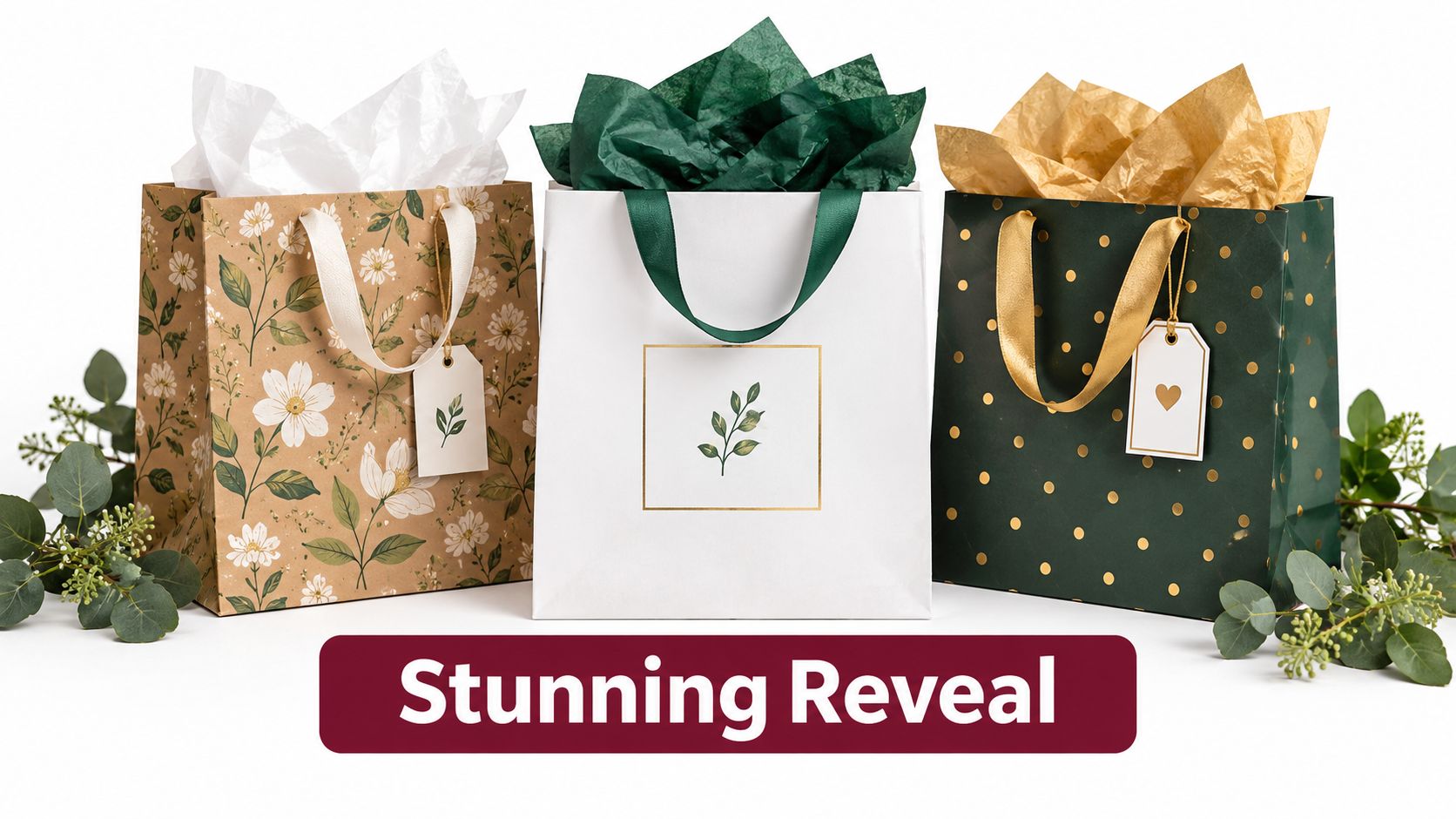
A beautiful bag can still look unfinished if it's overfilled, underfilled or arranged without a clear focal point. Presentation starts with the first visible layer. Tissue paper gives height, protects the contents and creates a pause before the recipient reaches the gift.
Begin by placing the heaviest item at the base. Add softer or smaller pieces around it so they don't shift, then bring tissue paper up the sides rather than pushing it down into a flat wad. A single fold of contrasting tissue can add structure, while too many colours may distract from the personalised print.
Assemble each bag in the same order
- Prepare the contents: Remove excess packaging, check labels and place any fragile item in a protective sleeve or box.
- Create the base: Put the heaviest piece in first, keeping its weight centred.
- Add the personal note: Position it where it can be found early, but not so prominently that it hides the main gift.
- Build the tissue: Use enough paper to create volume without forcing the bag open.
- Finish the handles: Tie a ribbon or attach a tag where it can be seen, keeping knots secure and tidy.
- Complete a visual check: Stand the bag upright and inspect the front, sides and handle alignment.
For a gentle, useful addition to a bridal hamper, a green tea set from Pep Tea can sit above a folded robe or beside a candle. The package should be visible enough to communicate the theme, while the tissue still protects the contents during transport.
Make a group display look intentional
Line bags up by recipient or arrange them from smallest to largest. Keep printed fronts facing the same direction and use consistent tissue height. If the bags sit on a gift table, leave enough space for guests to pick them up without disturbing the rest.
For larger celebrations, assemble one complete sample and photograph it from the angle guests will see. Use that image as the reference for the remaining bags. It prevents small decisions, such as where to place a tag or how high to lift the tissue, from changing halfway through the process.
The gift wrapping services guide provides further ideas for coordinating wrapping details with bridal accessories and gift presentation. The strongest reveal remains simple: a stable bag, a visible personal detail, a tidy arrangement and enough space for the recipient to open it comfortably.
Before the event, store finished bags upright in a dry, clean area. Keep food, candles and scented products separated where odours could transfer. For paper bags, avoid damp storage and unnecessary compression. For reusable fabric bags, protect the printed surface from rubbing against rough boxes or unsealed decorations.
Final check: If the bag looks beautiful before it is opened, the recipient already feels considered.
Australian disposal guidance varies by material and council. In Victoria, wrapping paper with plastic, metallic or glitter elements shouldn't go into kerbside recycling, and paper containing metallic or glittery elements belongs in general rubbish, according to Sustainability Victoria's packaging guidance. Marion Council advises that damaged gift bags may be recycled only after handles and ribbons are removed, while cellophane, foil and plastic or glitter-containing wraps belong in the waste bin, as explained in its waste and recycling guidance.
Recycling Near You also advises households to keep plastic bags out of home recycling because they can contaminate the stream and jam sorting machinery. Its festive guide notes that over 90% of Australian households have access to kerbside recycling collections, but access doesn't guarantee that every material belongs in the same bin, as outlined in the festive recycling guide.
For time-sensitive events, plan earlier than feels necessary. Customised bags may involve choices about size, material, handles, colour, artwork placement and added features. Approvals, setup and freight all affect the schedule, and Australian packaging FAQ guidance commonly allows around four weeks for custom orders, with delivery potentially taking one to two weeks depending on location, as explained in the custom packaging FAQ. Build in time for artwork corrections and inspect the delivery as soon as it arrives, not on the morning of the wedding.
Choose your bag style, recipient list and personalisation before ordering, then confirm the material, artwork proof, production schedule and delivery buffer in writing. For a coordinated bridal hamper, begin with one complete sample and use it to finalise the contents, tissue, tags and display before preparing the full set.