

Your wedding morning can look polished and still feel chaotic. One bridesmaid is hunting for a hairpin, someone else is steaming a robe, the photographer is asking where the champagne flutes are, and you're trying to stay calm while the room fills with half-packed bags and last-minute instructions. Custom bridal accessories fix that tension fast, because they turn the getting-ready space into something organised, personal, and photograph-ready.
In Australia, that matters more than most brides realise. There are 120,844 registered marriages in 2024, and the scale of wedding activity means the good suppliers get busy, especially around popular dates and weekend ceremonies ABS data on Australian marriages. The smart move is to choose pieces that look beautiful, travel well, and still make sense after the wedding day. That's where the right robe, pyjama set, slippers, clutch, box, or keepsake earns its place.
Why Custom Bridal Accessories Matter
The morning-of rarely stays calm. Someone is late, lashes are still being done, and the room shrinks fast once dresses, gift bags, makeup, and photo gear pile up. Custom bridal accessories bring order to that chaos. They make the whole group look intentional instead of scattered.
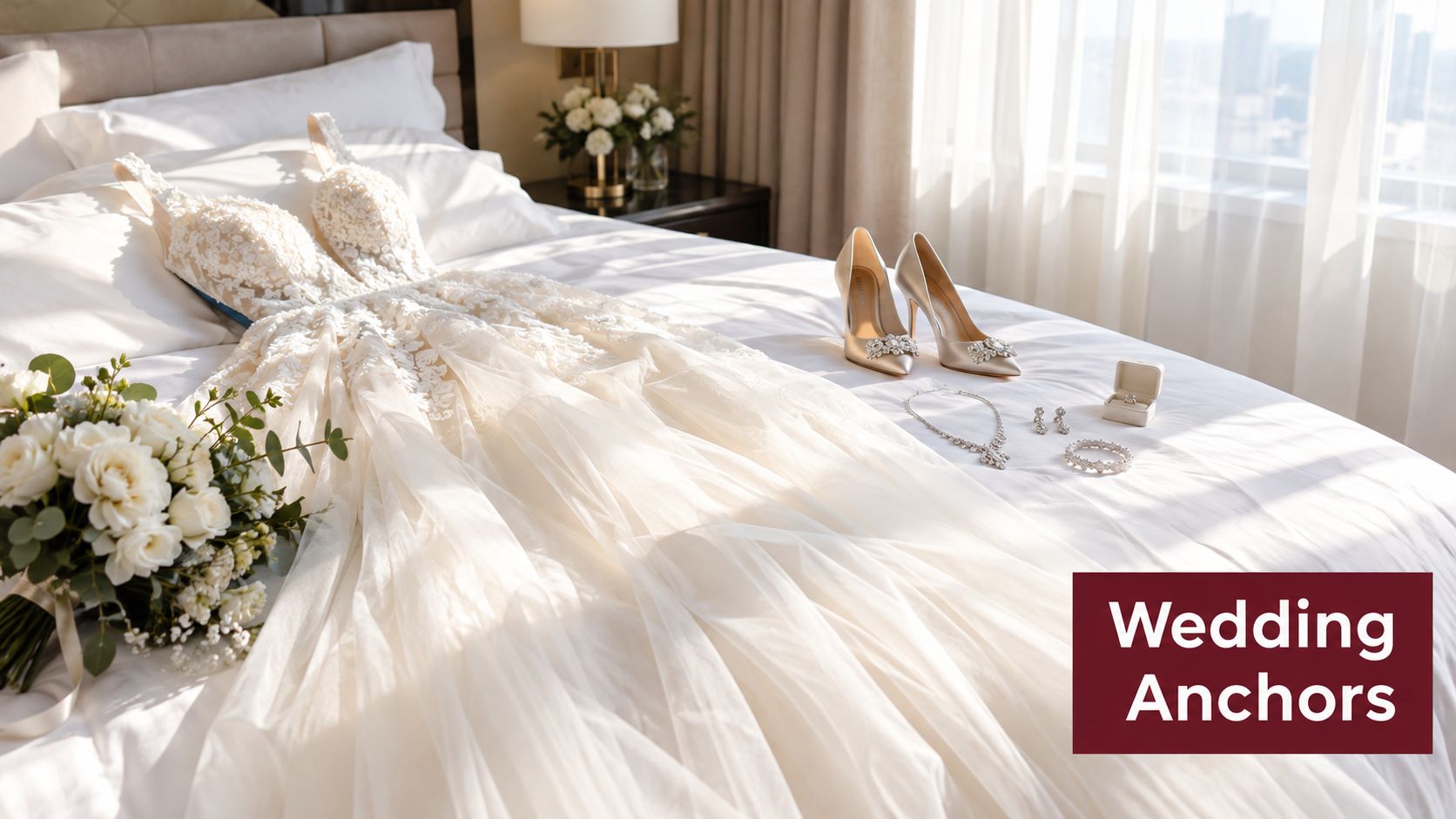
They set the tone before the ceremony starts
A matching robe or monogrammed pyjama set turns the getting-ready room into part of the wedding, not just a hotel stopover. That matters because the first photos happen well before the aisle walk, and whatever is in the frame becomes part of the story. Coordinated pieces give the morning a polished, close-knit feel without trying too hard.
Practical rule: choose one colour story and one personalisation style, then repeat it across the morning items. Consistency photographs better than trying to make every piece stand out.
Keeping the focus on the people closest to you
When the bride's mother, bridesmaids, and flower girls each receive something considered, nobody feels like an afterthought. That is the value of custom bridal accessories. They create belonging. You are not handing out random gifts. You are giving each person a clear place in the day.
That flexibility matters for bridal parties spread across different ages, styles, and budgets. A simple title on one set, initials on another, and a keepsake box for someone who will not wear matching sleepwear can still feel cohesive. For a straightforward example of how coordination can stay polished without becoming rigid, the styling ideas in matching pyjama sets show how a group can be dressed with one shared look and still keep individual pieces practical.
Sustainable reuse should guide the purchase too. Bridesmaids' pieces, robes, slippers, and boxes should earn their place after the wedding, whether they are worn again, packed for a honeymoon, or kept as a memory. In Australia, that practical approach matters even more because you want accessories that suit the season, arrive on time, and work for a bridal tribe that may be spread across different cities.
The Rise of the Bride Tribe and Matching Essentials
Australian wedding culture has shifted away from making the bride stand alone. The mood is more inclusive now, more chosen-family, and matching essentials fit that shift perfectly. They tie the morning together for bridesmaids, mothers, sisters, and flower girls without feeling forced.
Matching doesn't need to mean identical
The smartest bridal parties keep the look coordinated, not cloned. Match on colour, texture, title, or packaging, then let the pieces differ where it counts. That keeps the photos polished and gives each person something she'll use again.
You see it in robes, slippers, proposal boxes, and keepsake gifts. One shared visual language is enough. If you want a clear example of how coordinated items can still feel varied, custom shirt examples worth studying show how typography, placement, and colour do the heavy lifting even when the base items are different.
The collection should work as a system
Buy the set with reuse in mind. A robe should pair with slippers. A box should hold a robe, a card, and a small keepsake. A champagne flute can work for the proposal, the hens party, and the wedding morning.
That system approach suits Australian weddings especially well. It works for smaller bridal parties and for groups spread across different suburbs or states, where delivery timing and sizing need to be handled early. It also keeps the buying decision sensible in our seasons, because you want pieces that suit the weather, arrive on time, and still make sense after the day is over. For a close look at how one matching sleepwear concept can sit inside a wider bridal set, the internal guide on matching pyjama sets is worth keeping in mind.
When you choose with longevity in mind, the gifts stop feeling disposable. That is the point. Bridal accessories should earn their place again after the wedding, whether they are worn, packed for a honeymoon, or kept as a memory.
How to Personalise Your Wedding Essentials
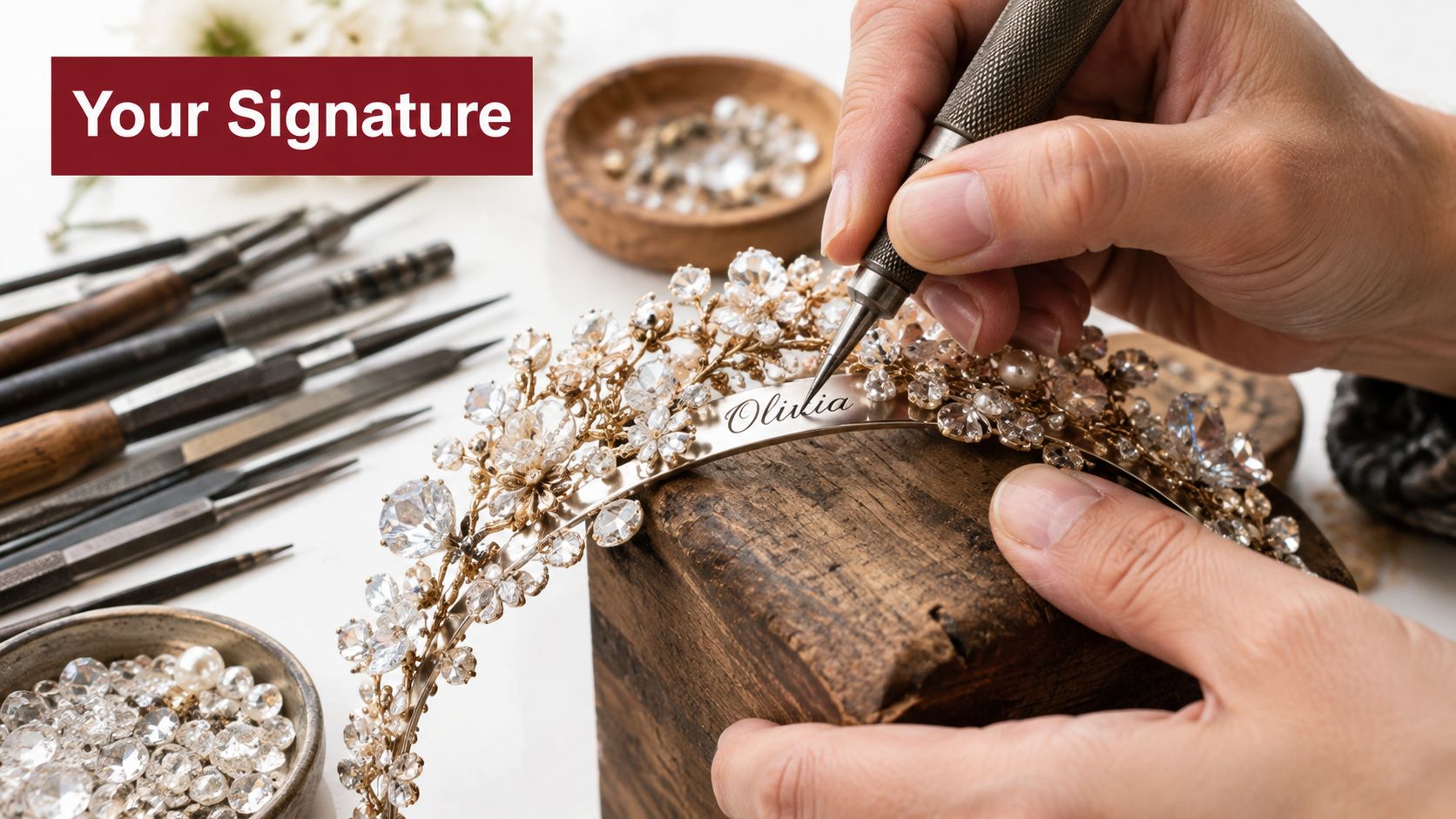
Personalisation only works when it looks intentional. A badly placed monogram or unreadable script can make even a lovely robe feel rushed. If you want your accessories to look premium in person and in photos, start with the details that control clarity.
Begin with the name treatment
Decide whether the item needs a full name, initials, a role title, or a short phrase. For bridesmaids, roles like Maid of Honour, Bridesmaid, or Mother of the Bride usually work best when the item is a gift. For keepsakes, initials are cleaner and more reusable. If you want something that lasts beyond the wedding weekend, avoid locking the item to a date unless that date is meant to stay part of the memory.
Keep the font readable at photo distance
Script fonts can look elegant, but they only work if the letters stay distinct from across a room. Block fonts are cleaner for modern sets, while a softer script suits satin or lace when the item already has a romantic feel. The test is simple. If you can't read the title quickly in a group photo preview, the font is too decorative.
A good external reference point is how Robosize recommends your size, because the same logic applies here, measure carefully, then choose the result that fits the actual wearer rather than the fantasy version of her size.
Place the personalisation where the garment can carry it
Chest placement suits pyjamas and robes. Sleeve or cuff placement can work on wraps and accessories. Boxes, flutes, and pouches need cleaner, smaller text because the surface is part of the presentation. Don't crowd the item. The design should read as polished, not loud.
Practical rule: confirm spelling, titles, and capitalisation in one proofing round, then stop changing the wording. Constant edits are how polished orders turn messy.
For a deeper look at monogramming options, the page on monogramming services is useful for understanding how monograms can be handled across different item types.
Choosing the Perfect Style and Fabric
Fabric choice decides whether your accessories feel luxurious or fussy. A set can look stunning in a mood board and still be the wrong pick for a humid morning, a cold regional venue, or a long getting-ready window. Choose with the location first, then the photos.
Satin, lace, and cotton each serve a different purpose
Satin gives you sheen, smooth drape, and the most classic bridal look. It's the right call when you want a polished morning aesthetic and a clean silhouette in photos. Lace brings texture and romance, but it needs careful handling, especially when the garment already includes embroidery or delicate trim. Cotton is the practical choice for comfort, movement, and repeat wear, which matters if you want the piece to live on after the wedding.
A good sewing reference for lace finishing is Display Guru's sewing guide, because trim placement and finishing detail make a big difference to how polished the final piece looks.
Match the fabric to the venue and season
A warm-weather coastal wedding calls for breathable, light-feeling pieces. Heavy layers will look pretty for five minutes, then become uncomfortable. A winter ceremony in Victoria can justify a plush robe or a warmer wrap because comfort matters when the morning starts early and the room is cool.
| Fabric choice | Best for | Why it works |
|---|---|---|
| Satin | Glamorous photos and coordinated sets | Smooth finish, strong visual impact |
| Lace | Romantic styling and detail-led looks | Soft texture, feminine movement |
| Cotton | Long wear and relaxed mornings | Comfortable and easy to reuse |
Keep the palette controlled
Don't overload the bridal party with too many textures and tones. One main colour, one accent, and one consistent personalisation style are enough. If the bride wears something more detailed, let the bridesmaids stay simpler so the overall effect still feels balanced.
The point is not to impress with quantity. It's to make the room look intentional from every angle, without anyone feeling overdone or underdressed.
Planning Ahead, Timelines and Sizing
Custom orders punish procrastination. Start early or accept avoidable stress. Personalised bridal accessories need time for making, packing, and delivery, and Australia Post treats Parcel Post and Express Post as delivery estimates rather than guarantees, with transit affected by posting time and destination Australia Post domestic sending guidance. Once you add weekends, public holidays, and custom work, the calendar tightens fast.
Order early enough to absorb production and shipping
For interstate bridal parties, the buffer has to be even bigger. Same-state and interstate delivery can differ, and regional addresses may take longer again Australia Post speeds and coverage. Use the workshop dispatch date as your real starting point, not the day you place the order.
A practical benchmark is simple. Allow enough time for production, then allow extra for shipping, especially if the items need to reach bridesmaids in different suburbs, towns, or states. That matters in Australia, where wedding tribes are often spread out and parcels do not all travel the same way.
If you are planning around a wedding morning, use the wedding preparation timeline to work backwards from the day. Accessories should be one of the first things you lock in, not the last.
Get sizing right the first time
Collect sizes before you place the order. Ask for actual measurements, then match the style to the person, not the other way around. Before you collect sizes, it helps to know each person's actual measurements, and how Robosize recommends your size is a useful reference for getting this right.
That is especially important for robes, pyjamas, and slippers, where the fit has to look good on camera and still feel comfortable while getting ready. A set that pinches or hangs badly will show in every photo.
Get the measurements in the same message as the title spelling and delivery address. It cuts out the usual back-and-forth when one bridesmaid sends a nickname and another forgets her size.
Useful rule: order for the slowest delivery scenario, not the fastest one. If the item arrives early, you can press, pack, and store it properly. If it arrives late, you are scrambling.
Investing in Quality and Longevity
I'm blunt about this. If an accessory only makes sense for one photo and then gets shoved into a drawer, it's a weak buy. A better piece earns its keep after the wedding, whether that means another hens night, an anniversary trip, or a quiet Sunday morning at home.
Reusability is the real sustainability test
Sustainable shopping isn't just about looking eco-conscious. It's about choosing items that stay useful. A well-made robe, a durable clutch, or a simple personalised pouch can be used again, which makes it more defensible than a single-use novelty item that feels thoughtful on the day and pointless afterwards.
That also changes how you should personalise. A date-free monogram is easier to rewear than a title locked to one year. A colour that fits everyday life is smarter than a shade that only matches the wedding palette. A washable textile is easier to justify than a delicate piece that requires specialist handling every time it's used.
Build around materials that age well
Look for stitching that stays neat, trims that don't fray, and closures that won't fail the second someone packs the item into luggage. The finish matters because wedding accessories get handled more than people expect. They're worn, folded, photographed, packed, opened, and often stored.
I'd rather a bride choose one strong item she can keep than three flimsy ones she'll never touch again. That's the quieter luxury move, and it usually feels better six months later than the over-decorated option ever did.
Creative Use Cases and Gift Ideas
The strongest custom pieces earn their place across the whole wedding journey, not just on the morning of. A personalised box can work as a proposal gift, then hold accessories before the ceremony, then become a keepsake drawer afterwards. That kind of reuse is what makes gifting feel thoughtful instead of cluttered.
Use them as part of the proposal moment
A custom bridal box can hold the note, the title item, and a few small surprises for the people you're asking to stand beside you. It feels more special than handing over a loose gift bag, because the packaging itself becomes part of the memory. The same logic works for bridesmaid keepsakes and thank-you gifts after the event.
Build your hens party around the same visual set
Matching accessories work beautifully at the hens, especially if you want a cohesive look without demanding everyone wear the same outfit. A sash, a flute, a makeup bag, or a pouch can create a consistent theme across the group. You get the photos, and they get something practical enough to keep.
Use pieces that travel well
Bridesmaids who are flying in or driving long distances need gifts that don't crush easily. Flat pouches, small boxes, and foldable pieces are smarter than bulky items that are awkward to pack. If the gift can sit in a carry-on and still look good on arrival, it's doing its job.
A practical Get Spliced option is a personalised bridal box, since it can hold robes, slippers, flutes, and cards in one coordinated presentation. That kind of structure keeps the gifting tidy and makes the opening moment feel deliberate rather than improvised.
Caring for Your Keepsakes
Once the wedding is over, treat the pieces properly or they'll age badly. Bridal accessories are not throwaway props, and the ones worth keeping need the same care you'd give any good garment or gift.
Follow the label, not your guesswork
For Australian textiles and clothing, care labelling is regulated under the Consumer Goods (Care Labelling) Information Standard 2023 Australian product safety guidance on care labelling. That means the care instructions on the finished piece matter, especially when satin, lace, embroidery, heat-transfer lettering, and trims are combined in one garment. Don't treat the base fabric as the whole story.
If the label says cold hand-wash, use that. If it says low-temperature ironing, don't chance a hotter setting because you're in a hurry. The finish can distort, the adhesive can fail, and delicate stitching can be damaged by a cycle that's too aggressive.
Store the pieces with the same care you'd use for formalwear
Clean everything before it goes away. Residue from makeup, champagne, or body products can set over time and become much harder to remove later. Then store each item in a dry, breathable place where it won't be crushed by heavier boxes or folded in ways that crease the fabric permanently.
For travel, use a flat pouch or clean garment bag rather than stuffing keepsakes into random luggage gaps. That protects embroidery, keeps lace from snagging, and stops accessory sets from arriving creased or bent.
The simple rule is this. If you want it to last, you have to care for it like it matters. The right custom bridal accessories should feel beautiful on the day, useful after the day, and easy enough to maintain that you'll keep them.
If you're choosing accessories for your own wedding, start with one coordinated set, one practical keepsake, and one item you know you'll use again. Build from there with your bridal party sizes, delivery windows, and fabric preferences in mind, then place the order early enough to avoid stress.