

The group chat has finally agreed on dinner, the bride's outfit is sorted, and you're comparing sashes while wondering whether anyone will notice the difference between the cheapest pack and something a little more considered. You want that lovely moment when everyone slips theirs on, the selfies begin, and the group looks pulled together. You don't want scratchy edges, peeling letters or another purchase to rescue the first one.
Cheap hen party sashes should save money without creating extra work. Spend on the details people can see and feel, then skip the extras that won't improve the celebration.
What Cheap Really Means for a Hen Party Sash
At the start of the night, a sash has a simple job: make the bride feel celebrated and give the group a shared detail. It doesn't need elaborate embellishment or an entirely new outfit underneath. Clear lettering, a comfortable fit and a colour everyone likes will do more than a pile of mismatched novelty accessories.
The mistake is judging value by the advertised sash price alone. A bargain stops being useful if you need urgent delivery, replacement lettering or a second order because the first batch doesn't match.
Count the whole accessory spend
Use this calculation before you buy:
Budget rule: Add the sashes, personalisation, delivery and any supplies needed to make them wearable. Divide that total by the people receiving them.
If the bride's sash is a gift from the group, agree how you'll cover it rather than adding it to everyone's bill without discussion. The same applies to matching accessories. A sash shouldn't become an excuse to insist that guests buy shoes, dresses or jewellery they won't otherwise wear.
Budget sensitivity isn't imaginary. In a 2024 poll of 1,500 social-media community members, 80% said they were willing to spend less attending a hen party than they had previously, according to Yahoo Finance Australia's report on hen-party spending. That's a community poll, not a representative measure of every Australian guest, but it's a useful reminder to keep participation costs visible.
Save on novelty, not usability
I'd choose a plain satin sash with readable lettering over a heavily decorated version with questionable finishing. Satin alone isn't a guarantee of quality, so judge the finished accessory rather than the fabric description.
Consider these trade-offs:
- Existing clothing beats a compulsory costume. Give guests a colour direction, not a shopping assignment.
- Simple wording beats crowded printing. A clear title is more useful in photographs than a long slogan.
- A wearable finish beats extra sparkle. Decorations aren't a bargain if they catch on someone's dress.
The smartest purchase is something the group can comfortably wear and genuinely wants to keep. Lowest price is a starting point, not the final decision.
How to Judge Quality Before You Buy
Don't commit to a group order from a flattering product photograph alone. Request a sample where possible, then handle it as you would any accessory you're planning to wear against clothing and skin.
Inspect the construction
Check the sash laid flat, then try it over the intended outfit. Pay particular attention to the shoulder, neck opening and fastening rather than just the decorative front.
- Stitching and tie points: Gently tug the joined ends and inspect any reinforced areas. Reject loose seams or a fastening that looks barely attached.
- Printed lettering: Lightly flex the printed section. Letters should move with the fabric without visible cracking, flaking or lifting.
- Edges and decoration: Run your fingers along the binding and trims. Rough edges, loose embellishments and exposed sharp staples are reasons to stop.
- Fit and movement: Walk, sit and reach forward. The sash should stay closed without needing constant adjustment or pulling awkwardly across the outfit.
Photograph the sample indoors and outside. You're checking whether the title is legible, whether the sash twists, and whether the colour works with the clothes, not trying to produce a polished product shot.
Read the care information
For covered textile products, Australia's Consumer Goods (Care Labelling) Information Standard 2023 requires appropriate care instructions that account for the finished article, including its fibres, dyes, decoration, trims and fasteners, as explained in the Australian mandatory standard for textile care labelling.
Look for clear English instructions or recognised care symbols. Don't assume the cleaning method for plain satin is suitable for satin carrying vinyl lettering, metallic decoration or glued lace.
A fabric description tells you what you're buying. Usable care instructions tell you whether you can look after it.
Ask the supplier to resolve vague instructions before ordering. “Gentle care” doesn't tell you whether water, detergent or an iron is suitable.
Keep the listing and the care information together. An inexpensive accessory still deserves proper product information, and a low price isn't a reason to accept an unclear cleaning method or a rough finish.
Choosing the Right Sourcing Route for Your Group
Choose your sourcing route around the event, not around how impressive the ordering process sounds. A casual dinner doesn't need a bespoke production run, while a carefully styled weekend may justify coordinated names and colours.
Sash sourcing routes at a glance
| Source | Typical cost per sash | Lead time | Personalisation | Best for |
|---|---|---|---|---|
| Ready-made packs | Compare the usable pack cost, not just the advertised unit price | Check stock and delivery estimates | Usually limited to listed titles | Casual or time-sensitive celebrations |
| Bulk personalised orders | Request an all-inclusive group quote | Allow for proofs, production and delivery | Names or roles where offered | Groups wanting consistent wording |
| Fully custom printed sashes | Quote-dependent, especially for artwork and setup | Confirm design approval and production timing | Bespoke wording and design, subject to supplier capability | A distinctive theme or coordinated wedding palette |
| Handmade DIY | Materials, tools and unsuccessful attempts determine the total | Depends on your available making time | Flexible within your skills and materials | Crafty organisers who already own useful supplies |
Treat those comparisons as decision criteria, not fixed market prices. Suppliers differ, and a personalised order isn't automatically cheaper because you're buying for a group.
Match the route to the occasion
Ready-made is my recommendation for a relaxed, last-minute gathering. If the bride wants a simple title and the rest of the group doesn't need individual names, there's little reason to introduce proofing and production into the schedule.
For matching roles or names, an Australian bridal boutique such as Get Spliced, which includes sashes among its bridal accessories, is one option alongside ready-made packs, specialist printers and DIY. Ask what personalisation is available and what the quoted price includes rather than assuming every design can be altered.
Custom printing makes sense when the wording itself matters: a shared phrase, a particular colour combination or a design that ties into the wedding stationery. It's less compelling when an existing title already does the job.
Use your hen party accessories shortlist to decide what the sash needs to coordinate with. If you're also considering robes, personalised pouches or a bridal gift box, choose a shared colour direction rather than buying everything with identical decoration.
DIY belongs on the shortlist only when you enjoy making things. Don't volunteer for a craft project because the ribbon looks inexpensive.
Making Your Own Sashes at Home
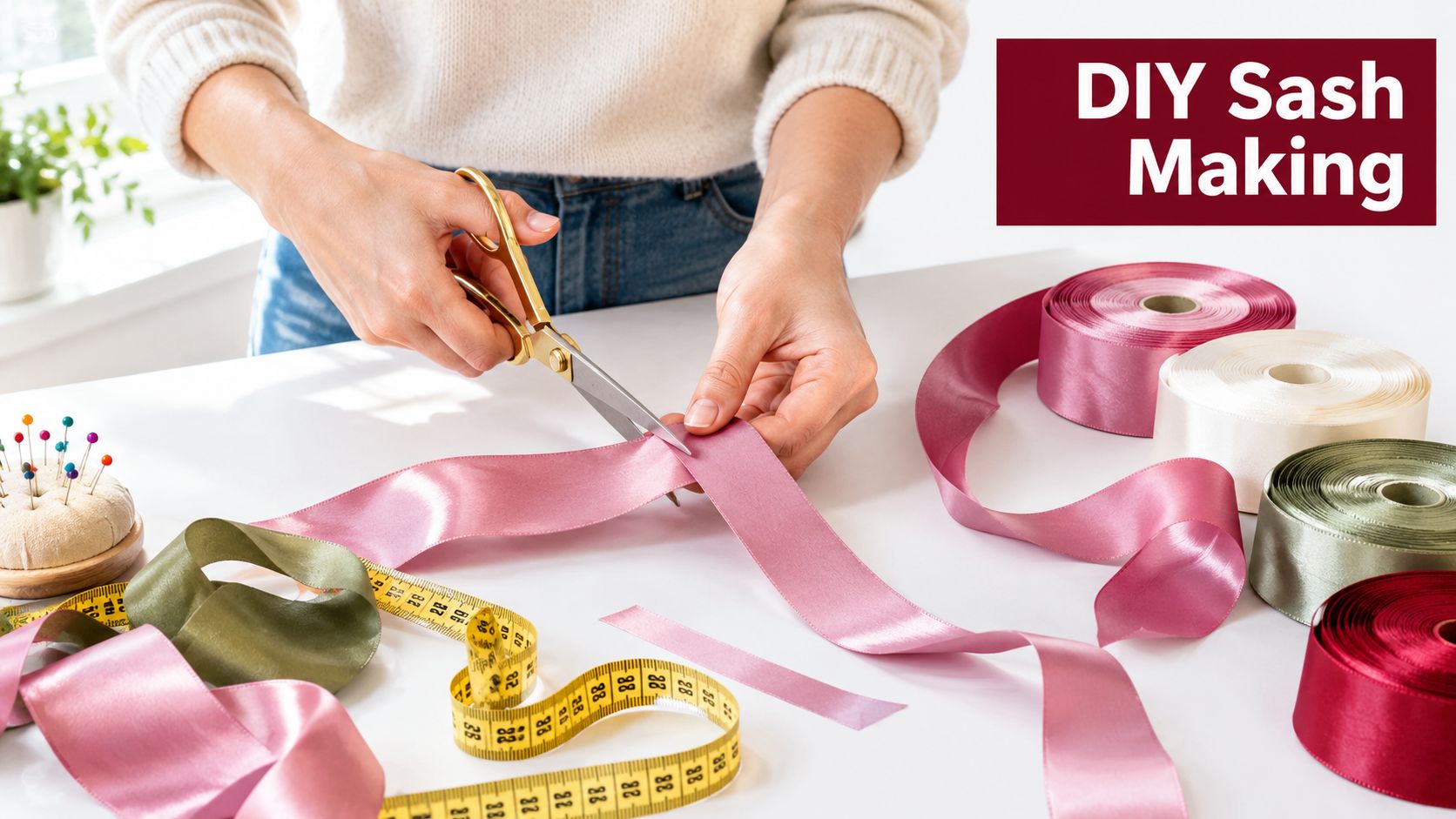
DIY can produce a lovely result without a sewing machine, but keep the design restrained. Start with a plain sash, readable lettering and a dependable closure. Add decoration only after that basic version works.
Buy the essentials first
Build your shopping list around the method you'll use:
- Base material: Wide satin or cotton ribbon that sits comfortably across the body.
- Measuring and cutting tools: A tape measure, sharp fabric scissors and tailor's chalk or a removable fabric marker.
- Edge finishing and closure: Suitable fabric adhesive or hemming tape, plus a smooth fastening compatible with your material.
- Lettering: Fabric paint, iron-on vinyl or printable transfers specifically suitable for the chosen fabric.
- Optional details: Soft lace trim or a securely attached small charm, provided it won't snag clothing.
Get current Australian supplier quotes rather than relying on a generic craft budget. Don't buy a cutting machine for a single sash project. Supplies you already own are where DIY has the clearest opportunity to save.
Make a prototype before the matching set
Drape the ribbon across the intended outfit and mark where the ends should meet. Leave room for comfortable movement, then use that successful fit as your cutting template.
Finish cut ends using a method approved for the ribbon. Test adhesive or hemming tape on an offcut first, since a visible glue mark can spoil an otherwise neat sash.
Lay out the bride-to-be title on paper before applying it. For iron-on vinyl or printable transfers, follow both the lettering manufacturer's application instructions and the fabric's heat guidance. Don't guess an iron setting, particularly with satin.
Fabric paint is another option for bridesmaid names. Put a protective layer beneath the fabric, practise on a scrap, and let it cure according to the product instructions before fastening or folding the sash.
DIY reality check: Price the whole basket, then account for your time and a practice piece. Compare that with a finished group order before committing.
Uneven cutting, bleeding paint and peeling vinyl are good reasons to simplify the method, not add more decoration. A clean, plain finish looks more intentional than a rushed attempt to disguise mistakes.
Bulk Ordering Without the Headaches
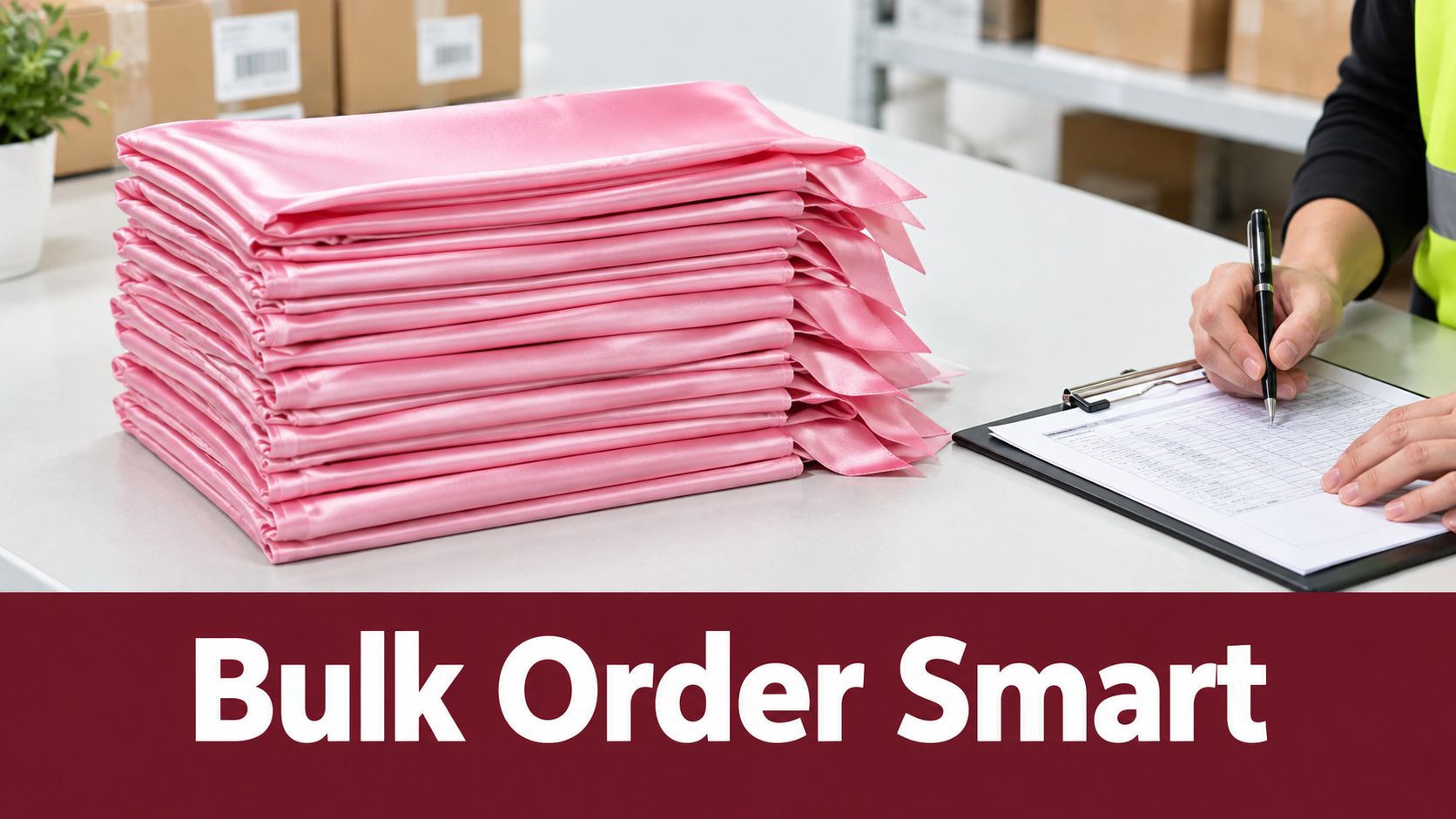
The most useful bulk-order tool isn't a discount code. It's a master list that everyone has checked before production begins. Keep names, titles, colours and approval notes in the same document so the organiser and supplier aren't working from different messages.
Use a written ordering sequence
- Confirm the quantity. Count the people receiving sashes, including the bride. Don't use the full invitation list if some guests haven't confirmed.
- Approve names and titles. Ask each person to check their entry, including capitalisation and preferred wording.
- Request a sample or proof. A physical sample shows fit and finish. A digital mock-up checks layout and spelling, but can't establish fabric quality.
- Compare the complete delivered quote. Include personalisation, shipping and any production charges. Ask the supplier to identify anything excluded.
- Set the arrival deadline. My recommendation is at least seven days before the celebration. That's a planning buffer for inspection and possible replacement, not a delivery guarantee.
- Inspect on arrival. Match every sash against the approved list and check that the group's colours and finishes are consistent.
- Save the paperwork. Keep the product description, proof approval, order confirmation and relevant messages together.
Treat fibre information as a technical specification. AS 2622:2019 addresses the designation of textile fibre content and its supply on made-up textile products, as described by Standards Australia's textile fibre-content standard. A decorative material description shouldn't replace a clear answer about what the sash is made from.
Resolve problems against the approved order
If something arrives misspelled or in the wrong colour, photograph it beside the written approval and contact the supplier promptly. Describe the discrepancy and the event deadline without assuming a particular remedy is guaranteed.
For delivery problems, distinguish dispatch from arrival. Ask for tracking and a realistic resolution rather than placing another rushed order immediately.
Keep the accessory deadline in your hen party planning checklist. One organiser should own the final approval and supplier communication, even if everyone helps choose the design. That keeps conflicting instructions out of production.
Styling Cheap Sashes to Look Intentional
A sash looks more polished when it belongs with the outfit rather than competing with it. Choose the clothing first, then decide whether the lettering needs contrast, warmth or a quieter finish.
A white tee and jeans can look beautifully coordinated with matching sashes. A slip dress usually needs less decoration, while a satin robe offers an easy setting for getting-ready photographs without introducing another costume.
Build around clothes people own
Give guests a flexible direction such as soft neutrals, dark separates or a favourite dress in the agreed palette. Don't make everyone buy an exact shade to accommodate an inexpensive accessory.
- For a daytime lunch: Keep the sash simple and let comfortable clothing carry the look.
- For an evening celebration: Check that the lettering remains readable against the outfit, especially under subdued lighting.
- For cooler weather: Try the sash over the jacket before leaving home. It shouldn't disappear beneath a lapel or interfere with the fastening.
- For getting-ready photos: Coordinate the sash with existing robes or pyjamas rather than adding competing prints.
Wear it diagonally across the body using its intended closure. Avoid improvised tight loops around the neck or fastening arrangements that restrict movement.
Give the details a shared direction
Match the lettering to a detail already present in the celebration, perhaps the invitations, flowers or table setting. Your hens party decoration choices don't all need to match, but they should feel comfortable together.
Personalise for the wearer, not just the photograph. Confirm that each person likes their title, and don't assume traditional role labels suit every group.
Afterwards, a bride's sash can sit beside photographs in a memory box. A bridesmaid's sash can accompany a handwritten thank-you note, or return for bridal shower photographs where the wording still fits.
For future flexibility, choose neutral sashes with removable badges or ribbons. Before promising recycling, check local acceptance of the complete item, including its lettering and trims. A mixed-material keepsake needs a more thoughtful plan than just calling it recyclable.
Care, Storage and What to Do if Something Goes Wrong
Use the supplied care instructions as your starting point. Don't apply a general satin-cleaning routine to a sash with printed letters, metallic decoration or glued embellishments.
Clean and store it gently
If spot-cleaning is permitted, test an inconspicuous area first and use gentle blotting rather than scrubbing across the lettering. If hand-washing is allowed, follow the stated water temperature, detergent and drying method.
- Avoid improvised heat treatment: Don't iron directly over decoration or tumble-dry unless the finished product's instructions permit it.
- Let it dry before packing: Store only once it's fully dry, away from food, cosmetics and damp clothing.
- Keep folds loose: Lay it flat or roll it gently, avoiding sharp creases through printed areas.
- Protect the surface: Separate embellished sashes from fabrics they might catch on.
Don't experiment with solvents or heavy stain treatments on a keepsake. If the instructions don't answer your question, ask the supplier before trying to remove the mark.
Know the difference between a fault and a changed plan
Australian consumer guarantees aren't the same as a seller's change-of-mind policy. A product that is faulty, materially different from its description or unsuitable for its stated purpose may attract remedies depending on the circumstances, while choosing the wrong colour is a different issue, as explained in the ACCC's consumer rights and guarantees guidance.
Use your saved order records to explain what was agreed and what arrived. Personalisation makes careful approval important, but it doesn't automatically remove rights relating to a faulty product.
Finally, a sash identifies the celebration, not someone's age or entitlement to alcohol. For NSW events, relevant liquor licensing, responsible-service and age-check procedures remain separate responsibilities under the NSW Government's event safety and security guidance.
The lasting takeaway: Choose a sash that photographs well, feels comfortable and has a useful life beyond the first group selfie.
Before placing your order, confirm the guest list, choose the wording and request the finished specification or a sample. Set a complete accessory budget, check it against the delivered quote, and buy only what your group will enjoy wearing. That's how cheap hen party sashes become a considered finishing touch rather than another disposable purchase.