

You're sitting on the lounge-room floor with robes, ribbon and a printer that won't cooperate, wondering whether the boxes need slippers too. Somewhere between asking your closest friend to stand beside you and organising the hen's celebration, a thoughtful gift has become another wedding project. The most useful bridal box ideas start with the person and the occasion, not with filling every corner of the box.
The Moment You Decide to Build Bridal Boxes
A proposal card belongs to the moment you ask someone to join your wedding party. Getting-ready pyjamas belong to the morning you're sharing breakfast while hair and makeup get underway. A thank-you keepsake belongs to the quieter moment when you can acknowledge what someone did for you.
Trying to make the same box cover all those occasions can leave you buying things too early or giving them too late. A robe doesn't need to accompany the initial invitation, particularly if you haven't settled the getting-ready arrangements.
Start with the occasion, not the shopping basket
Before choosing anything, write down the decisions that determine what belongs inside.
- Recipient: Name the person, rather than writing “bridal party”. Your sister, your mum and a friend attending only the hen's celebration may need different gifts.
- Occasion: Decide whether you're asking, preparing or thanking. Each calls for a different balance of sentiment and practicality.
- Shared look: Choose whether everyone will share a palette or whether each role will have its own interpretation.
For a smaller party, a modest proposal box for your maid of honour might be enough to mark the invitation. Getting-ready clothing can follow once you know who'll be present, while a parent's thank-you gift can wait until after the wedding.
This isn't a lesser version of a grand matching set. It's a more deliberate allocation of effort.
Set the boundary before adding extras
Budget deserves attention before the tissue paper comes out. Australian couples typically exceed their starting wedding budget by 28.6%, and budget pressure is the leading planning stressor for 25% of couples, according to the Australian wedding industry insights.
Separate gifts from items you're asking attendants to use for your wedding. If you want coordinated clothing for photographs, treat that as a presentation expense rather than padding out a supposedly personal gift.
Practical rule: Don't buy another item just because the box looks empty. Choose a smaller box.
An intimate wedding party gives you room to make each gift more specific. The bride's box doesn't have to contain everything the attendants receive, and parents don't need matching morning outfits unless they want them.
Choosing a Theme That Holds the Whole Bridal Box Together
Choose the visual direction before selecting a robe, slipper or champagne flute. Otherwise, it's easy to collect individually lovely pieces that don't sit comfortably together.
Start with palette, texture and tone. Keep the palette restrained, with main colours and an accent used sparingly. Choose a dominant texture, such as satin, lace, linen or cotton, then decide whether the overall feeling is classic, garden, modern, coastal or vintage.
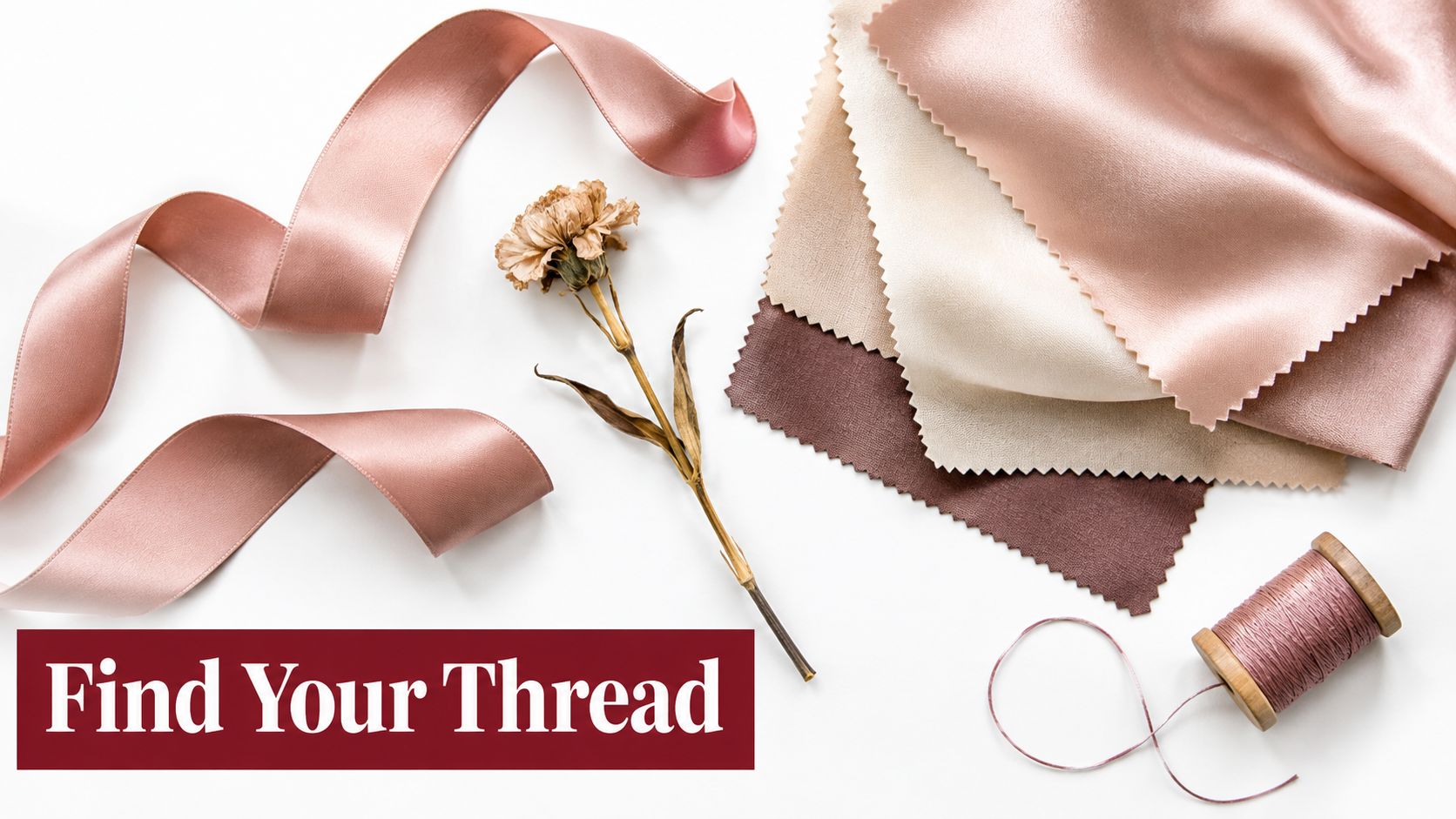
Compare complete looks, not isolated colours
A blush-and-ivory satin theme could use smooth tissue, a neatly tied ribbon and a restrained script on the card. The effect is polished without needing lace, pearls and metallic lettering on every surface.
For the same wedding party, a sage-and-linen garden theme could use textured card stock, matte wrapping and botanical details. Identical contents would feel softer and less formal because the surrounding materials differ.
| Theme choice | Presentation direction | Clothing consideration |
|---|---|---|
| Classic satin | Smooth card, clean lettering, softly structured ribbon | Offer robes or pyjamas according to preference |
| Garden linen | Textured paper, botanical detail, matte finish | Choose breathable-feeling fabrics the recipient likes |
| Modern neutral | Minimal print, tonal tissue, understated initials | Allow different garment styles within the palette |
Neither look belongs exclusively to a particular age or role. A mother might prefer the garden interpretation, but she might equally love ivory satin. Ask rather than assigning people a style based on their title.
Let coordination stop short of uniformity
A mood board shouldn't decide what every person wears. Check garment measurements, coverage preferences and whether someone would rather have pyjamas than a robe.
Ribbon width should suit the box, not overwhelm it. Match card stock to the texture you've chosen, and keep the monogram style consistent with the tone: elaborate lettering can feel out of place on otherwise minimal packaging.
Apply the same restraint to fragrance. If you include a candle or bath product, ask about scent preferences and sensitivities rather than choosing something purely because its label matches.
Coordinate the visual details, then accommodate the person. A coastal palette can still work with different sleeve lengths, neutral packaging and unscented contents. That flexibility makes the collection look considered without turning the gift into a costume.
Bridal Box Templates for Each Role in the Wedding Party
The strongest templates give every item a job. Start with the recipient's activities and preferences, then remove anything that duplicates what they already own or won't want to carry home.
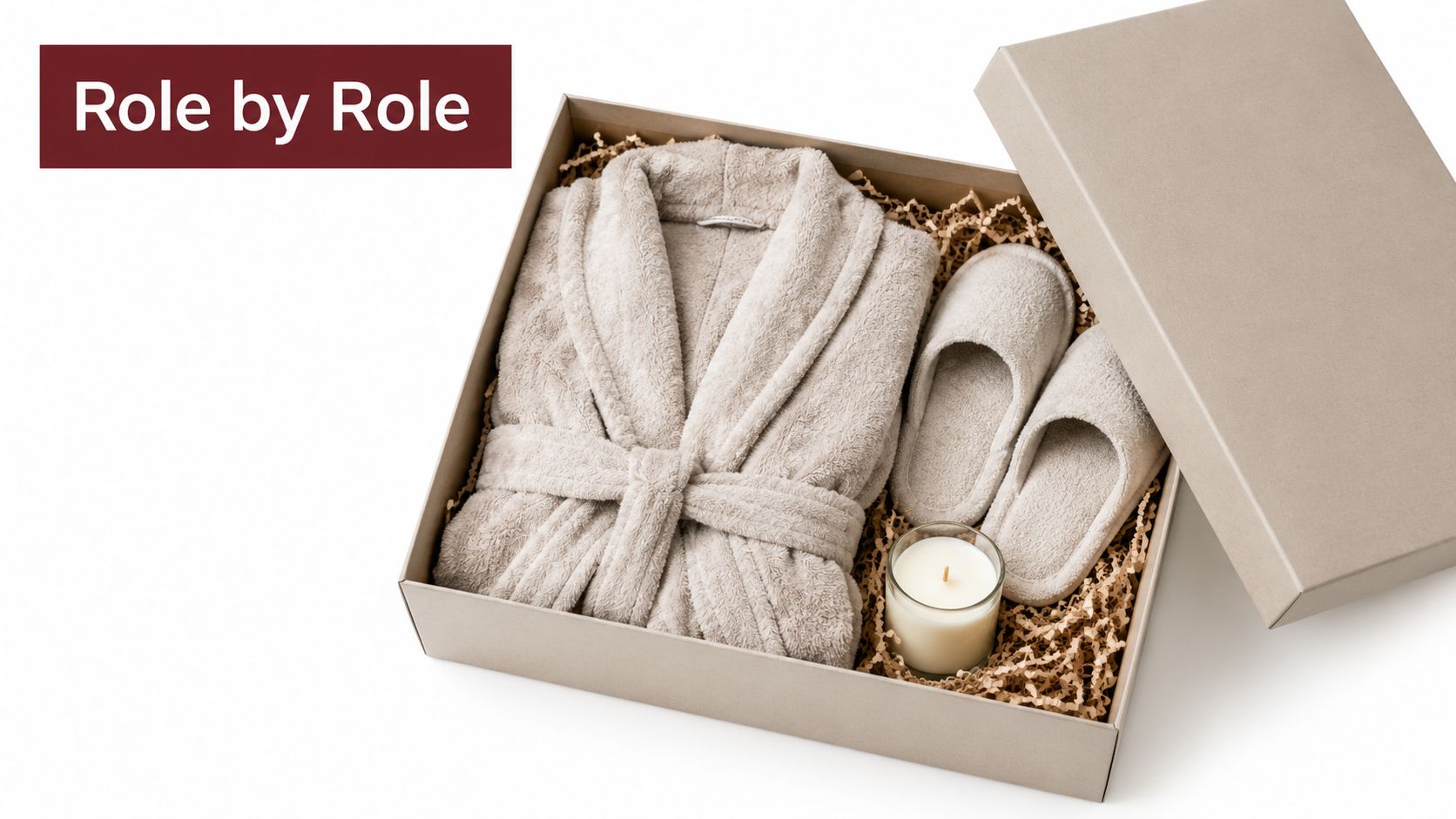
The bride
Contents: Front-opening robe or pyjamas, a zipped makeup pouch and a personal card.
The garment provides something to wear before dressing without pulling a close neckline over finished hair. The pouch gathers the small touch-up items she has chosen. A card gives the gift emotional substance beyond the photographs.
Skip: A second getting-ready outfit unless there's a planned change. Don't add oversized drinkware if the bride will already have suitable glasses at the venue.
Bridesmaids and the maid of honour
For a bridesmaid proposal box, begin with a proposal card, a personalised pouch and, if preferences are confirmed, getting-ready apparel. The card makes the invitation clear, the pouch can be used beyond the wedding, and the garment earns its place when there's a shared morning planned.
A maid-of-honour box can follow the same practical base, with a more personal letter recognising your relationship. Don't substitute a longer shopping list for a better message.
- Bridesmaid skip: Extra slippers when the recipient has suitable footwear and you're not requesting a coordinated pair.
- Maid-of-honour skip: A bulky emergency kit presented as a gift. Discuss support tasks separately rather than making responsibility part of the surprise.
Get Spliced is one option for coordinating role-labelled robes, pyjamas, slippers and bridal boxes; assembling a smaller bundle yourself is another.
Mothers and flower girls
For a mother of the bride or groom, choose a keepsake clutch or pouch, a letter and an optional getting-ready garment. The pouch holds personal essentials, the letter acknowledges the relationship, and the garment makes sense only if she's joining the morning preparations.
Skip: A sash or role-labelled outfit she hasn't agreed to wear.
A flower-girl box might contain a parent-approved robe or pyjama set, an age-appropriate activity and a simple card. Clothing supports her participation, the activity gives her something to do while adults prepare, and the card makes her feel included.
Skip: Adult skincare, scented products or fragile glassware. Ask a parent or carer to approve the contents.
Make room for other attendants
Use the person's name, best person, parent or wedding-day support crew where traditional wording doesn't fit. Ask what someone wants printed, and offer a non-apparel alternative without making them explain their choice.
For ideas beyond conventional bridal labels, Essentia Perfume's modern groomsmen gift guide offers another starting point for thinking about gifts for different attendants. Keep the recipient's preferences ahead of the category name.
Personalisation and Monogramming That Actually Looks Right
Personalisation works best when it identifies the recipient without covering every surface. In a survey of 750 Australian adults, 43% valued personalising the physical gift and 39% valued adding a personal message, as reported in the Australian gift-personalisation survey.
Treat those as separate decisions. A name on a pouch identifies its owner; a handwritten card explains why you chose the gift.
Personalisation options by item type
| Item | Best personalisation | Why it works |
|---|---|---|
| Robe or pyjamas | Pre-printed title, or discreet name | A title marks the occasion; a name feels less wedding-specific |
| Clutch or pouch | Single initial or initials | Keeps the finish understated on a small surface |
| Leather keepsake | Confirmed monogram | Provides a compact identifier without lengthy wording |
| Keepsake box | Full name | Leaves room for a clear, legible design |
| Champagne flute | Name and optional wedding date | Distinguishes the glass and records the occasion |
A pre-printed title is straightforward if the wording is right. A single initial is quieter, while a full monogram needs careful confirmation of the letter order.
Don't assume someone will change their surname, or that a married-name monogram is welcome. For leather pieces, Grainmark Leather's browse personalized leather gifts resource can help prompt consideration of initials and keepsake formats before choosing the final wording.
Ask for the method and the proof
Printing, embroidery and monogramming shouldn't be treated as interchangeable finishes. Ask the supplier which method they use, what size the lettering will be and whether the chosen material affects placement.
The guide to monogrammed bridesmaid gifts is a useful companion when deciding which pieces merit initials rather than full names. Keep the final order details in writing, not scattered across messages.
- Assign an approver: Nominate a named person to approve all personalisation.
- Confirm the text: Check spelling, title, initials, date and capitalisation against the recipient's details.
- Request a visual: Ask for an artwork proof and, where available, a finished-item photograph before dispatch.
- Approve the placement: Confirm whether the design sits on the chest, back, lid or front panel.
A beautiful font won't rescue an incorrect name. Proof the wording before judging the styling.
Ask whether approval starts the production lead time and whether corrections require a remake. A proof is only useful if there's still time to act on it.
A Realistic Timeline for Ordering and Delivering Bridal Boxes
Use the date the recipient needs the box, not automatically the wedding date. Proposal gifts, hen's-party accessories, getting-ready clothing and post-wedding thank-yous each have their own deadline.
Additional celebrations deserve their own planning entry: 43% of Australian couples include festivities beyond the wedding, according to the Australian wedding customer report. A sash needed for the hen's celebration can't sit inside a box scheduled for wedding-week delivery.
Build the weekly plan backwards
There isn't a reliable universal ordering window for personalised goods. Work backwards in weekly blocks using the supplier's confirmed production and delivery estimates, then reserve separate space for inspection and correction.
| Planning stage | Action | What must be confirmed |
|---|---|---|
| Earliest planning weeks | Arrange proposal gifts | Roles, invitation wording and recipient addresses |
| Before the production window | Submit apparel and personalisation details | Sizes, stock, method and approval process |
| Proofing window | Approve artwork | Every name, initial, title and placement |
| Delivery buffer | Receive and inspect goods | Missing items, damage and personalisation accuracy |
| Packing window | Assemble and label boxes | Contents checked against the recipient list |
| Event week | Hand over or transport completed boxes | Named person responsible for delivery |
| After the wedding | Finalise thank-you gifts | Messages that acknowledge specific support |
For each stage, write an actual calendar date once the supplier confirms their schedule. Use a broader wedding preparation timeline to avoid placing box assembly on top of dress collection, travel or other fixed appointments.
Keep production, transit and correction separate
Ask whether the stated lead time includes personalisation or begins after proof approval. Then ask about dispatch from the supplier's location to your postcode, especially for interstate and regional deliveries.
Dispatch isn't arrival. Leave a correction buffer before your packing date, and an event buffer before you need to leave home. These are planning allowances, not promises about how quickly a supplier can remake an item.
Hand-deliver where it's practical, particularly if the gift includes fragile glassware. For attendants travelling to the wedding, consider sending the keepsake separately and having getting-ready clothing waiting at the accommodation.
Overseas orders also need a complete cost check. GST can apply to eligible imported gifts valued at A$1,000 or less, and shipping and insurance form part of the delivered-goods amount used to calculate GST, as explained in the Australian Taxation Office's importing guidance.
Packing and Presentation That Photographs and Recycles Well
Choose packaging around the contents rather than making the contents fit a decorative box. Apparel needs room to fold without pressure on the lid; glassware needs protection from movement.
A rigid cardboard box suits a structured presentation. A reusable keepsake box makes sense when the recipient has a likely use for it, while a printed mailer can simplify posted gifts without requiring another presentation layer inside.
Box tiers at a glance
| Tier | Box | Core contents | Best for |
|---|---|---|---|
| Modest proposal | Compact cardboard box | Proposal card and personalised pouch | An invitation without wedding-morning purchases |
| Mid-range getting-ready | Suitably sized rigid box | Chosen apparel and practical accessory | A coordinated preparation kit |
| Premium thank-you | Reusable keepsake box | Recipient-selected keepsake and personal letter | A considered gift for a parent or key attendant |
Premium should mean more considered, not more crowded. A keepsake and a thoughtful letter can be a stronger gift than a lid that barely closes over filler.
Australian event waste-minimisation guidance recommends avoiding throwaway novelties and choosing useful, reusable items. Apply that approach to presentation too: minimise mixed-material inserts and prefer clean paper-based protection where it safely suits the contents.
Pack for opening, transport and later use
Lay out everything before assembling. Fold apparel with straps and ties tucked inward, position heavier items securely, and protect glassware separately rather than resting it directly on satin.
- Paper filler: Use enough to prevent movement, not enough to bury the gift.
- Tissue: Fold it neatly over clothing without compressing the fabric.
- Ribbon and stickers: Use removable finishing details rather than layers of adhesive.
- Printed card: Place it where it can be read first, away from items that could spill.
- Recycling note: Ask recipients to flatten clean cardboard and check local council rules.
Don't label every component universally recyclable. Waxed finishes, glitter, foil and bonded plastic windows can complicate disposal, and local acceptance varies.
Food belongs in its own sealed packaging. If you're considering a dietary-conscious addition, Rip Van's thoughtful sugar free gifts resource can prompt ideas, but check the actual ingredient and allergen labels before selecting anything.
For further packaging considerations, consult the guide to eco-friendly bridal gifts and party essentials. Keep the opening experience simple enough that recipients can unpack the box without creating a pile of unnecessary waste.
A Calm Checklist Before You Press Order
The final check is about catching mismatches between the person, the gift and the deadline. An attendant who won't be there for the wedding morning may need a keepsake instead of apparel; a parent who prefers neutral wording shouldn't receive a gendered title by default.
Read the order as separate gifts for named people, not as a single matching bundle. That makes omissions and unsuitable extras easier to spot.
Your order approval checklist
- Recipients listed: Everyone receiving a box is named, including people attending only a particular celebration.
- Occasions separated: Proposal, hen's celebration, getting-ready and thank-you gifts have distinct handover dates.
- Theme confirmed: Palette, texture and presentation choices are recorded.
- Contents chosen by role: Every item has a purpose, with duplication removed.
- Preferences checked: Apparel measurements, wording, fragrance and dietary requirements are confirmed where relevant.
- Personalisation recorded: The method and exact text are attached to each item.
- Proofing assigned: A named approver knows what must be checked before production.
- Timeline plotted backwards: Production, delivery, inspection, correction and packing each have space.
- Packaging selected: The box suits its contents and has a sensible reuse or disposal plan.
- Late additions allowed for: A small uncommitted buffer remains rather than every resource being spent upfront.
Check the order confirmation, not just your notes
Compare the supplier's confirmation with your final list before approving it. Check quantities, sizes, personalisation choices, delivery address and whether any item is unavailable or awaiting approval.
Save the confirmation and approved proof together so whoever receives the parcel can inspect it properly. If another person will pack the boxes, give them the recipient list rather than expecting them to remember which pouch belongs to whom.
Before checkout: Remove anything you'd struggle to explain in a personal note. It may be decoration rather than a meaningful part of the gift.
The best bridal boxes don't need to remain intact forever. Their value is in the pouch that goes into a weekend bag, the pyjamas someone reaches for again, or the box that later holds jewellery and a treasured letter.
Choose usefulness, personal relevance and a manageable plan over a larger pile of matching things. That's how a wedding gift becomes something people keep.
Open your planning notes and make a recipient list today. Beside each name, record the occasion, the item you most want them to use and the wording you need to confirm, then send those details to your chosen supplier for availability and lead-time checks before ordering.